Your vehicle
No vehicle selected
Identify yours to refine your search results
No vehicle selected
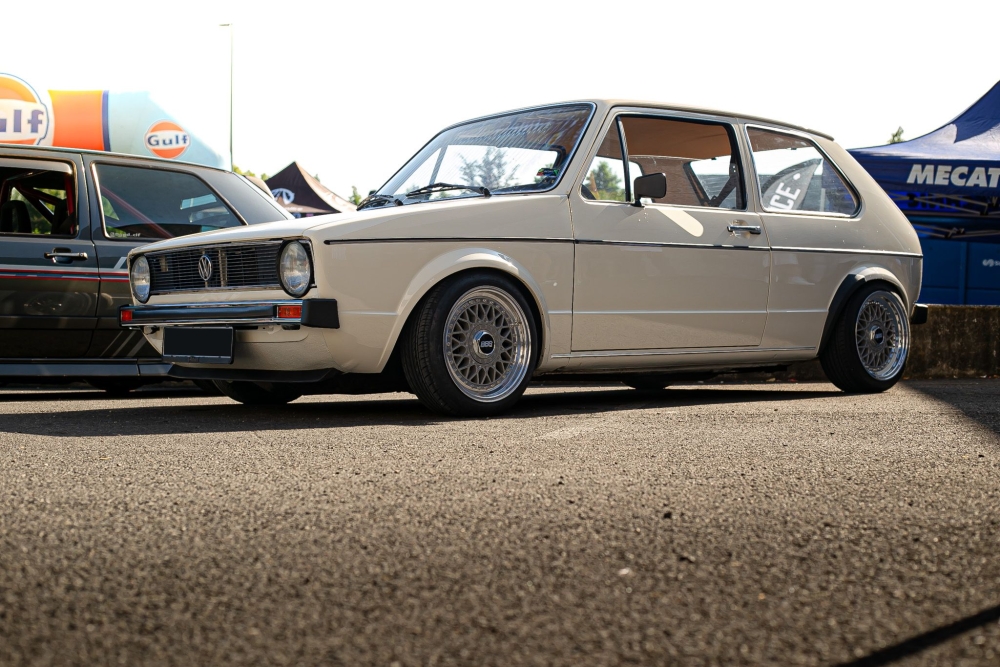
The Golf 1 went on sale in spring 1974, with 2 engines: the 1100 (50 hp) and the 1500 (75 hp). The first was fitted with 4 drum brakes until 1975, the second with discs...
27/01/2026
Harald
4 minutes read
Volkswagen
Volkswagen Golf 1
The Golf 1 went on sale in spring 1974, with 2 engines: the 1100 (50 hp) and the 1500 (70 hp).
The first was fitted with 4 drum brakes until 1975, the second with discs at the front and drums at the rear. To ensure safety, VW quickly adopted front discs on all its Golfs.
Under hard braking, the weight transfer towards the front is significant; a GTI that lifts its rear leg when turning in on a downhill bend … does that ring a bell?
The original-type brake discs are the same left and right and are generally sold individually; pay attention to this when ordering. They have a diameter of 239 mm and come in 3 thicknesses depending on the year and version.
Front brake pads are always sold in sets of 4, to equip the 2 calipers of the same axle.
First identify the type (shape) of pads and discs (thickness) on your Golf 1. Not all pads are equal, in original spec as in performance, you will have a choice.
Be aware that since 2001 there has been an ECE R90 regulation on braking. This law ensures that the braking parts you buy in Europe are at least of equivalent quality to the original ones. Linked to the models of calipers and discs existing on the different Golf 1s, there are 3 types of pads.
There are two types of calipers on the Golf 1 :
Brakes are the subject of many checkpoints at the C.T, and not for nothing. To maintain them, drive your Golf 1 regularly. Operating the brakes, and therefore the hydraulic system as a whole, keeps them in good condition. Brakes are like the battery, they need to be used to stay in shape. Safe travels, and remember to brake to stop at least every 2 hours
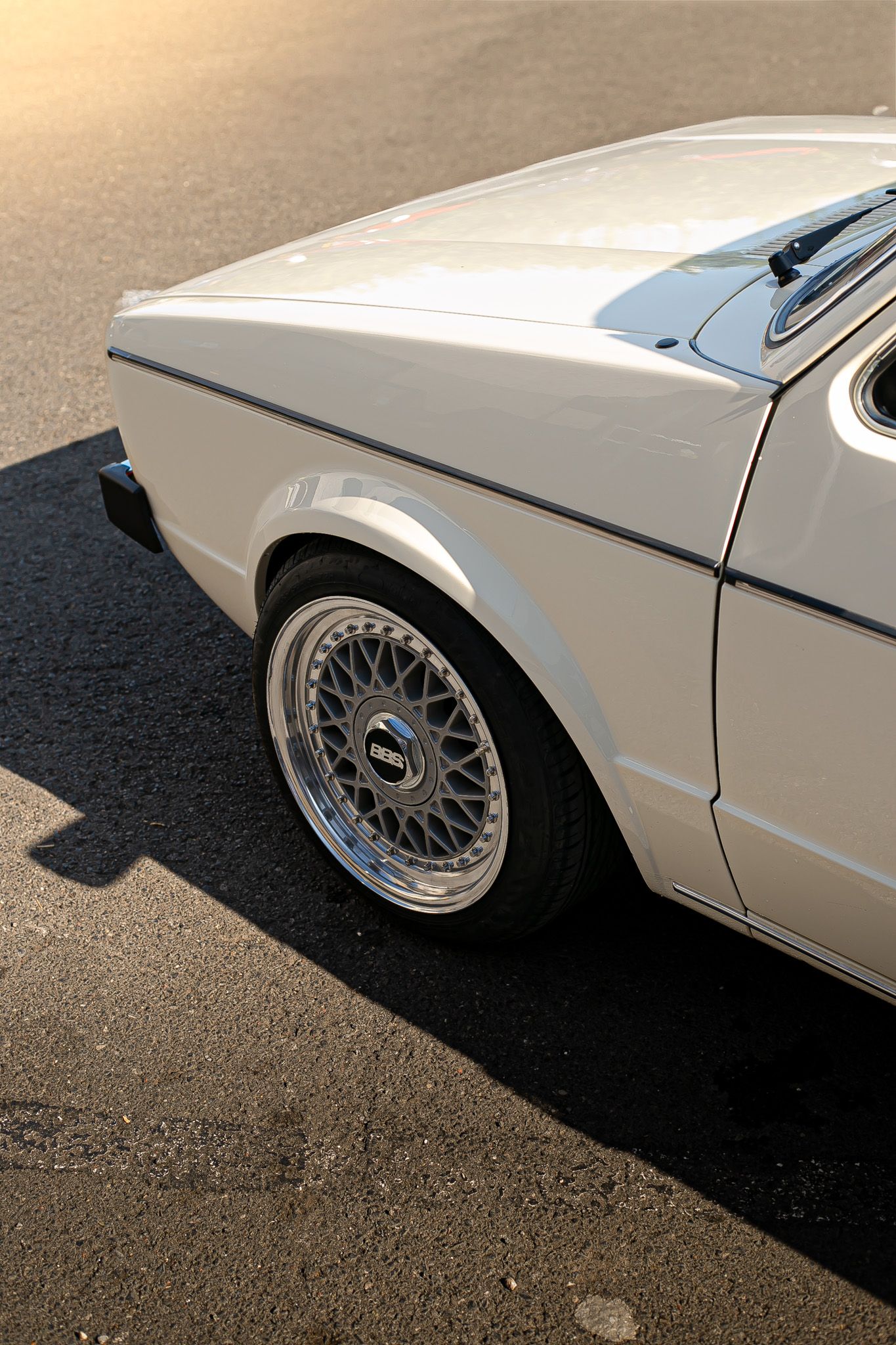
Is it possible to fit GTI 20 mm ventilated discs on Golf 1s equipped with solid discs?
Yes, it is possible on Golf 1s that are fitted with 239x12.
This braking improvement on "base" Golf 1s can be made provided the car was fitted from the factory with floating brake calipers. These calipers are recognisable by their large pads of different shapes on the same caliper. GTI pads are thinner and compensate for the greater thickness of the ventilated brake disc; they fit in place of the thick versions for 12 mm solid discs.
This upgrade is not possible on Golf 1s fitted with pads of identical shapes or with small, square pads.
Can the braking be improved on a pre-1982 Golf 1 GTI?
Absolutely. The most effective way is to use a complete (second-hand) set from a Golf 1 GTI 1800 or, easier to find, taken from a Golf 1 cabriolet between 1982 and 1993. In that case you need to replace the big calipers with small square pads with the next version, which is in 2 pieces: floating calipers and caliper brackets (to be bolted onto the stub axles).
You can keep the ventilated discs as long as you use the thinner large pads of the post-1981 GTI.
Do you need to bleed your brakes when changing the discs and pads on a Golf 1?
No, it is not necessary. As long as you do not open the hydraulic circuit, you do not need to bleed the brakes. It becomes essential, for example, when changing a caliper or a slave cylinder, because brake fluid will run out and air will enter the circuit via the connecting pipes.

Harald
Le partage de la Passion, simplement.
Previous article
Golf 1 rear brakes: shoes, wheel cylinders and drums
Next article
Volkswagen Bay Window Camper: the legendary van of the hippie years
Similar articles
Golf 1 rear brakes: shoes, wheel cylinders and drums
Reliable, light and nimble, the Golf 1 never needed rear disc brakes. Well-chosen drums, shoes and cylinders give safe, quiet and effective braking. A simple system that is remarkably durable, as long as you look after it.
Read the article
The Golf 1: the most famous compact of all
An icon of the 70s, the Golf 1 embodies Volkswagen's modern turning point: compact, stylish, reliable… and ready to make history.
Read the article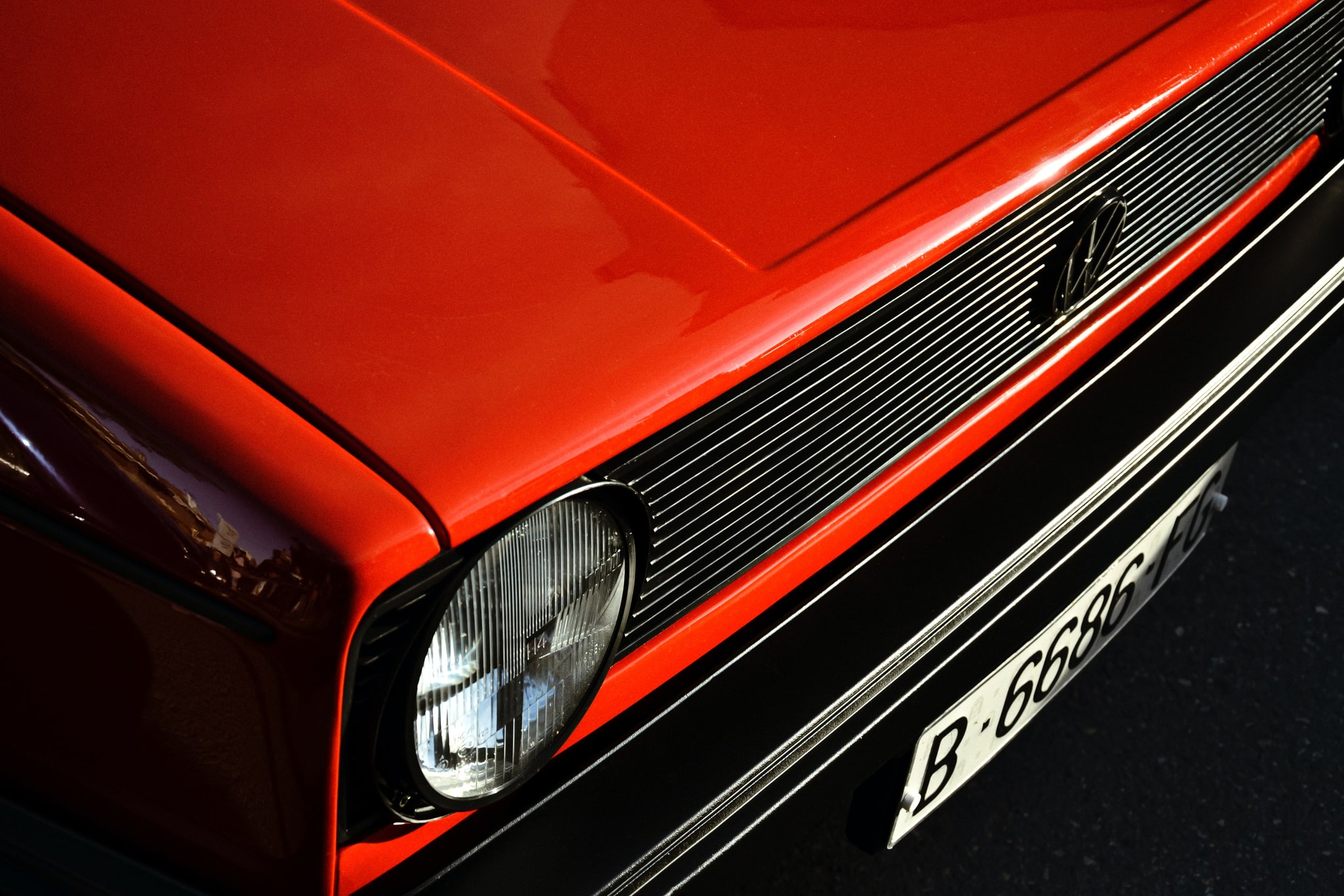
Subscribe to our MECATECHNIC newsletter