Your vehicle
No vehicle selected
Identify yours to refine your search results
No vehicle selected
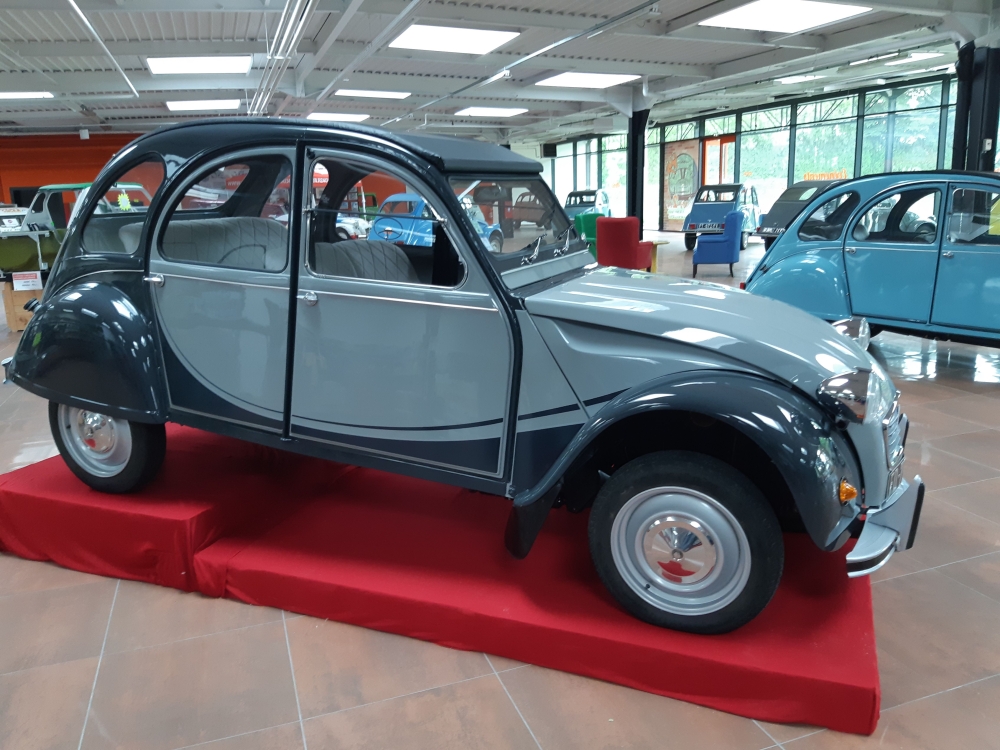
A true symbol of the French art of living, the 2CV won the hearts of the French with its simplicity, toughness and inimitable charm. Now a cult classic, it embodies the people's car par excellence.
27/01/2026
Harald
5 minutes read
Citroën
Not so many years ago, when you went through the icons that make up the charm of France, you had the baguette, the beret, wine and cheese, the Eiffel Tower and … the 2CV.
Simple, popular, easy, practical, the car affectionately known as the Deuche, the Deudeuche or the Deux pattes … has ended up marginal on our roads.
The 2CV is to the car what the flip-flop is to the shoe: given the bare minimum, it does the maximum.
The TPV, or "Toute Petite Voiture" ("Very Small Car"), project was launched at Citroën before the Second World War. The first idea was to create a front-wheel-drive vehicle with 4 seats, light, able to carry 2 adults, 50 kg of payload, economical, easy to maintain and able to cross a ploughed field with a basket of eggs on the back seat without breaking a single one! The formula that has stayed in legend sums up the ambition: to carry two farmers in clogs and 50 kg of potatoes (or a small barrel) at 60 km/h at most, on 3 litres per 100 km. This "2cv", meaning "fiscal" horsepower, had to be a minimalist, popular and cheap small car, aimed at the lower-income social classes. The French people's car, in a way.
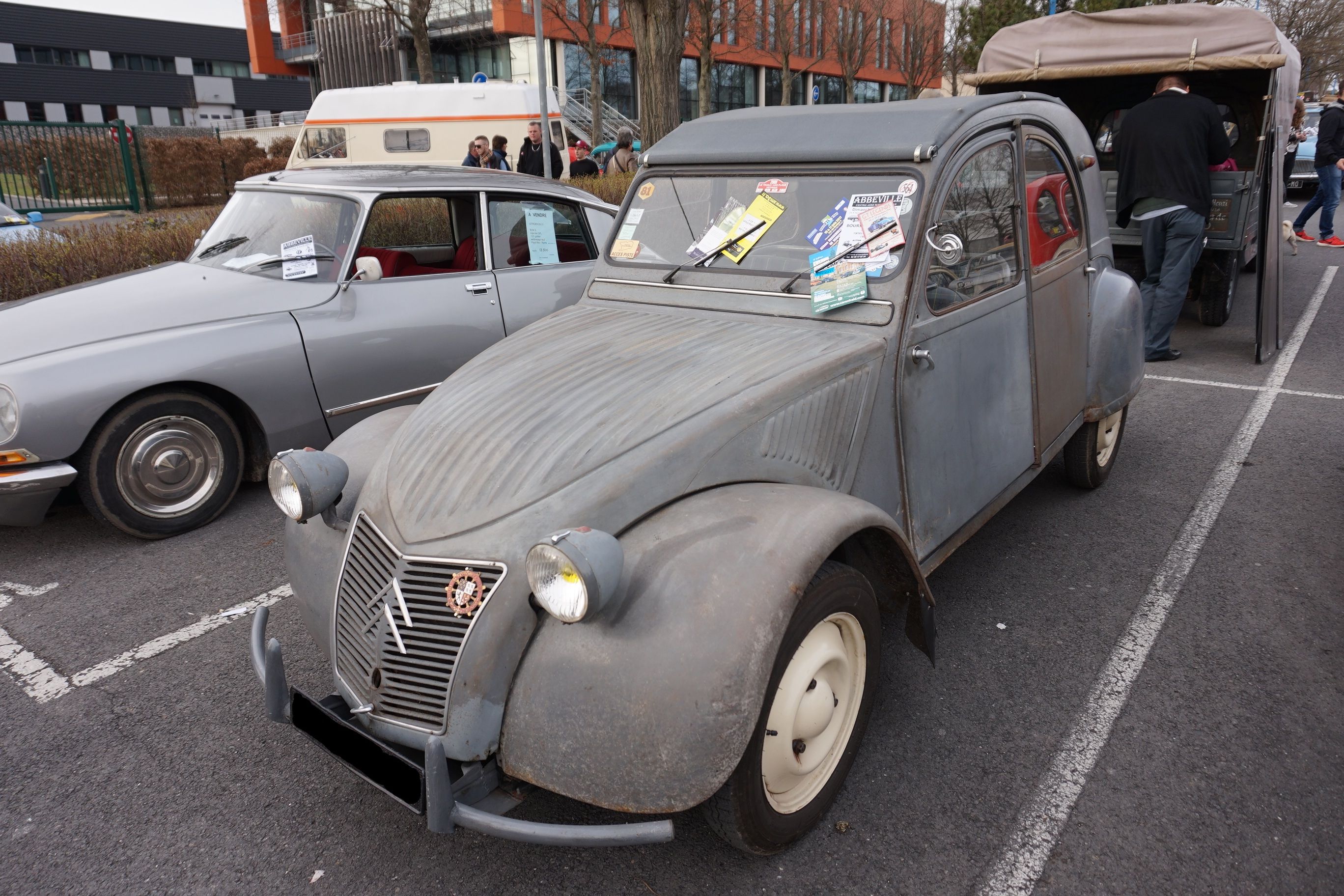
A set of specifications that Pierre-Jules BOULANGER, who became head of Citroën in 1935, had made good progress on, surrounded by André Lefebvre (the father of the Traction Avant) and Flaminio Bertoni (Design), until the Second World War stopped it dead. Some 250 minimalist-looking TPVs (corrugated sheet metal and a single headlight) were built and then destroyed or dismantled so as not to fall into enemy hands. The post-war period did not make things easy for Citroën: metals became scarce and expensive and the Régie Renault was served before everyone else. Even so, it was at the October 1948 show that what would become the 2CV appeared. The cheapest car on the market finally met the famous brief: "four wheels under an umbrella".
Journalists and the competition mocked the 2CV and criticised it on every point.
The Citroën mountain seemed to have given birth to an ugly grey duckling.
The public it was aimed at gave it a much better welcome and got excited about a dream that was about to come true. An unmistakable sign: people queued for up to 2 hours to see it. With different technical solutions (torsion bar suspension, air-cooled front engine, front-wheel drive) it proved much cheaper and more modern than the 4CV presented 2 years earlier. To each car its audience; the 2 chevaux was aimed at the more modest, farmers and workers.
The 2CV was Citroën's biggest success with 5,114,961 cars built between 1949 and 1990.
In proportion, 3/4 of sales were 2CV saloons and 1/4 2CV vans. If you add the 2CV derivatives, the Méhari, Dyane, Ami 6 and 8 , you reach a total of around 8.5 million units.
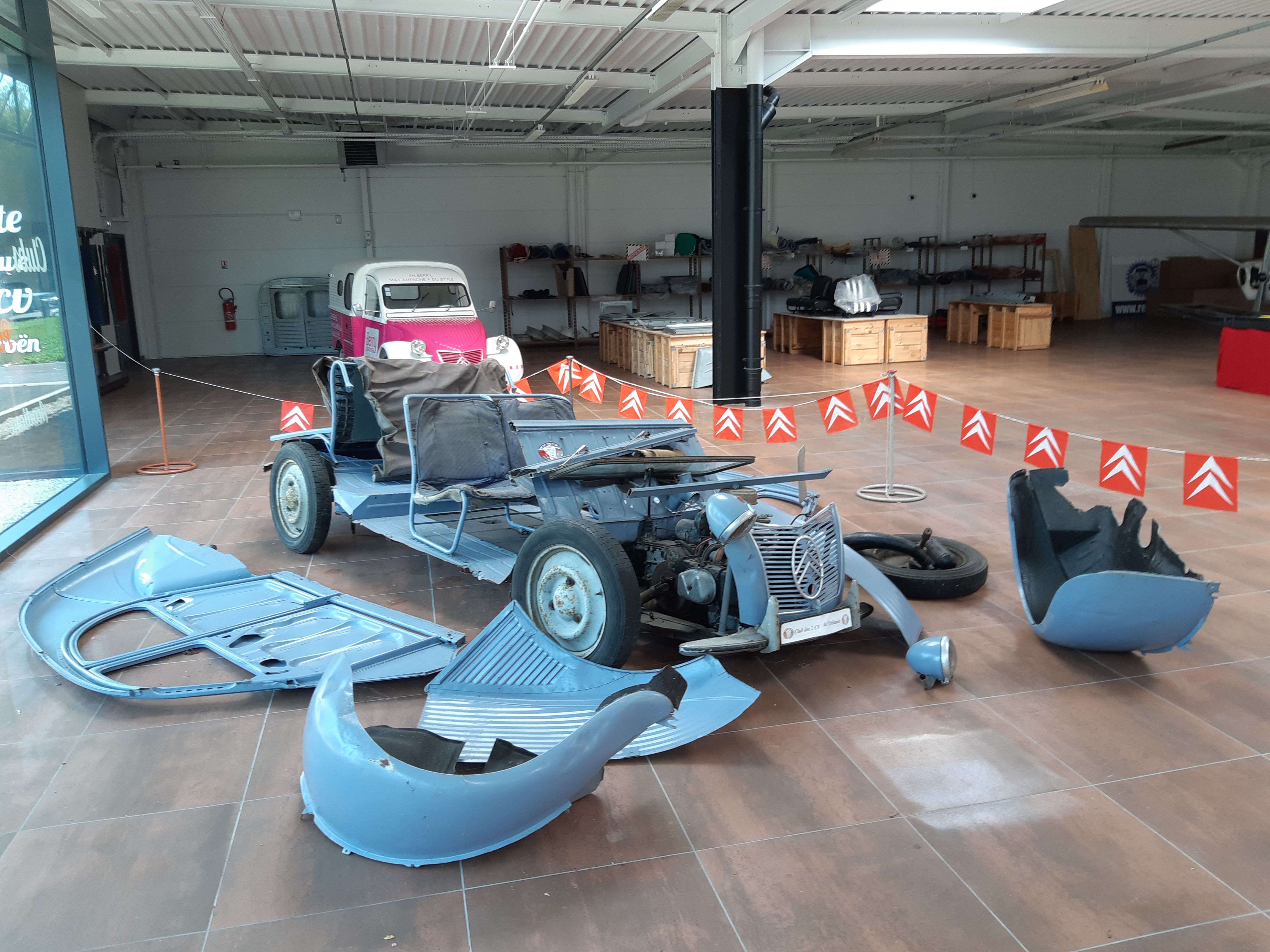
Like a snail, whose shape and speed it somewhat shares, it stays glued to the road despite its impressive body roll. It loves roundabouts, the countryside and the sun; in a way, it offers you board and lodging (in case of rain in the corners). It is THE ideal car for a ride.
When you drive a 2CV, you have to know how to anticipate hills, overtaking and braking; with it, you learn to drive, and it's a whole art of living! It is a fairly lively car despite a power output of 9 to 29 hp for around 500 kg.
Easy to maintain, reliable, economical and a little noisy, its soft suspension is a fairground ride for children.
From its launch, its large removable soft roof made it the cheapest "convertible" on the market; very easy to roll back, the 2CV's hood is handled with ease and gives it enormous charm.
Craftsmen and small shopkeepers, for their part, fell for the 2CV van that appeared in 1951; it could carry anything and its sides sported their hand-painted advertisements.
EDF, La Poste and the fire brigade were wonderful rolling advertisements for Citroën, not forgetting the parish priest!
Changing safety and pollution regulations and consumer expectations finally sounded the swan song for the 2CV in the 80s. The little French car with the enormous success no longer met the standards.
French production stopped at Levallois in 1988; the 2CV carried on in Portugal, at Mangualde, where the very last one came off the line on 27 July 1990 at 16:30: a grey Charleston.
Fortunately, enthusiasts and the very many 2CV clubs that are very active in Europe will carry the torch for the car that will forever remain a symbol of the French art of living.

Harald
Le partage de la Passion, simplement.
Subscribe to our MECATECHNIC newsletter