Your vehicle
No vehicle selected
Identify yours to refine your search results
No vehicle selected
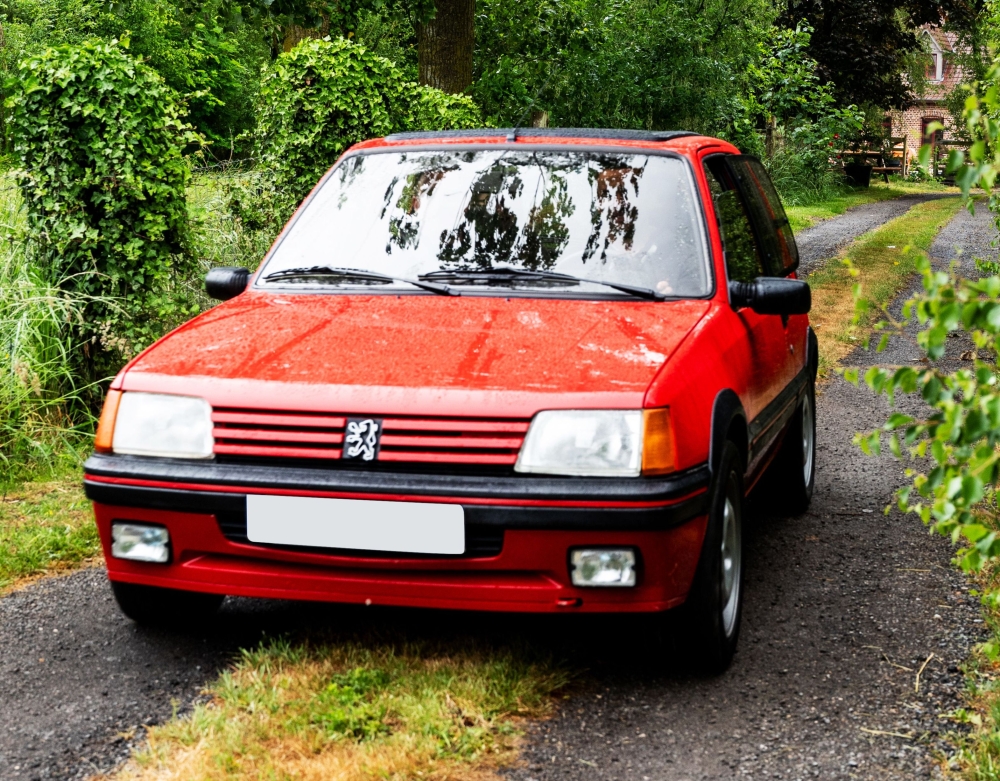
City car, GTI, convertible, diesel or rally beast: the Peugeot 205 did it all, won it all, and conquered it all. From 1983 to 1998, it put Peugeot back on its feet, left its mark on French motoring history and an unforgettable imprint in the hearts of enthusiasts.
27/01/2026
Harald
7 minutes read
Peugeot
In late February 1983, Peugeot launched what would prove to be a commercial bombshell: the 205.
The "B" segment, that of small cars, is a crucial segment for any manufacturer of affordable cars. The new codes of car design were turning towards more roundness, small city cars were no exception, and the rivals of Peugeot's ageing 104 were also starting to get rounder. The 205 would therefore benefit from a modern, flowing design and a new visual signature drawn by the in-house studio that had been pitted against Pininfarina.
Production began at Mulhouse in late 1982, followed by Poissy and Sochaux, adding up to some 2,500 units built per day. The 205 was a smash hit and it didn't take two years for it to celebrate its millionth car.
First bodied as a 5-door saloon, then as a 3-door coupé (1984), it quickly expanded to a convertible (1986) and a van with the 205 Multi (1985) and then the 205 F (1993).
From 1983 to 1998, the little Sochaux car was built in 5,278,300 examples; this record would be beaten by its successor, the 206.
In 1983, the 205 was offered with 4 petrol engines, all 4-cylinders, made by la Française de Mécanique and better known by their "X" prefixes, coming from the 104: the XV8, XV7, XY7 and XY8.
In 1987, the 205 got new engines, coming from the Citroën AX, named under the (famous) "TU" prefix: the TU9, TU1, TU3 and TU3S.
Peugeot was far too slow to react to the success of VW's little firecracker, the Golf GTI released in 1976, the car that brought the GTI name onto the motoring scene.
Before 1984, the sporty badge in the compact class was the 104 ZS, which, with only 90 hp, was outclassed by the Teuton.
From its launch, the 205 GTI benefited from the enthusiasm of fans of the sporting lion, who saw in it an "affordable" little 205 T16.
THE model leading the 205 range is indeed its sporty version, the GTI. Like the competition versions, the sporty models pull the image and the sales upwards.
The little French GTI went through 3 major changes, linked to its engine: 105, 115 and then 130 hp.
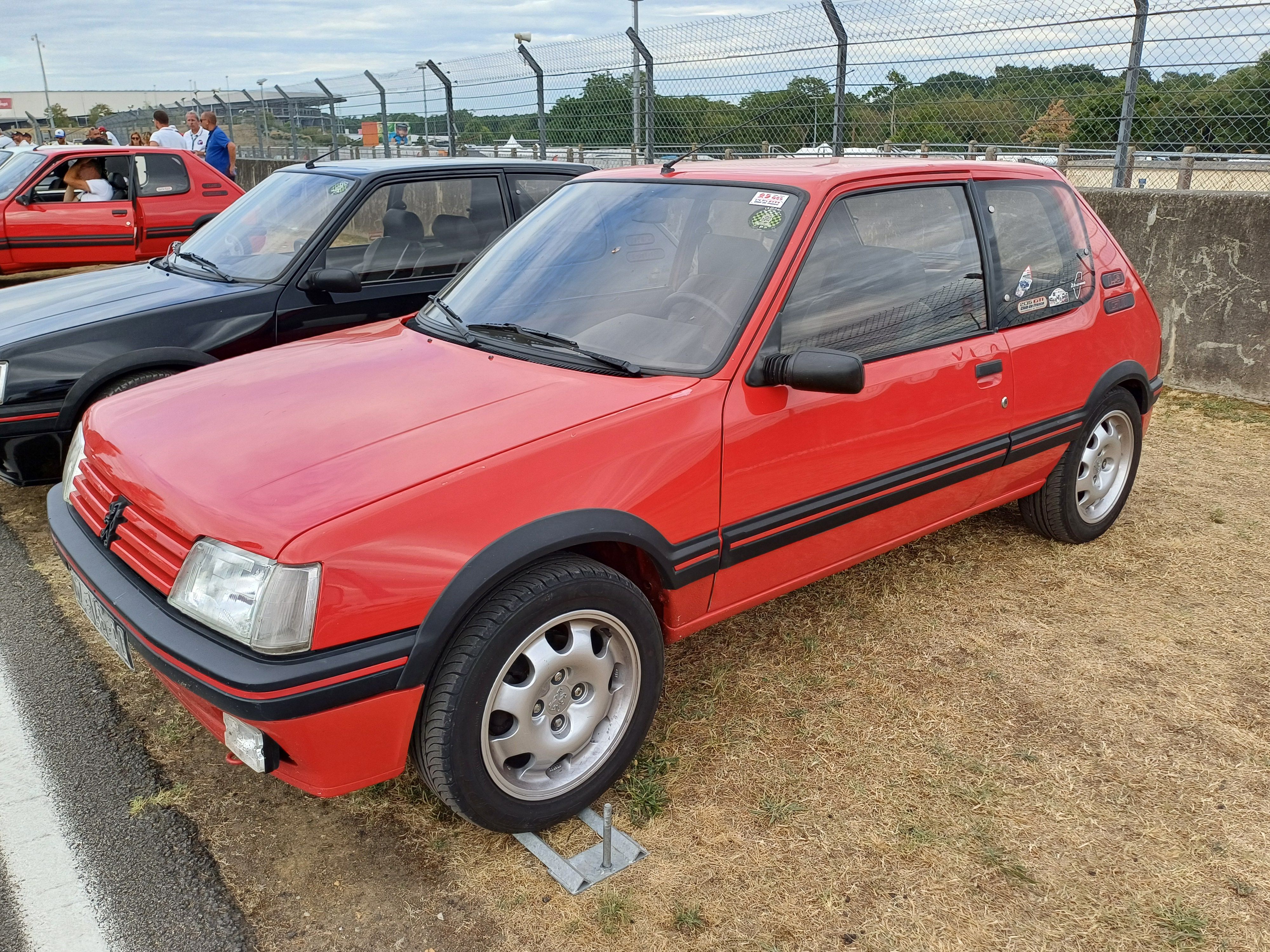
The first 205 GTI was offered with 105 hp, XU5J engine. Its equipment and presentation set it apart from the Golf 1, which was finishing its run, and from the new Golf 2 GTI that was arriving. The Sochaux car had 14-inch alloy wheels, a beltline with a red pinstripe, bumpers included, 4 black wheel arch extensions, a more cheerful interior and it weighed 85 kg less than the second German. It was lively, yes … but 105 hp against the Golf's 112 hp, it was short. Peugeot quickly went back to the drawing board and in 1986, its GTI went up to 115 hp; its XU5JA engine also arrived just in time to counter the Renault 5 GT Turbo.
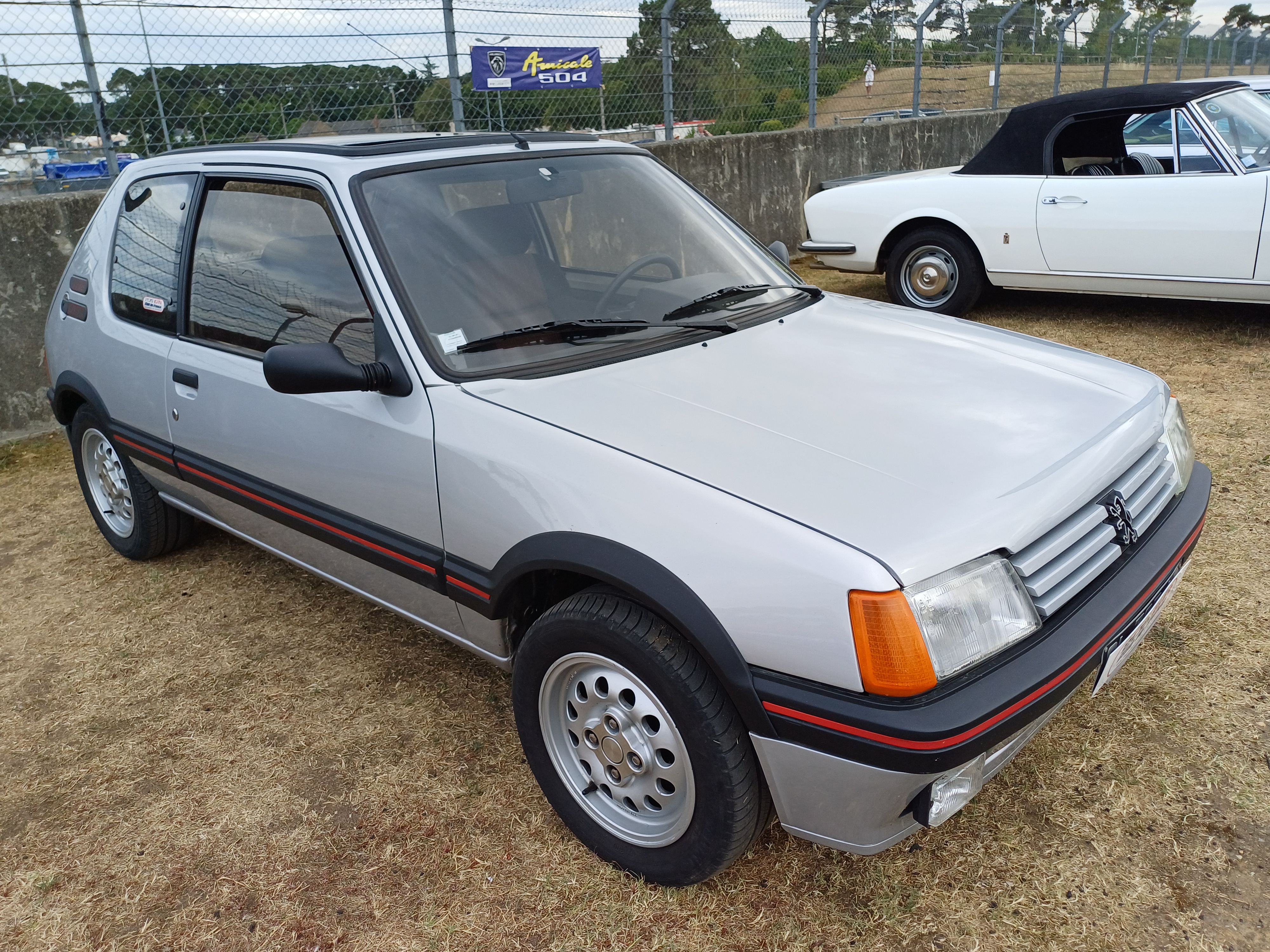
At the Paris Motor Show in autumn 1986, Peugeot brought everyone round with a 130 hp version; its increase in displacement to 1.9L (say "one point nine"!) gave it the horses the first one lacked. The new GTI lived up to its name and asserted itself as THE GTI (8 valves) of the moment. New (and beautiful) 15-inch alloy wheels, new torquier, angrier engine, new running gear with disc brakes at the rear. Its front end was very precise (the signature of sporty Peugeots).
With an excellent power-to-weight ratio, the 130 packed a punch … before dropping down to 122, thanks to its catalytic converter and the 1993 anti-pollution standards! The 130 is therefore more prized by connoisseurs.
Even the already special GTI got its limited edition; one of the most sought after by lovers of the roaring lioness. With it, the GTI went metallic green (Fluorite green), its wheels were painted anthracite grey and its black leather interior and grey carpet were as classy as can be. A true collector's limited edition (from its launch) built in 1,000 examples for France. This "130" is the grail of "205 GTI fans".

From B segment to Group B. The 205 T16 is a 205 on testosterone. Presented in 1983, it was built in a road version of 200 cars (with 200 hp) to allow it to be homologated in Group B for the World Rally Championship. Developed by Jean TODT, it was driven by the "Flying Finns", VATANEN, SALONEN and KANKKUNEN, who gave it the manufacturers' and drivers' titles. The French drivers Michèle MOUTON and Bruno SABY also distinguished themselves in its bucket seats.
It was an evolution of the 205 Turbo 16 Rally car, lengthened and modified for more stability, with tyres and ground clearance revised upwards to tackle the dunes; it was impressive. Ari VATANEN won this legendary event at its wheel in 1987 and Juha KANKKUNEN the following year. It was entered in Africa until 1990 alongside its successor, the 405 T16 grand raid, before passing the torch to it.
In 1987, the 205 was at the peak of its glory; three very special versions of the 205 Turbo 16 took part in the infernal Colorado hill climb (20 km of climbing, 156 corners and 1,440 m of elevation gain). It was with the 405 T16 that Ari VATANEN gave Peugeot a victory the following year and an anthology climb for motor racing fans (immortalised in the film Climb Dance).
The "little" 205 in its original form long scoured the rallies in group A and group N. It let amateurs and pros race effectively and at lower cost.
The 205 took its bow in 1998, after 15 years of glory. The famous 205 GTIs and the racing versions, which swept up almost all the world titles, contributed greatly to conveying a dynamic image of the 205, beneficial to every Peugeot range.
The 205's many limited editions also helped propel the little "Sochaux lioness" to the heights of the sales charts. Image … always image.
When endurance, quality and reliability are there, the image conveyed is not a vague promise. The 205 did the job and more than the job to let the lion regain its strength, before bounding towards new successes, with another number that would also become sacred: 206.
Harald
Le partage de la Passion, simplement.
Subscribe to our MECATECHNIC newsletter