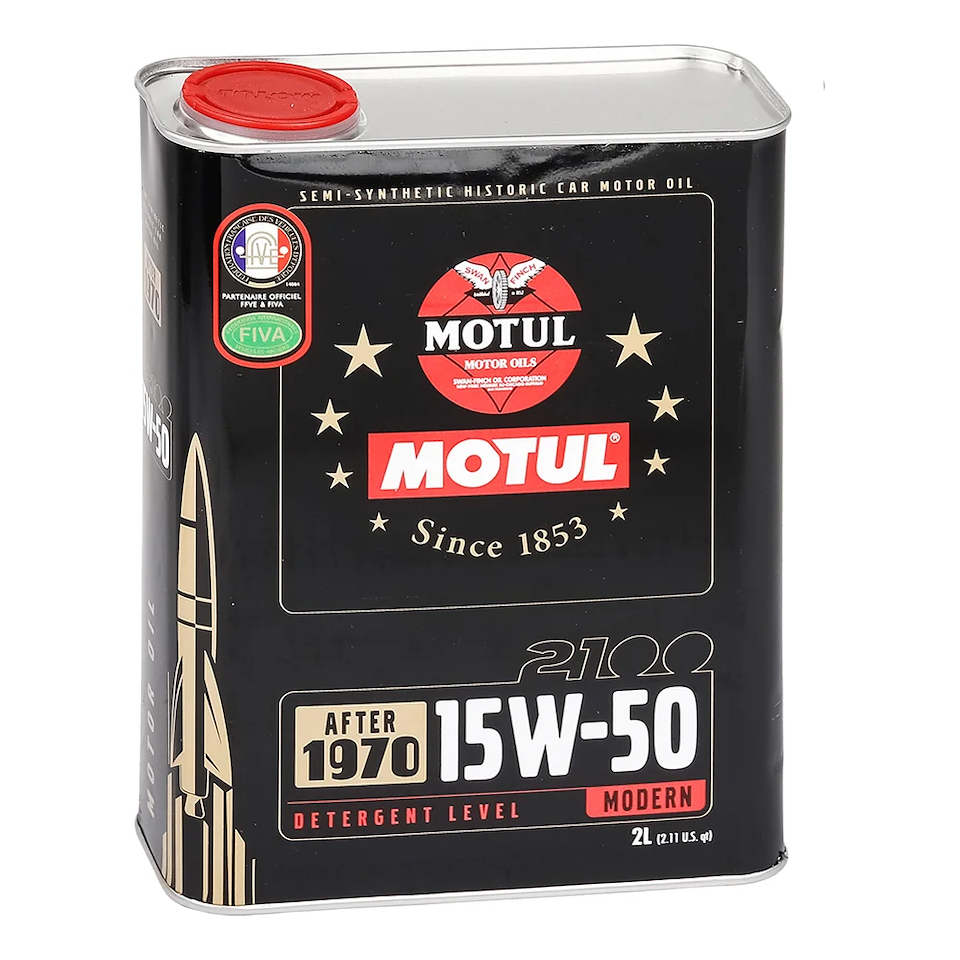
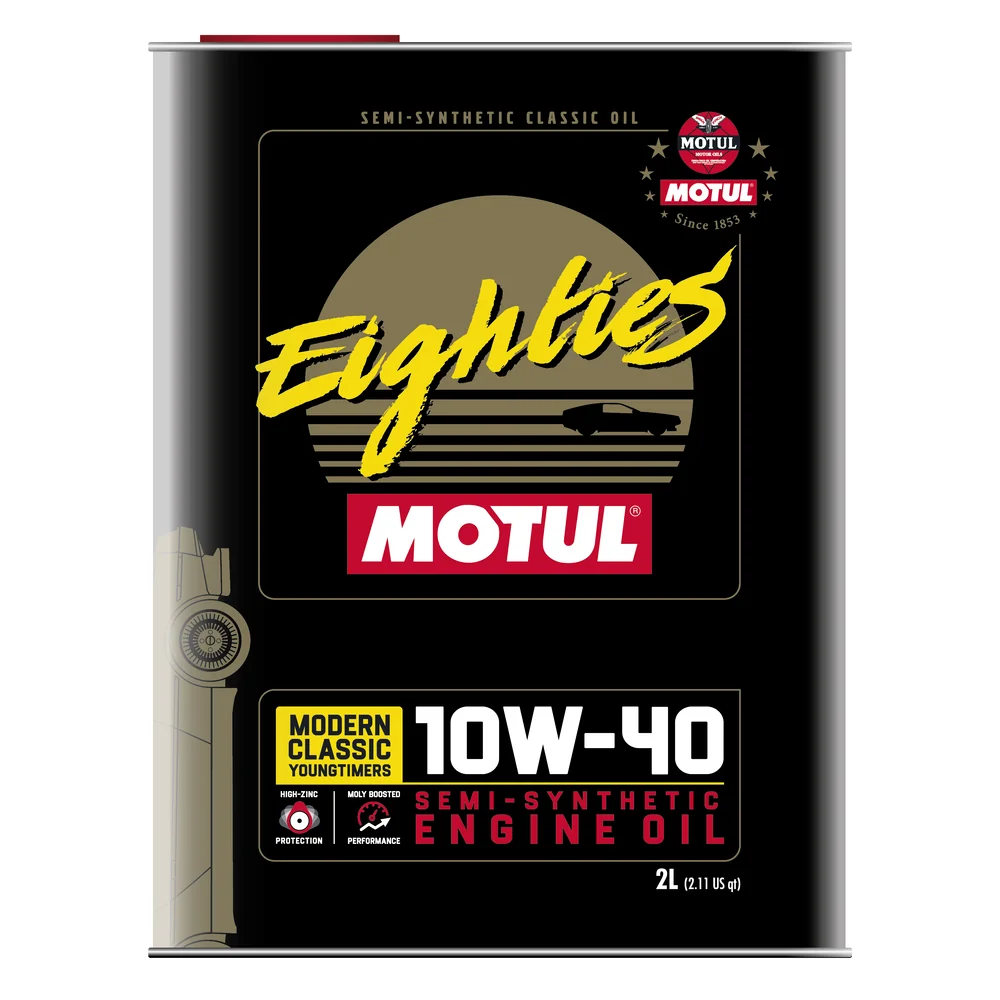
The numbers—or more precisely, the grades around the W—indicate how fluid the oil is when cold and how thick it is when hot.
The “physical” condition of an oil changes with its temperature. For those of you who have known deep-fat fryers… (before the era of oven chips) you’ll remember: when cold, the oil was thick, even solid like grease, and when hot it was like water. And it’s the same—almost—for your engine oil.
Single-grade oils : e.g. SAE30.
A single number tells you something consistent about their quality: single-grade oil keeps the same viscosity, whether cold or hot. This type of oil is made for old engines—for the pre-war “teuf-teuf” era. You could “freshen up” the naming, using our example, with 30W30 (don’t confuse it with 0W30!).
Multi-grade oils : e.g. 20W50
The W that appears in the middle stands for “Winter” (as in winter is coming).
The lubrication performance required from this modern type of oil becomes double.
. The left-hand number indicates cold-flow fluidity : mechanical parts need lubrication as soon as the engine starts. Before reaching its optimum operating temperature, the engine needs oil circulating (under pressure) that is fluid—even in very severe cold.
The lower the number, the more “liquid” the oil will be and the less wear it will cause in cold weather.
The more engines evolve, the tighter their operating clearances (tolerances) become, and the less play there is. With less clearance and wear, the oil needs to be more fluid when cold to ensure good lubrication. If the engine is leaking, don’t hesitate to step up one grade in fluidity.
. The right-hand number indicates hot viscosity : heat is the engine’s number one enemy. At high temperatures, the oil must be able to keep its qualities (lubrication, protection); it must not turn into “water”. So when hot, viscosity is measured—its ability to maintain a certain thickness and consistency at operating temperature. In reality, this index measures the resistance of the oil film (protective layer) at 100°C.
The higher the number, the better the oil will hold up and reduce wear at high temperature (a bit like sun cream, actually).
“Tell me Jamy… if I’ve understood correctly, the ideal universal engine oil is 0W100?!”
“Not that simple!” First of all, because technically there are manufacturing limits; this would be a huge leap, like Jean-Claude Van Damme doing the splits—and it would be expensive to produce. Secondly, not all engines could use it (extreme cold fluidity = leaks). And thirdly, from an “econ0-marketing” point of view, engine oil is a bit like toothpaste: the more varieties there are, the better the manufacturers do.
A miraculous, universal oil isn’t possible given the current vehicle fleet.
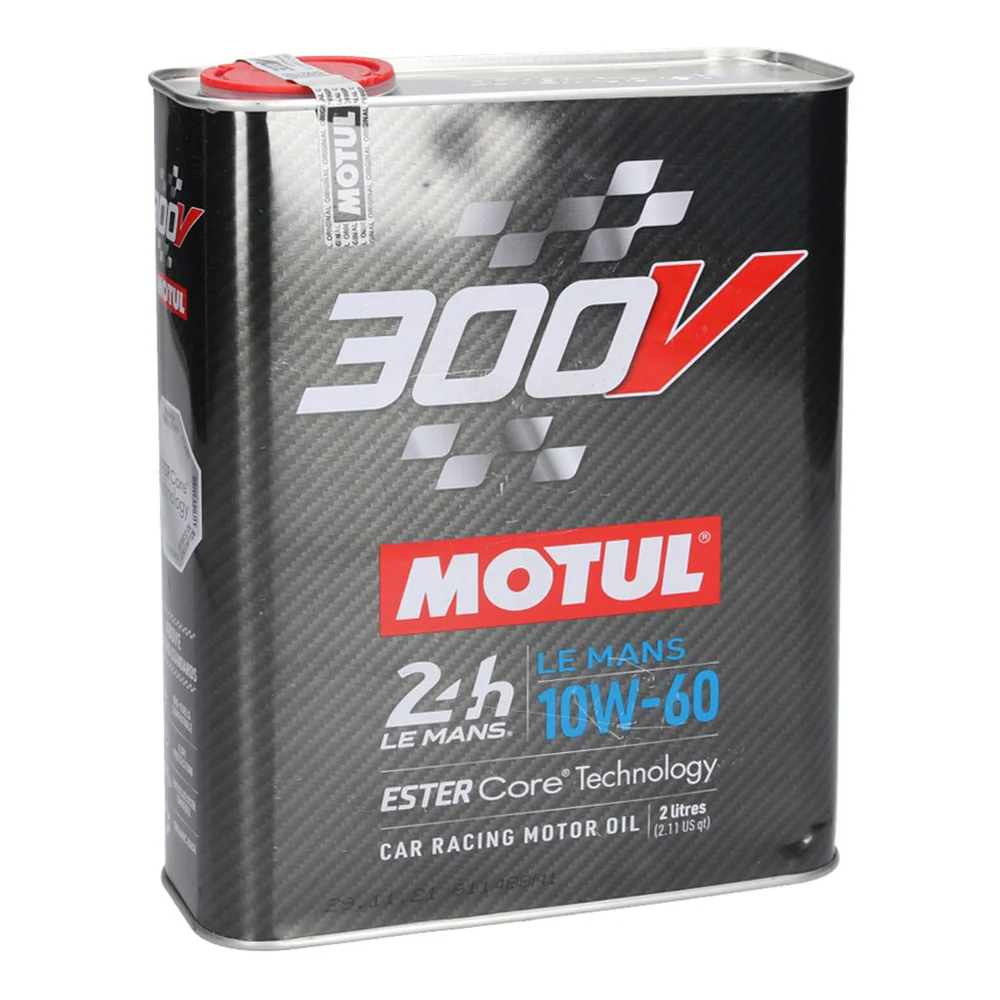
For a wink, a 0W60 oil “exists on the market” for very specific engines that run at extremely high revs and pressures. You won’t find it in supermarkets—it’s mainly used in racing. 0W20, 0W30https://www.mecatechnic.com/fr-FR/c-2319-huile-moteur-0w30 or 40 oils are common nowadays, used on recent engines in hybrid cars or very high-performance vehicles.
Mineral oils and synthetic oils :
. Mineral oils are made from crude oil refining. They contain additives designed to stabilise their quality as they heat up and cool down, as well as anti-oxidants and even detergents. They are economical oils, ideal for simple, low-power engines.
. Synthetic oils arrived at the same time as compact synthesizers in rock and disco music. Synthesis in a laboratory makes it possible to create a uniform molecular structure—resistant, stable—and to add properties to it.
Synthetic or semi-synthetic? A story of composition.
100% synthetic oilhttps://www.mecatechnic.com/fr-FR/c-97008-huile-moteur?attributes%5Bqualite-d-huile%5D%5B0%5D=Synth%C3%A9tique : it’s purely chemical—pure synthesis. This type of oil is more stable over time and resists extreme conditions, when cold and especially when hot. These oils are formulated with additional chemical components to enhance their anti-wear, anti-oxidation, detergent, etc. properties. They provide significantly better resistance to what’s known as the oil film breakdown: the friction point between two mechanical components, at which the protective oil film separating them can no longer hold.
The most performance-oriented engines, high-compression engines, multi-valve engines, turbocharged engines, and even competition engines, generally use this type of oil — more suited to their needs.
Oil change frequency : these engines require much more frequent and regular oil changes (1,000 to 2,000 km) ; most don’t have an oil filter. Let’s put it this way: at worst, one oil change per year. These cars drive very little most of the time.
. Engines from the 1950s–60s : 20W50
We move on to so-called “multi-grade” and mineral” oils.
As for using pure synthetic oil in these engines: it’s not necessary, especially for an engine that’s already done a lot of miles.
Oil change frequency : you stick to the same tolerances.
. Youngtimer engines from the 1990s : joker-W-joker
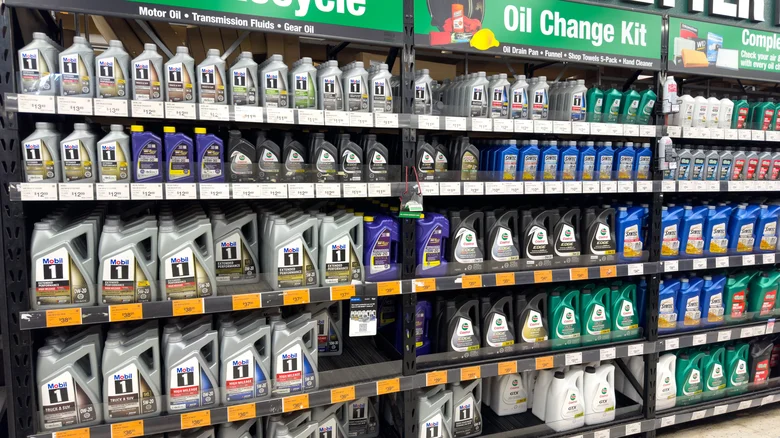
We talked about technology, on the engine side it made a big leap forward during this decade. Manufacturers had to meet increasingly strict environmental (pollution) standards; engines are equipped with catalytic converters, electronic injection, etc. The quality of oils and their standards (SAE and API) evolve too; the range of oils expands and the consumer is overwhelmed. Too many choices kill choice; it’s not easy to know what to pick. Just look at the width of the oil shelfhttps://www.mecatechnic.com/fr-FR/c-2253-huile-automobile in an automotive store to get a feel for the scale of the phenomenon. Is it technological necessity or Marketing?
Oil change frequency : you can go further; generally 7,500 km, or even more for certain high-performance engines built after 2000, for which manufacturers recommend 10,000 or even 20,000 km, or every 2 years. That’s the case with Porsche on its Boxster (type 986) and 996 models!
Can you put synthetic oil in an old engine?
Yes, it is possible to put synthetic oil into an engine that normally runs on mineral oil. As long as the grade and viscosity are respected, there’s no problem—but it’s not recommended. These oils have a stronger “detergency” power; they may strip your engine from the inside and cause seepage/leaks. Mineral oil tends to clog leaks—kind of like grease. If you rebuild the engine, eliminating wear (by machining/rectification), then there’s no issue (no need to pray to Saint Hèse).
On this subject: you should know that all engine oils are miscible, meaning they can be mixed together. Better to top up a leaking engine that needs oil with another oil of a different brand, type or grade, than to keep driving and end up with the engine seizing due to lack of lubrication. Afterwards, you’ll have time to drain everything (or not).
Petrol engine oil and diesel engine oil: is there a real difference?
At first glance, you might think it’s all marketing.
On second glance, when you look at the specs of two oils with the same grade (e.g. 10W40), you notice that the additives in these synthetic oils are not the same. A diesel engine doesn’t work like a petrol engine; compression and mechanical stresses are higher. It produces soot, it may have a DPF (diesel particulate filter), etc. So, once again, swapping is possible to get you by in an emergency, but it’s not ideal in the long term.
Not to mention that oil can pick up water: oil and water don’t mix well. This is called “mayonnaise” (visible under the filler cap) ; it’s most often because the car only does short trips. The engine doesn’t have time to heat up enough to burn off and expel the moisture it naturally draws in. People often confuse this with a “blown head gasket”.
On modern engines, you can forget it: most oil changes are done by suction; there isn’t even a drain plug under the sump anymore. Everything goes—including the plug.
If you choose to handle it yourself, you’ll find here a few tips for draining an old engine correctly.
When you put it all together, you can say that not all oils are equal. For each era and each type of engine, there’s an oil. When it comes to advice—just like everything else—every enthusiast, whether amateur or professional, will have firmly held opinions about what should or shouldn’t go into a given engine. If you’re unsure, follow what the manufacturer recommends (or recommended) in terms of quality and viscosity. One thing is certain: avoid that “is i o 4” option—it’s not a 4-stroke oil… at the risk of making a real mess of the valves.