Your vehicle
No vehicle selected
Identify yours to refine your search results
No vehicle selected
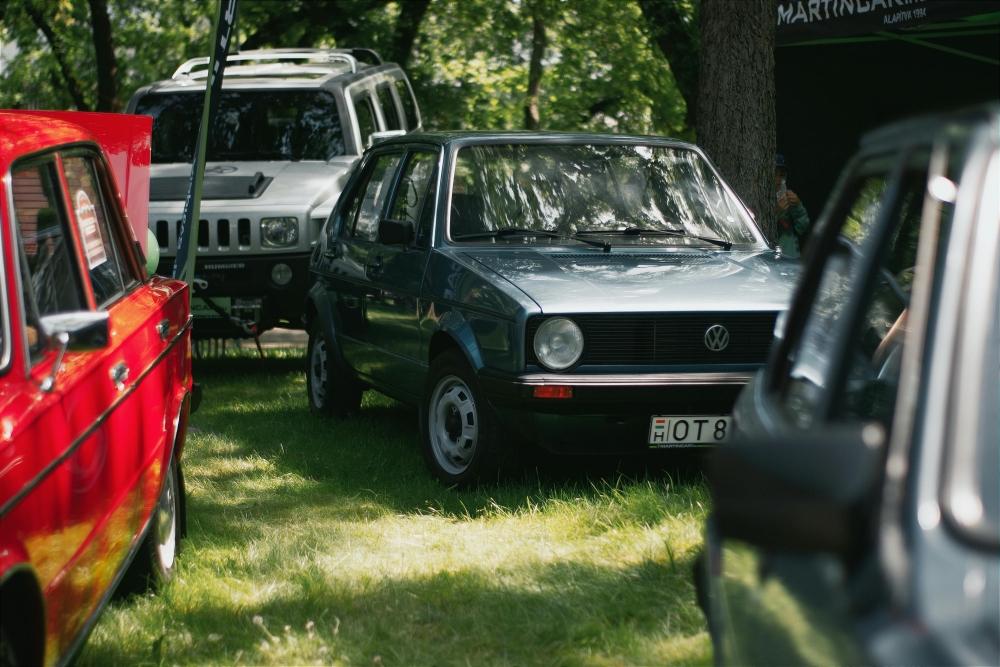
Reliable, light and nimble, the Golf 1 never needed rear disc brakes. Well-chosen drums, shoes and cylinders give safe, quiet and effective braking. A simple system that is remarkably durable, as long as you look after it.
27/01/2026
Harald
2 minutes read
Volkswagen
Volkswagen Golf 1
Every original Golf 1 is fitted with drums at the rear. The Golf 1's low weight and handling don't call for discs as on the front; rear brakes in good condition give the One enough bite to stop it effectively without locking the rear wheels.
That's why your drums, shoes and wheel cylinders deserve your attention too.
Like the pads at the front, they are the soft half of the pair and wear faster than the cast-iron drum, as they rub against its inner wall.
Golf 1s have automatic (wear) adjustment at the rear, which makes maintenance easier, unlike Beetle shoes, which need regular adjusting with the star wheels.
There are 3 versions of shoes, or brake linings for the rear of the Golf 1
Up to and including 1978, 30 mm wide
From the 1979 model year for saloons, coupés and convertibles, 30 mm
Caddys and pickups got larger drums at the rear for safer braking when loaded; their shoes are 40 mm wide.
Although sold individually, replace your rear brake drums in pairs.
While you're there, check the condition of your wheel cylinders and handbrake cables
Remember to order the rear bearings that ensure perfect contact between the drum and its stub axle. Just like the shoes … they are generally not included with the drum.
If the brake drums on your Golf 1 are in good condition, why replace them? A good clean and degrease with a can of brake cleaner should be enough to get them going again in fine style.
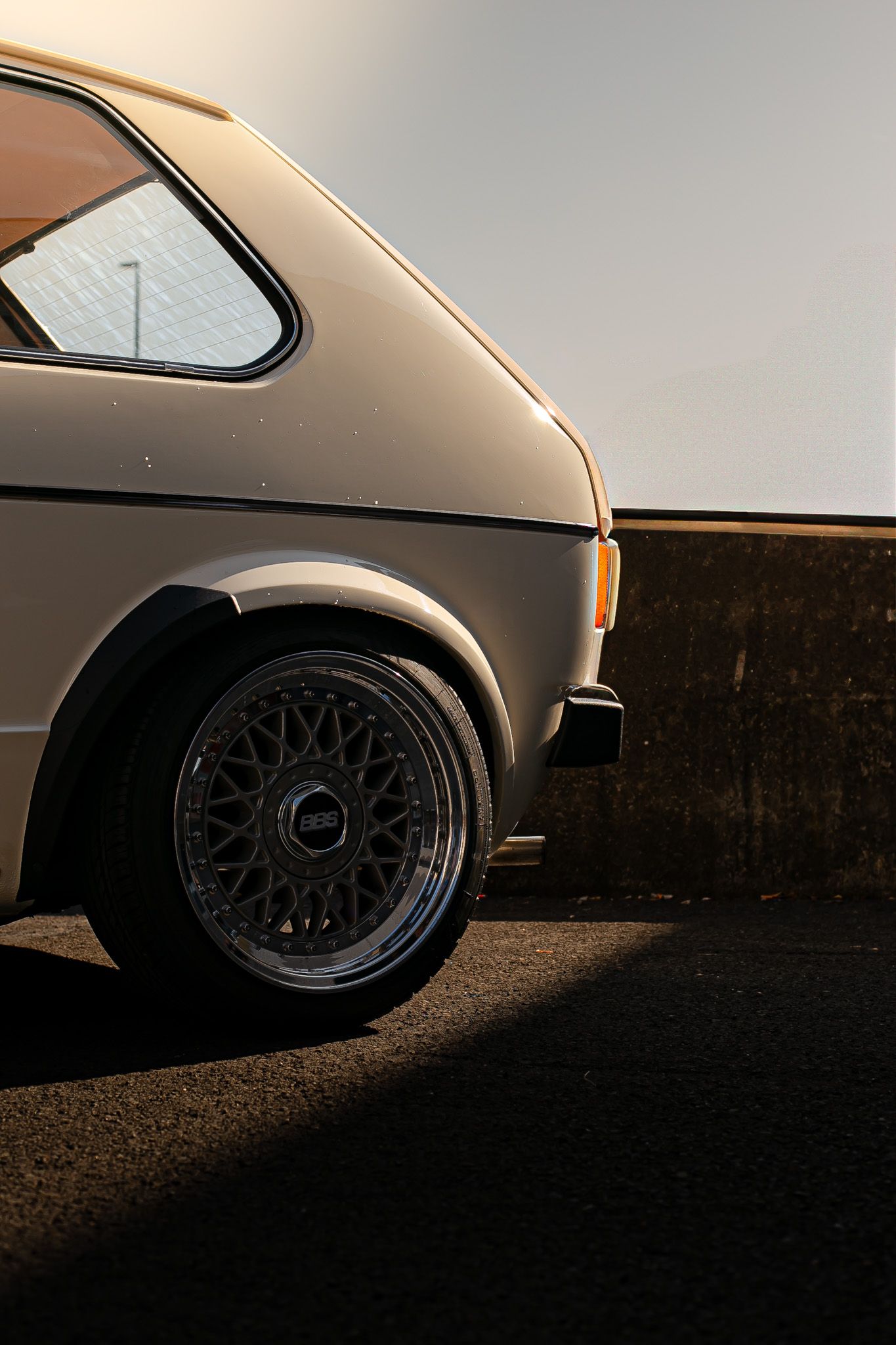
Should you replace the rear bearings at the same time as the brake drums on a Golf 1?
It is strongly recommended. A drum worn deeply enough to need replacing is very likely to have bearings that are on their last legs …
However, if after checking you can't see any wear (grooves) on the bearing races pressed into both sides of the drum, you can remove them and refit them to your new drums.
Do you need a press to remove and fit Golf 1 rear bearings?
No, unlike the front bearings, the rear ones can be fitted by hand. No hydraulic press needed.
There is a large bearing on the inner side and a small one on the outer side; each bearing is in two parts: a race that is driven into the drum and a set of tapered rollers that sits against this tapered race (mind the direction).
How do you remove and fit bearing races on Golf 1 drums?
The races can be driven out with a large drift; tap the race from the inside outwards, changing the point of impact halfway to stop it jamming at an angle.
To fit the new ones, if you don't have a press you can use a socket the diameter of the race (minus 1 mm). To get it started, you can use the old race, placed upside down.
This gives good contact on the race being driven in, while avoiding damaging it. Make sure you grease everything well during assembly.

Harald
Le partage de la Passion, simplement.
Previous article
Golf 1 brakes: hoses, pipes and ancillary parts
Next article
Golf 1 front brakes: what sets them apart
Similar articles
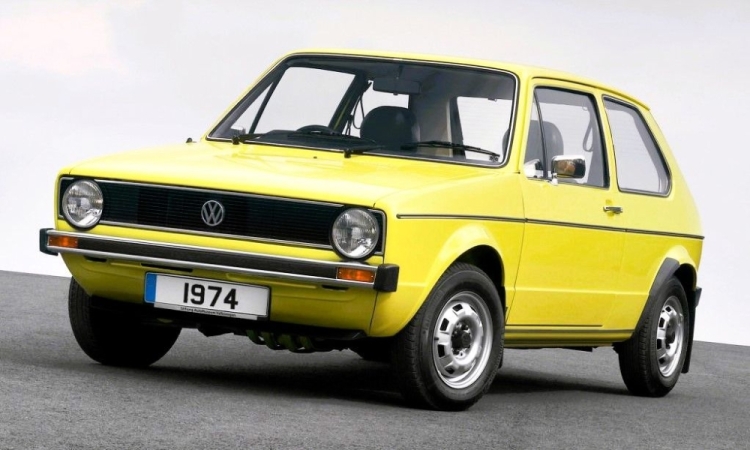
The Golf 1: the most famous compact of all
An icon of the 70s, the Golf 1 embodies Volkswagen's modern turning point: compact, stylish, reliable… and ready to make history.
Read the article
Subscribe to our MECATECHNIC newsletter