Your vehicle
No vehicle selected
Identify yours to refine your search results
No vehicle selected
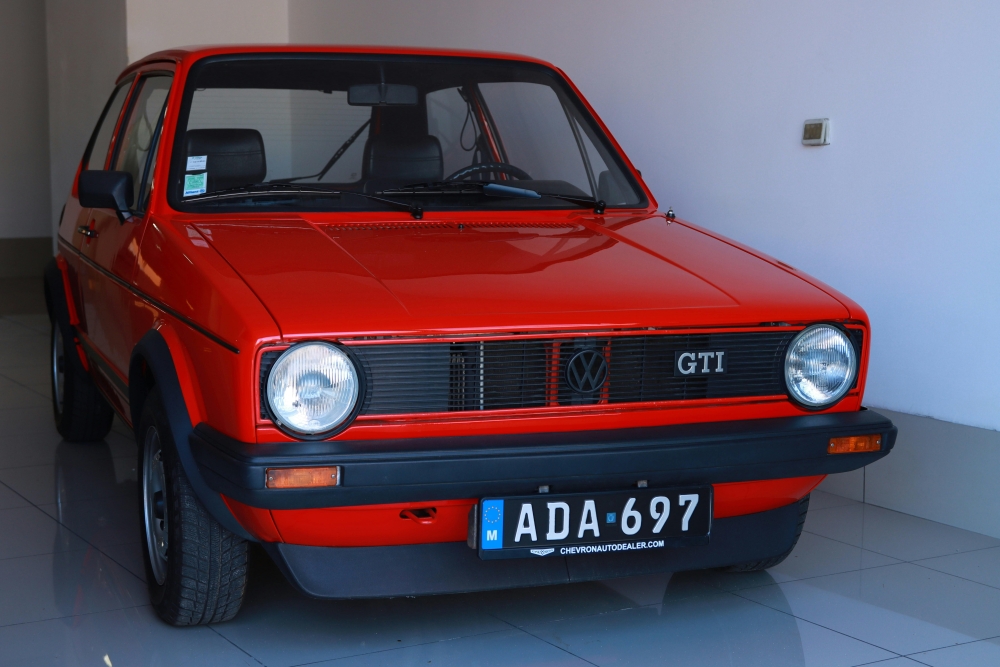
Often neglected, the complete braking system of a Golf 1 deserves all your attention. Hoses, pipes, master cylinder or pressure regulator: every part plays a key role in guaranteeing safe and effective braking, even on an old car.
27/01/2026
Harald
5 minutes read
Volkswagen
Volkswagen Golf 1
On a Golf 1 as on any car in general, good braking is not achieved just by looking at the visible wear parts. The rest of the parts that supposedly "never get changed" are just as important to check.
The Golf 1 is fitted with 4 brake hoses: 2 long ones at the front and 2 short ones at the rear. There are generally two types of flexible brake hose.
The original-equivalent brake hoses for Golf 1 are made of fabric-reinforced polymers (described as vulcanised rubber hoses); they are sold individually and are inexpensive.
Reinforced hoses originally used in aeronautics, a guarantee of reliability and high standards. Used in competition, the aviation brake hose is a Teflon (PTFE) sheath covered with a stainless steel braid that resists corrosion and fire.
Hoses of this type, like those from Goodridge, are sold in kits of 4 or 6, to equip a whole car.
Tip: change your hoses in pairs on the same axle.
A pipe, however rigid it is, can be damaged (badly placed jack, pinched line) or corrode, especially at the threaded fittings, which have often been undone many times on an old vehicle. Brake fluid is corrosive and damages metals.
There are complete rigid line kits for Golf 1, very handy during a restoration to start again from a good base. You can also buy rigid brake pipes individually or make them yourself to the dimension you want. You will then need to equip yourself with copper brake pipe, ends, male or female fittings and above all a flaring tool, or even a mini pipe bender.
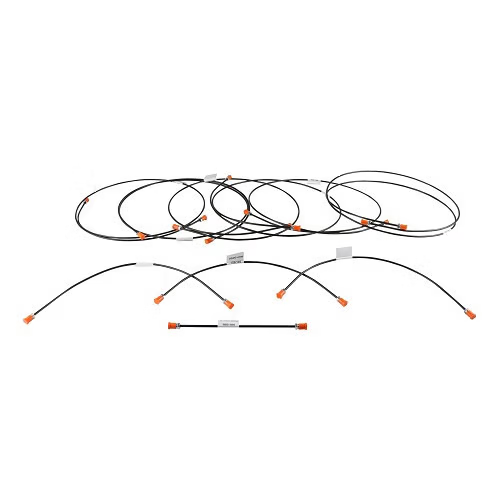
Did you know? Be careful if you are working on the underside of your Golf, do not paint or underseal your rigid brake lines. It is a fail item at the contrôle technique (the French roadworthiness test), these pipes must remain checkable by the naked eye, paint or a coating would hide them.
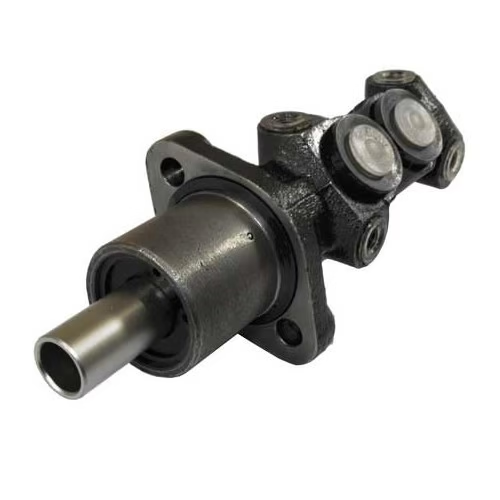
Golf 1s are all fitted with a dual-circuit master cylinder, also called a tandem master cylinder.
Most often, the Golf 1 master cylinders that you will find as aftermarket parts are delivered "bare"; the inlet fittings, the Golf 1 brake light switches and the blue low-pressure hose have to be taken from your old part or ordered separately from us.
Later Golf 1 cabriolets use a master cylinder (and a brake servo) of larger diameter to compensate for the extra weight of the Karmann kits with big bumpers.
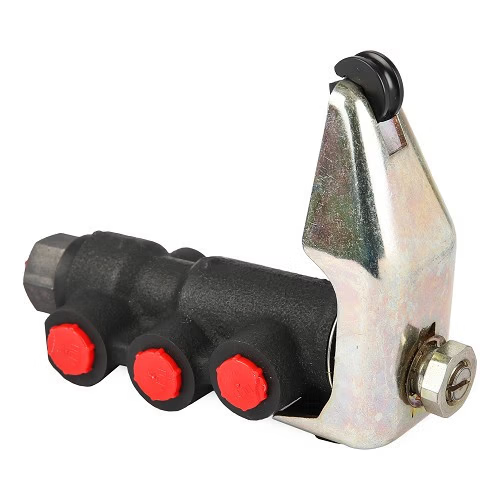
The brake pressure regulator for the Golf 1, also called a brake compensator, acts as a pressure regulator on the rear brakes. It distributes an appropriate force to the rear drums during the forward weight transfer (essential on Caddys used as commercial vehicles).
It prevents the rear wheels from locking under hard braking with weight transferred forward.
Not all Golf 1s are fitted with a brake pressure regulator; easy to check, it is located ahead of the left rear wheel.
See our exclusive MECATECHNIC remanufactured part: The rear brake pressure regulator for the Golf 1

Harald
Le partage de la Passion, simplement.
Subscribe to our MECATECHNIC newsletter