Your vehicle
No vehicle selected
Identify yours to refine your search results
No vehicle selected
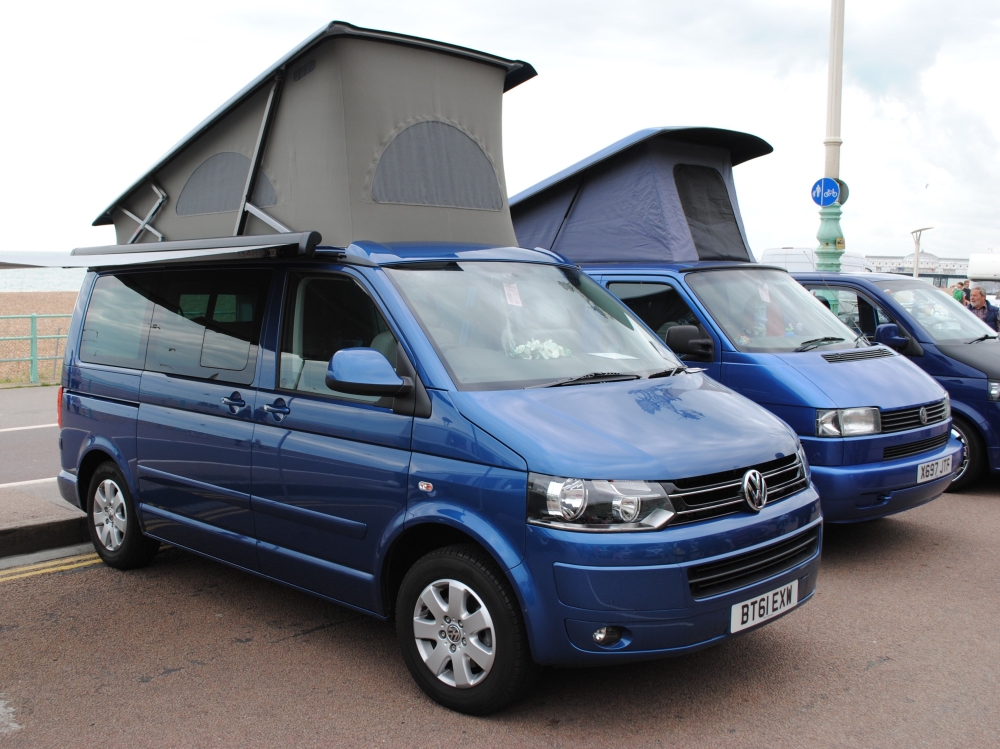
The Volkswagen Transporter T5 embodies the versatility and toughness of a van designed for every use. From Kombi to California, it offers modularity, comfort and efficiency, carrying on the legendary spirit of the Transporter family.
08/01/2026
Harald
9 minutes read
Volkswagen
Versatility, modularity, efficiency, economy and reliability: the 5 words that could sum up what a Volkswagen Transporter is. The 5th of the name set about the task to prove itself worthy of its illustrious predecessors; only reliability would be scratched during (and after) its 10 years of good and faithful service.
Whether Kombi, Multivan, Caravelle or California, the T5 quickly (re)found its audiences.
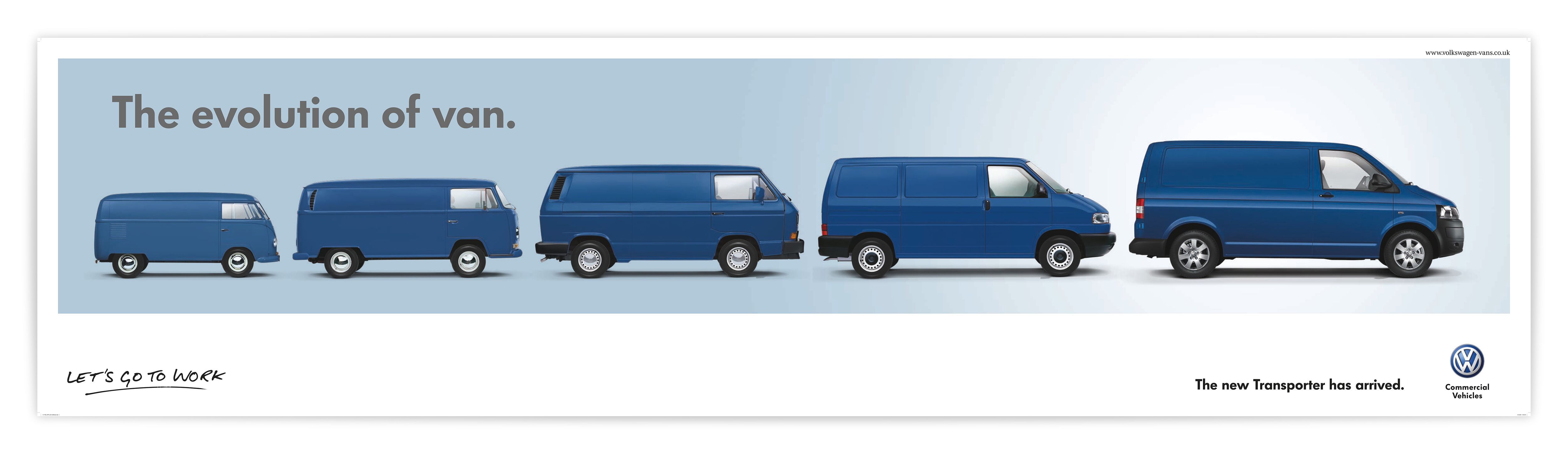
The Transporter 5, or T5, appeared in 2003 with a new skin. Its lines were modernised and its design energised. You look at it and immediately understand that you are dealing with a van that is in tune with the times, that oozes efficiency and toughness while keeping the modularity that made the success of the earlier generations.
The Transporter had had its revolution in 1990 with the arrival of the T4. VW had started again from a blank page on which new ideas had flown. From the rear-everything of the first 3 generations, it had gone to front-everything and water-everything. The T5 would continue down that royal road, with close to 2 million T5s produced.
It is the 5th member of the Transporter family and its legendary versatility could have made Leeloo Dallas say that "the T5 is Multipass".
You don't change grandma's recipe: just like its forebears, the Split-Screen Camper, the Bay Window Camper, the T3 or T25, the Transporter T4 … the modularity of the T5 would let it, once again, be put to every use. Every combination is available: it is a panel van or a minibus, a motorhome, or bodied and equipped for every possible trade. Delivery drivers love it and it remains a reference in passenger transport.
You will find it absolutely everywhere, particularly in Germany, in the service of every administration, for which it is effective advertising on wheels: from Deutsche Post (the postman) to the forestry services, via ambulances, fire brigades, gas, electricity, autobahn (motorway) and airport services… not forgetting the army and the Police.
There are 2 types of chassis: short or long, with a 40 cm difference, and 2 types of roof, standard or high-roof.
Combine the 2, long chassis and raised roof and you can move an elephant from one zoo to another.
The Transporter received a facelift (a cosmetic and technical update) in 2009, to boost its sales up to 2015. We speak of the Transporter 5 Phase 1 from 2003 to 2009 and the Transporter 5 Phase 2, from 2009 to 2015.
Still available in a 4x4 version (Haldex system), the Syncro became 4Motion, very handy for building sites or outdoor escapes. Its off-road ability is remarkable, it can climb slopes of up to 37%.
As far as the Transporter goes, you can tell 4 models apart, even if the border between the glazed ones is sometimes thin, given the options and equipment available.
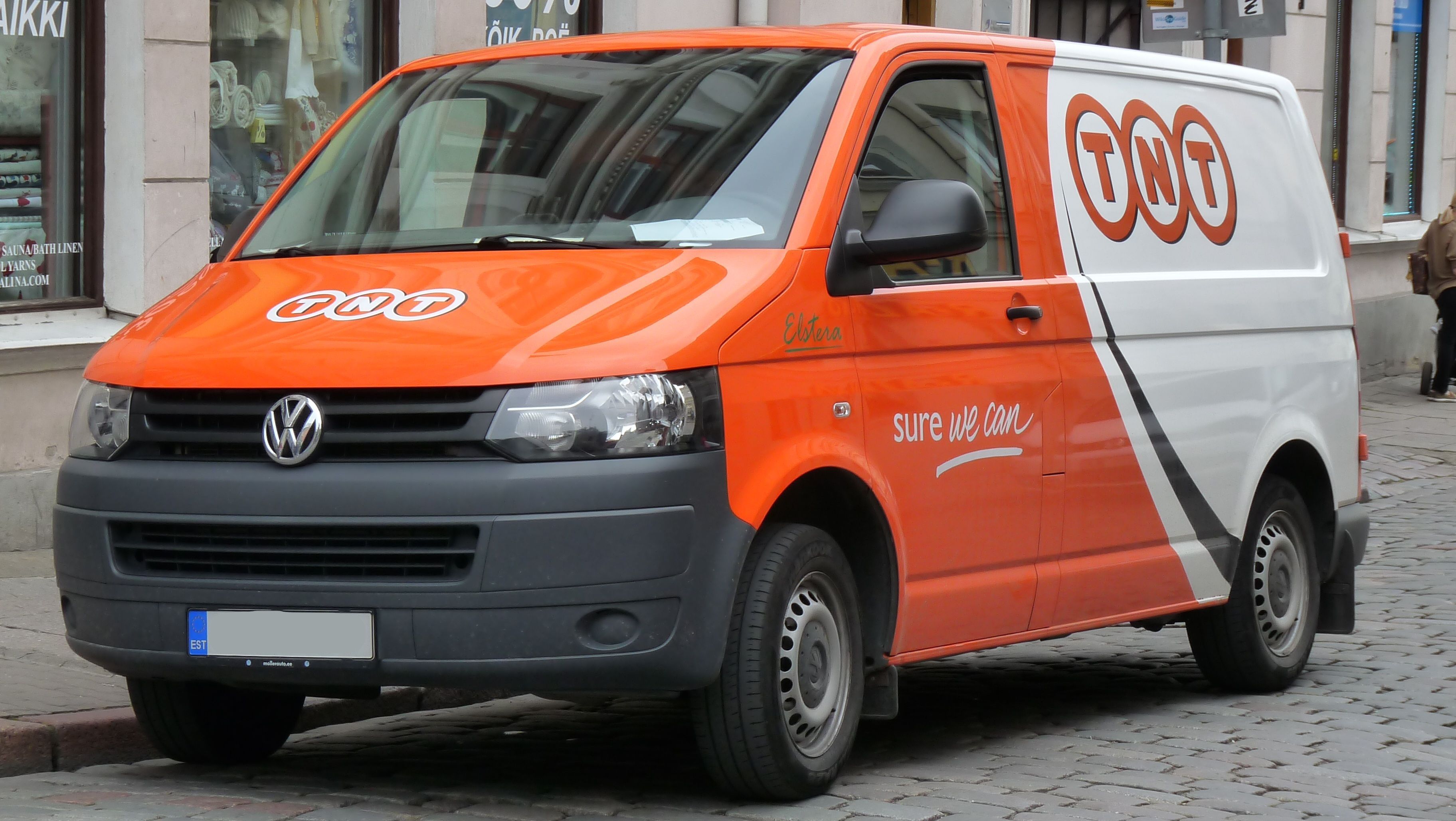
It comes as a panel van or with windows, and is recognised by its unpainted grey or black bumpers. Several versions of this commercial vehicle are available, on a short or long chassis, standard or with a high roof, which makes it a van very popular with shopkeepers and tradesmen. It is available as a single or double cab pick-up and as a bare chassis, which allows all sorts of special bodies (refrigerated units, box bodies and so on). Glazed Kombis can carry up to 9 people; they are fairly basic.
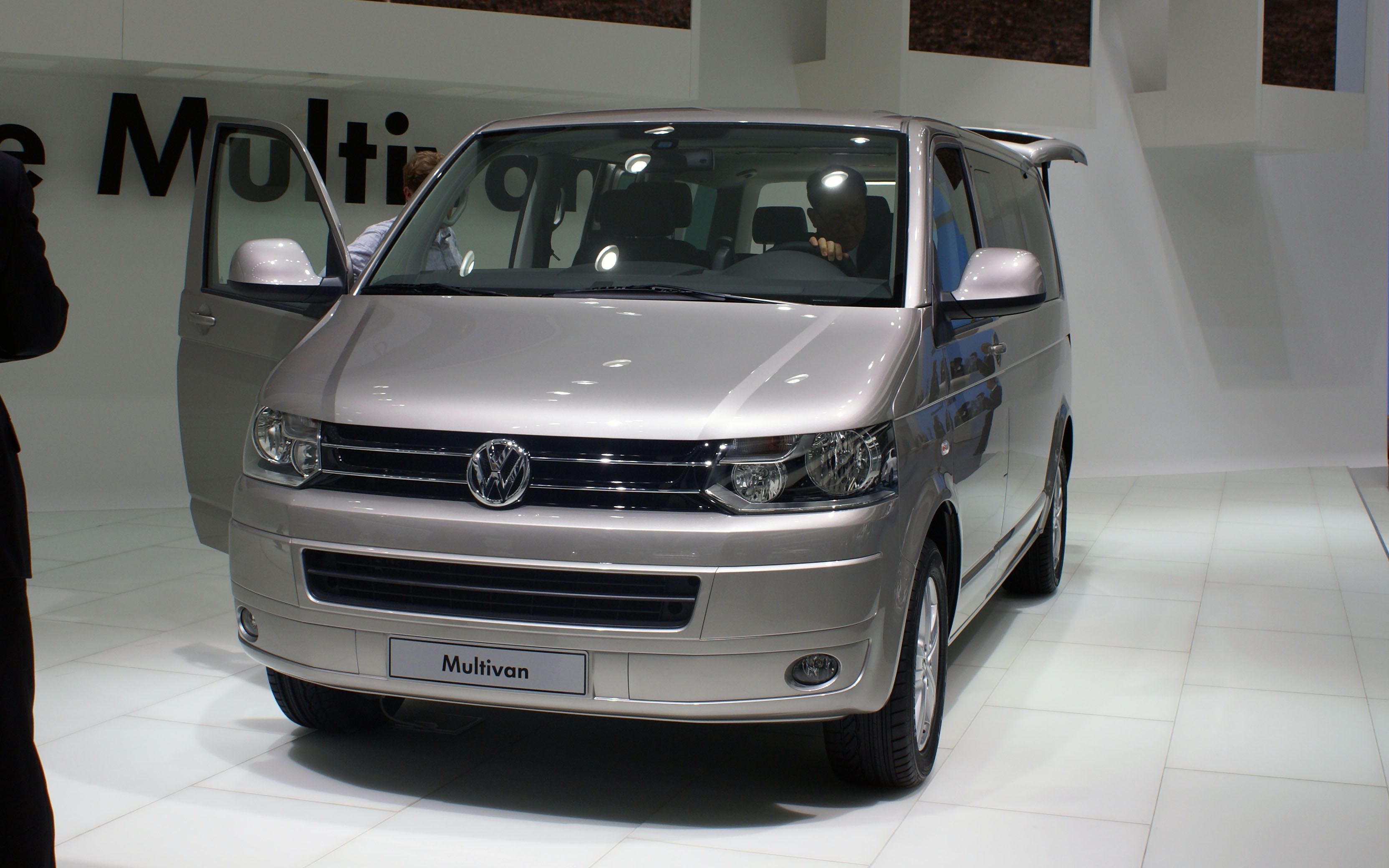
This more luxurious version is dedicated to modularity: its seats and bench seats let 7 people travel comfortably. If you choose the 5-seat version (no rear bench) you get a load volume of 4,300 litres! Once the seats are removed (easily, even though they weigh a dead donkey's weight), your steed turns into a van and lets you move a Norman wardrobe or carry a jet ski. It is the ideal Swiss army knife "car" for large families. The T5 Multivan comes as Startline (entry level), Trendline and Comfortline depending on its equipment.
In reality, it is an elegant Multivan turned into a premium shuttle; it is even more comfortable (adaptive suspension on some) and has a luxurious presentation. Originally, it is dedicated to professional passenger transport, up to 8 including the driver. Metallic paint, alloy wheels, connectivity and large sliding doors are all there to set this business class apart from a simple van. Large families are happy to acquire this luxurious limousine second-hand.
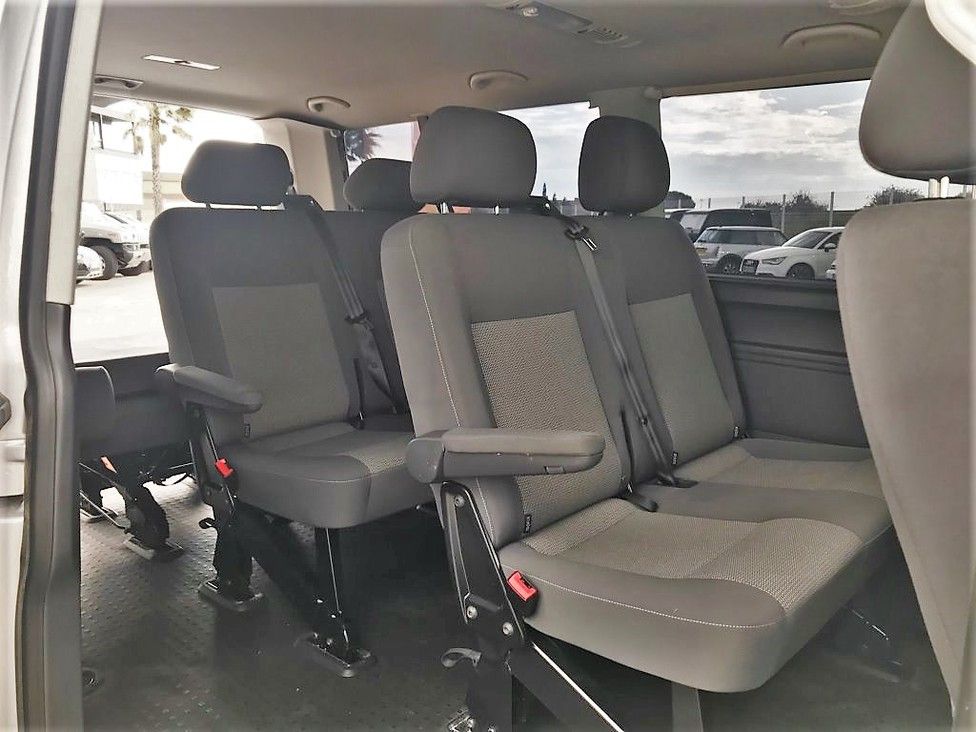
The Multivan and the Caravelle are much appreciated by taxis and chauffeur-driven companies; VIPs at the big hotels feel like princes in the luxurious Multivan Business and Caravelle Carat.
Camping in complete independence.
The historic partnership that had linked VW and Westfalia since the Split-Screen Camper ended with the last T4 in 2003. Volkswagen took over the reins of motorhome production from the T5 onwards. The California name, which dates from the T3 generation, remained, and the modernity brought by the T5 allowed new advances such as automatic air conditioning, the electrically raised roof and the multimedia pack. The California gains in space, refinement, ergonomics and practicality. 4 adults can travel and sleep in it; a couple and 2 children will however be more comfortable, the bench bed being only 120 cm wide!
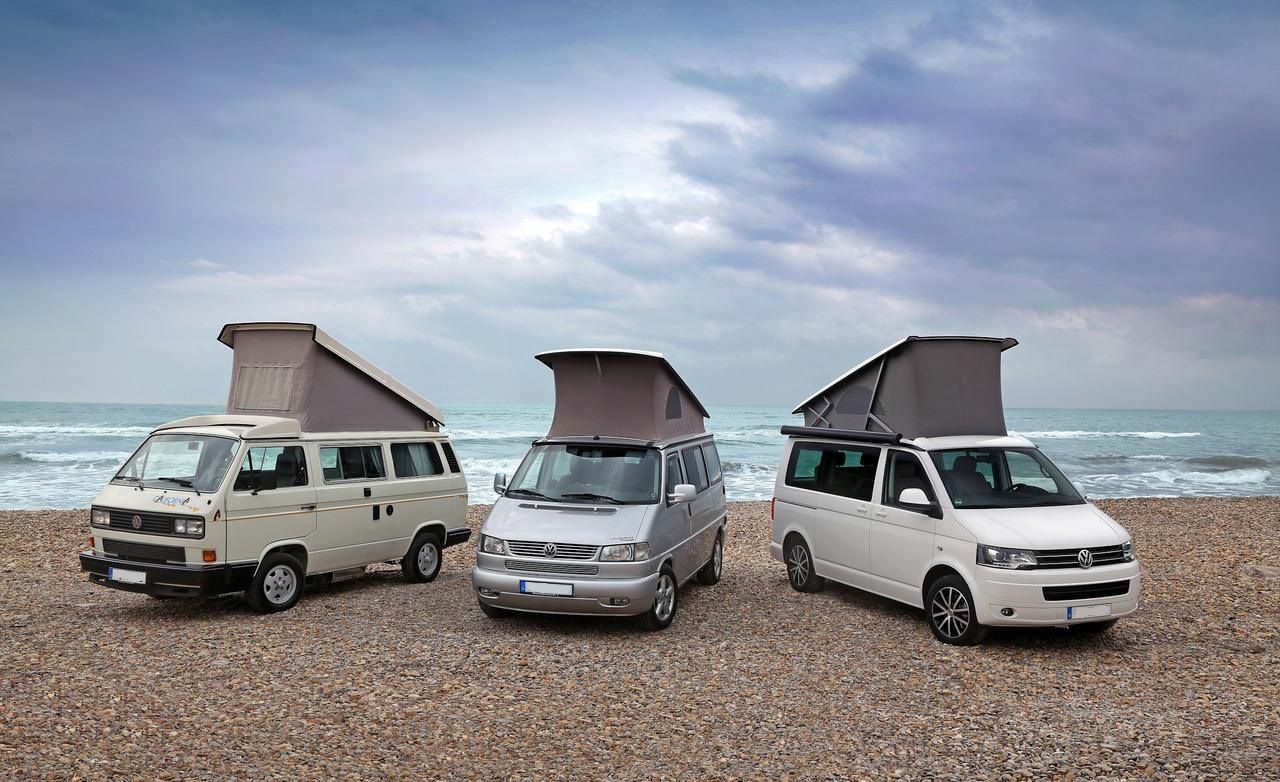
The fifth instalment of the Transporter is a little taller (+ 3 cm), a little longer (+ 18 cm) and a little more "beefy" (+ 8 cm of wheelbase) than the one before; it thus looks more muscular than the T4.
Besides its new design, the 2003 T5 and those that followed made a leap forward in equipment.
Inside, the instrument cluster and dashboard gained in quality and modernity; GPS, Bluetooth and a reversing radar bring new features to the driver, who can cover long distances in improved comfort too. From the T5 onwards, the Transporter is no longer an improved van, it is a comfortable, safe and powerful van that drives like a car.
On the safety side, the multiple airbags and the passive safety (reinforcements, deformation in a violent impact) watch over their occupants like guardian angels.
Braking and traction components improved further with ABS, an EDL electronic differential lock and a TCS traction control system that make driving easier in all conditions.
The automatic T5 has a 6-speed Tiptronic gearbox, replaced from 2009 by the dual-clutch DSG gearbox.
Two manual gearboxes, with 5 and 6 speeds, are also available, reputed to be more durable in the long run than the automatics.
Engines: VW offers a choice, essentially TDi (Turbo Direct Injection of diesel at high pressure) in 4 versions.
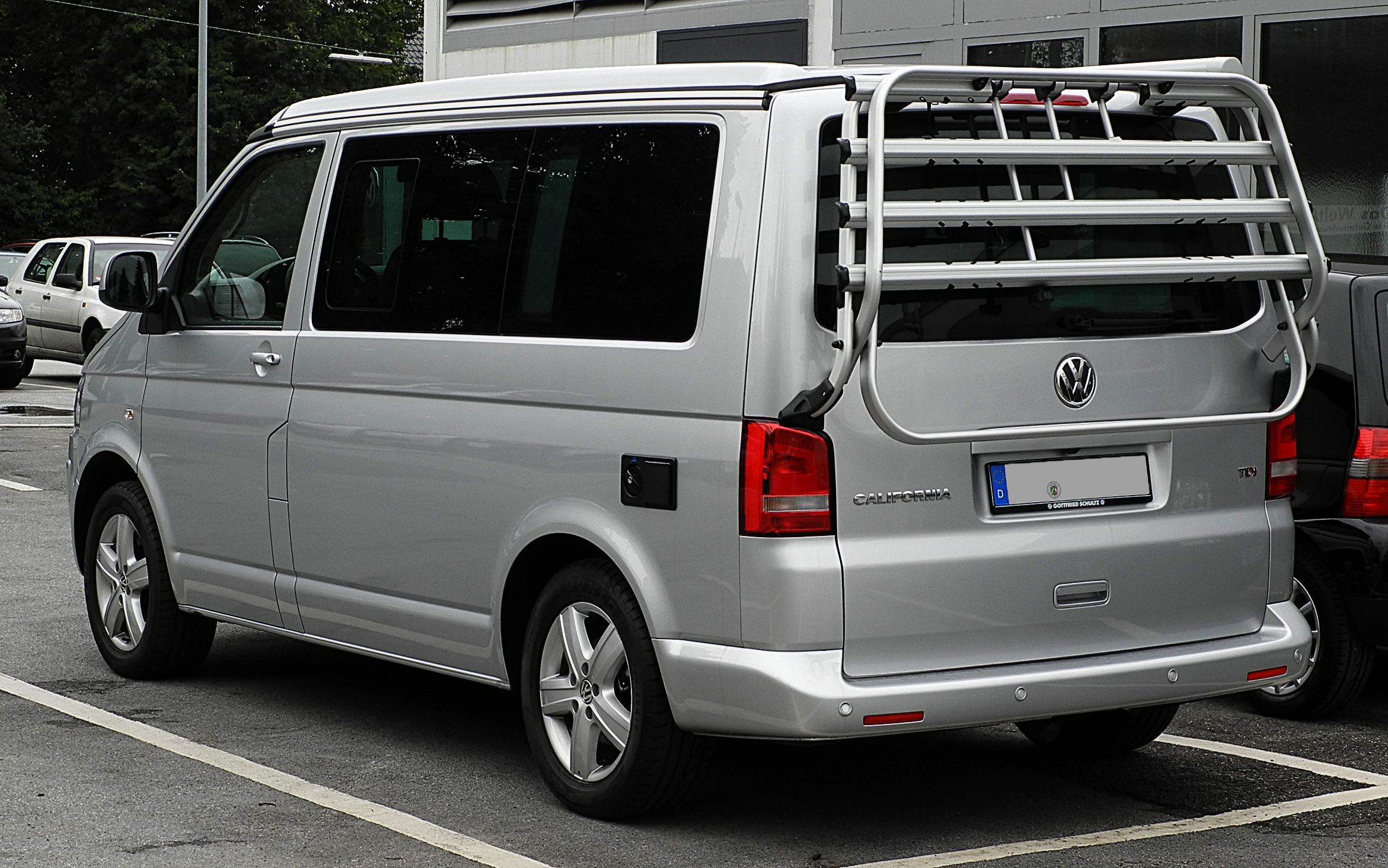
At the top of the podium for Diesel reliability: the 1.9 TDis, which stayed simple in design. The 2.5L 5-cylinders with their gear-cascade timing seem to be the most sought-after Transporters on the used market, for their reliability and power. In reality, with the hugely restrictive Euro standards (4 and 5) that appeared during the 5th-generation Transporter, all manufacturers were forced to invent emissions-control countermeasures that led them to new failures.
DPF (diesel particulate filter), EGR (exhaust gas recirculation) and other SCR (selective catalytic reduction): so many attachments and sensors on the engines that were followed by failures of all kinds, particularly on the BlueMotion Diesels that did not run enough. If these engines interest you, favour a spotless service history and do not be afraid of high mileages, which are a sign of genuine use.
The petrol engines are less affected by problems, apart perhaps from their gearbox if it is a DSG.
54 years after its launch, on 22 September 2004, the 10 millionth Transporter rolled off the Volkswagen production lines and it was a T5. It was going to drive the point home against a competition that was lagging behind and carry on prospering at the top of van sales thanks to its extraordinary adaptability.
Will the Transporter remain THE reference among commercial vehicles and vans to live in? Find out in the 6th season: the Transporter T6.

Harald
Le partage de la Passion, simplement.
Subscribe to our MECATECHNIC newsletter