Your vehicle
No vehicle selected
Identify yours to refine your search results
No vehicle selected
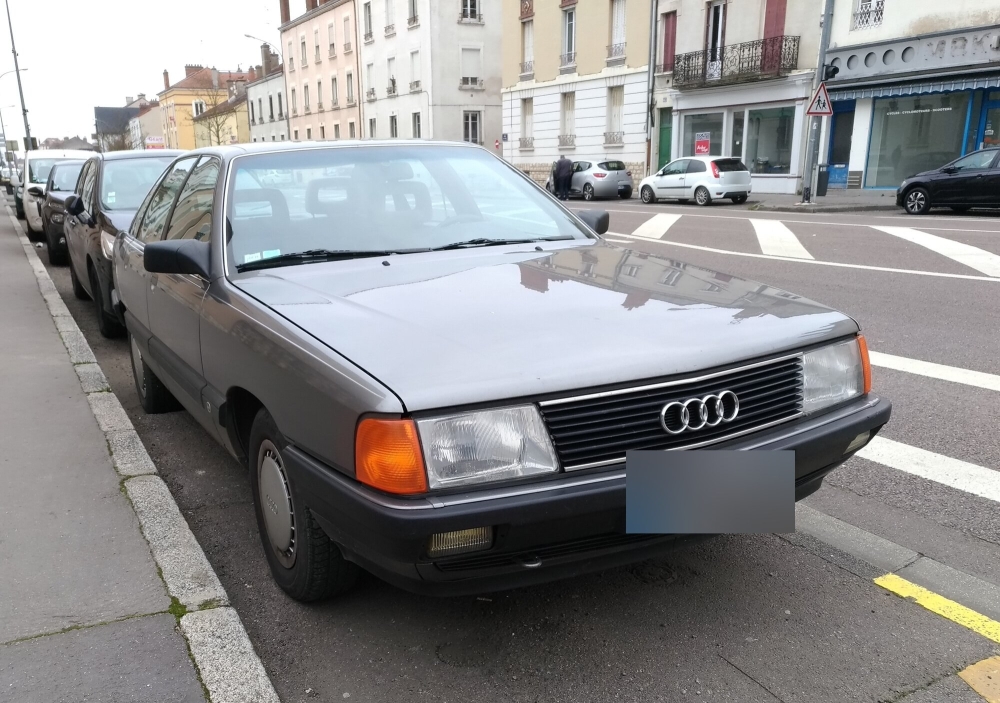
Developed in secret against Volkswagen's wishes, the Audi 100 took Audi upmarket over four generations, before becoming the A6 in 1994.
22/10/2026
Harald
6 minutes read
Few models have weighed as heavily in a brand's history. Without the Audi 100, Audi might have remained a secondary division of the Volkswagen group. With it, the Ingolstadt marque established itself over twenty-six years and four generations in the large saloon market, until it became the premium manufacturer we know. And it all starts with an act of disobedience.
In the mid-1960s, Auto Union, the Ingolstadt manufacturer, came under Volkswagen's control. The group's management ordered it to stop developing any new model.
Auto Union's technical director, Ludwig Kraus, ignored the order. He had a mid-size saloon developed in secret, larger and more prestigious than anything Ingolstadt had produced until then. The project was only presented to Volkswagen's management once the car was almost ready. It won them over, and the approval came after the fact. The commercial success that followed let Auto Union keep a place apart within the group.
The name is simple: 100, for the 100 hp of its LS version.
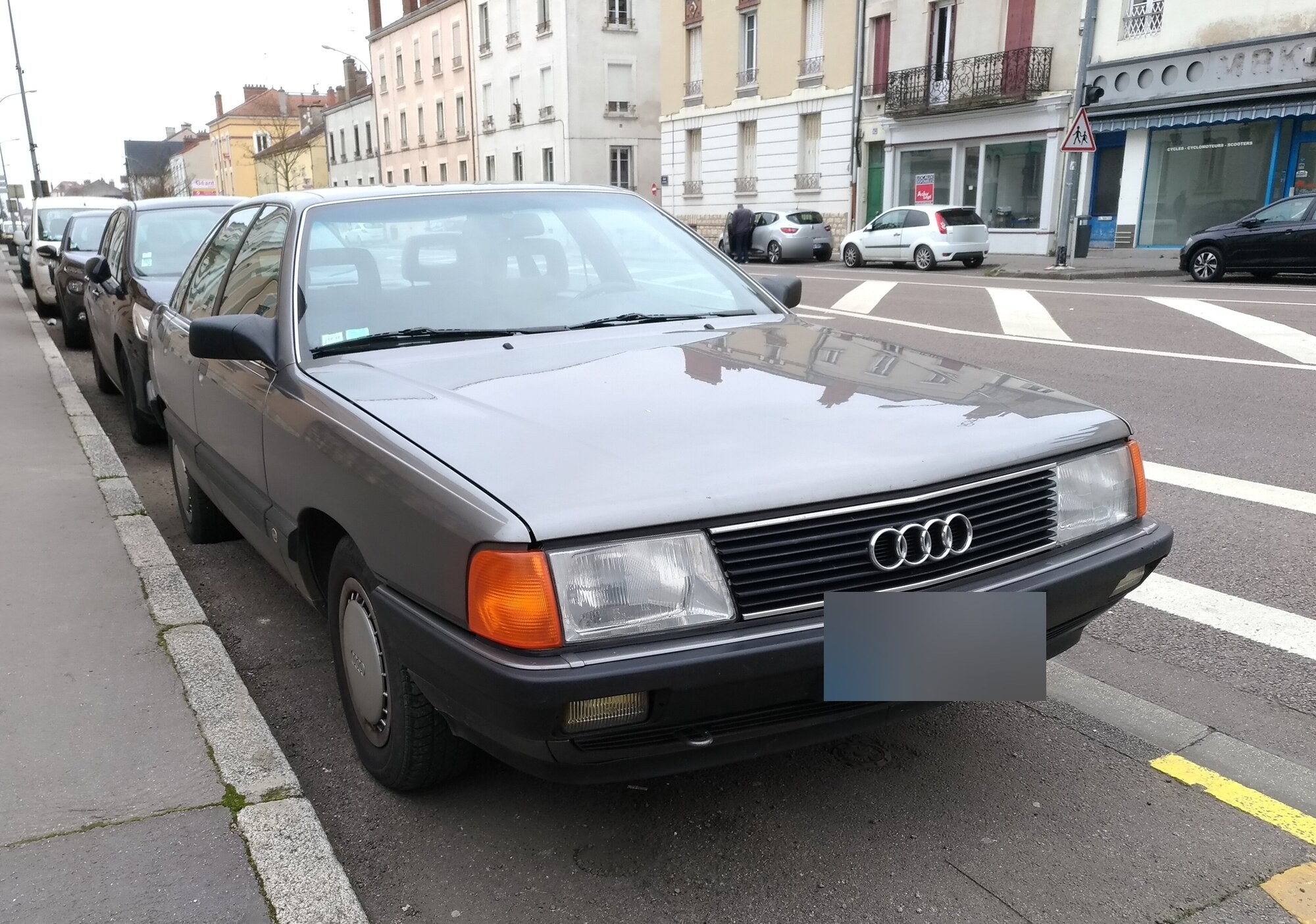
The Audi 100 was presented in late 1968 as a four-door saloon. It received a 1.8-litre four-cylinder engine, producing 100 hp in the LS version. A two-door saloon followed in October 1969.
The most desirable version today is the Coupé S, sold from 1970. A two-door, four-seater coupé, it received a 115 hp 1.9-litre engine. Only around 30,700 were built, which makes it a rare and sought-after car.
In total, the first generation exceeded 827,000 cars. For a car that nobody wanted to build, it is a resounding revenge: the Audi 100 established Audi in the upmarket family saloon segment. Demand was such that production, first launched at Ingolstadt, also spread to the Neckarsulm plant, which would later assemble the C3 and C4.
The second generation was presented in August 1976. More modern, it stood out above all for a first: the inline five-cylinder petrol engine. Audi presented it as the first petrol engine of its kind in the car industry. It displaces 2,144 cm³, is fuel-injected and produces 136 hp. The first Audi 100 5E deliveries began in March 1977.
Why five cylinders? Audi preferred it to an inline six, which was longer and heavier, while gaining smoothness over the four-cylinder: the right compromise for moving upmarket. It became a signature of the brand, offered as a Diesel from 1978 (2.0 litres, 70 hp) and then as a turbo in 1979 on the Audi 200 5T (170 hp), the prestige version derived from the 100.
For a C2 owner, this engine determines most of the parts: four or five cylinders, petrol or Diesel, injection or carburettor. Identifying the exact engine is the first thing to do before ordering anything.
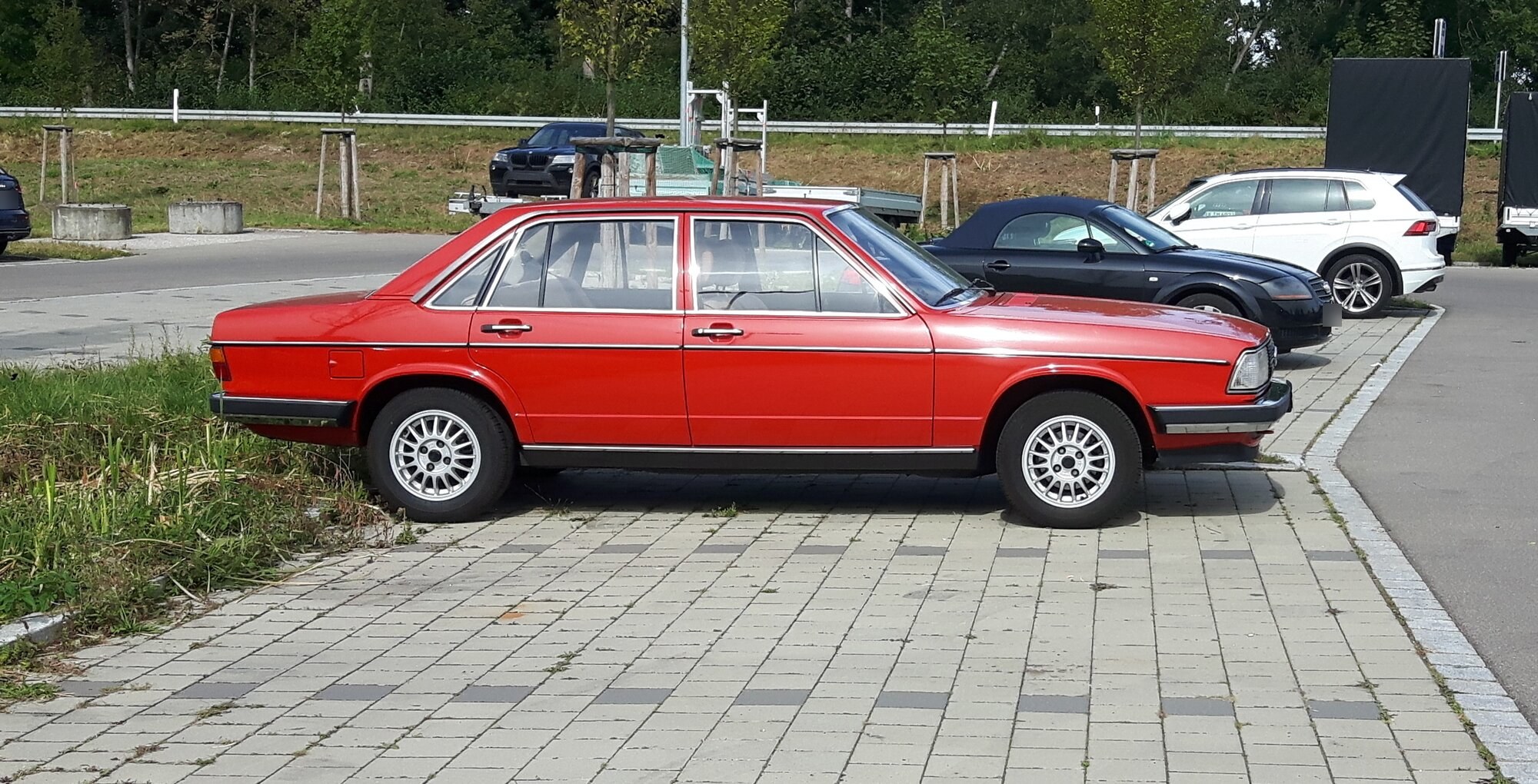
The third generation, launched in 1982, struck people with its smooth lines. Flush windows, rounded shapes: the base version achieved a drag coefficient (Cd) of 0.30, a record for a production car at the time. Less air resistance means lower fuel consumption and less noise, and Audi made it a selling point.
Recognition came quickly: the Audi 100 was voted European Car of the Year 1983. It is the only time the 100 won this title (the Audi 80 had won it in 1973).
The C3 brought other decisive advances:
The fourth generation appeared in late 1990. It introduced the 2.8-litre V6, which gave the 100 the smoothness expected in this segment. The TDI and quattro versions stayed in the catalogue.
In 1994, Audi adopted a new naming system, with an A followed by a number, already applied to the A4 and A8. The facelifted C4 was then renamed the A6. After twenty-six years and four generations, the Audi 100 name disappears, but the line continues: the current A6 is its direct descendant.
The codes C1 to C4 are internal designations that are now used to tell the generations apart. They are valuable when ordering a part: the same commercial name, "100" or "100 CS", covers very different cars depending on the generation.
Each generation has its following. The C1, especially as a Coupé S, appeals to fans of classic lines. The five-cylinder C2 remains a technical curiosity, still little known. The galvanised C3 and the V6 C4 are robust youngtimers, easy to live with every day.
Before buying, a few points to watch that are common to saloons of this age:
All the available parts can be found on the Audi 100 page, with access by engine to target your engine. The brand's other models are on the Audi page. And if your Audi 100 spends the winter in the garage, our tips on how to winterise your classic car properly will help you find it in good shape in the spring.

Harald
Le partage de la Passion, simplement.
Subscribe to our MECATECHNIC newsletter