Your vehicle
No vehicle selected
Identify yours to refine your search results
No vehicle selected
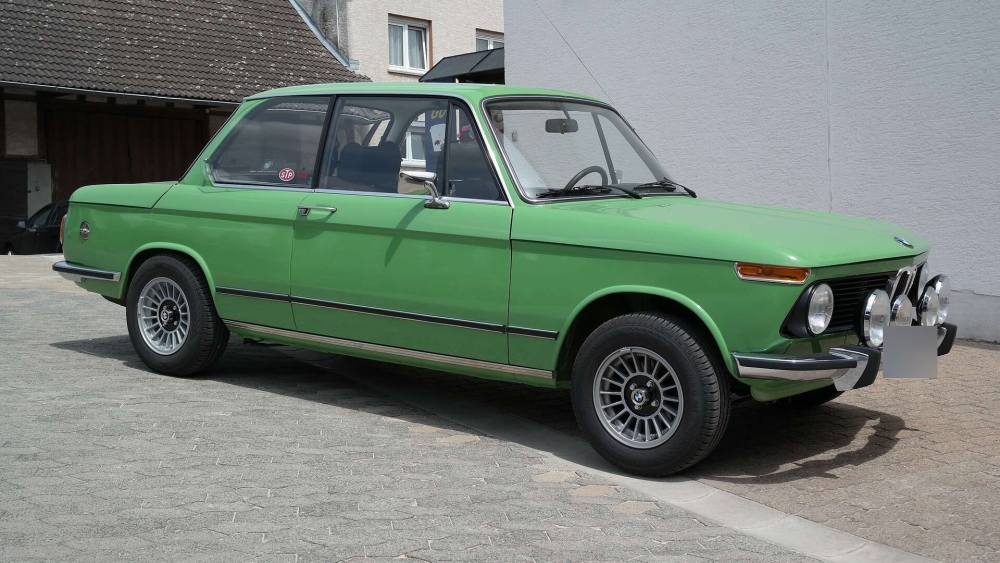
A compact two-door, a lively four-cylinder and benchmark handling: with the 02 series, BMW invented the affordable sports saloon. A look back at an eleven-year career, from the 1600-2 to the 1502.
22/10/2026
Harald
7 minutes read
Before the 3 Series, before the M3s and the "Ultimate Driving Machine", there was a small two-door saloon with a sober profile, generous glass area and a sparkling four-cylinder. The 02 series did far more than fill a catalogue, though: it set BMW in the niche that would make its fortune, that of the reasonably sized car that drives like a sports car. From the 1966 1600-2 to the last 1502 of 1977, this is the story of a family now highly sought after by collectors.
At the turn of the 1960s, BMW was emerging from a very difficult financial period. The marque recovered thanks to the Neue Klasse, a modern four-door saloon whose production began in 1962 with the 1500. Under its bonnet appeared an engine destined for a very long career: the M10 overhead-cam four-cylinder, designed by Alexander von Falkenhausen.
In the mid-1960s, BMW imagined a more compact and more affordable version of this saloon, with only two doors. The designers Georg Bertram and Manfred Rennen shortened the body, the wheelbase and the overhangs. The result was lighter, and therefore livelier, without sacrificing roominess: the 02 series was born.
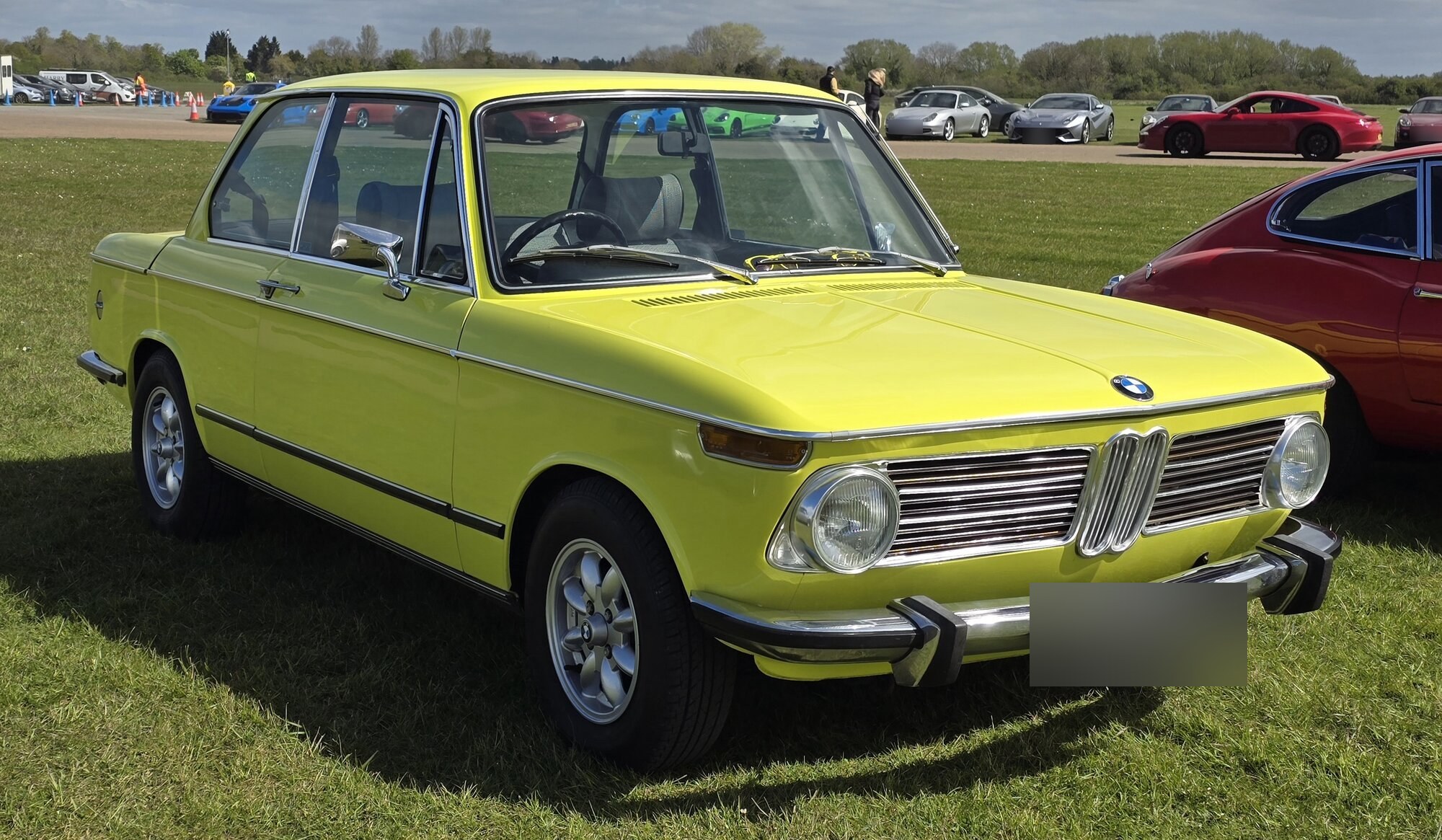
The 1600-2 was presented at the Geneva show in March 1966. The "-2" is merely a commercial suffix meaning "two doors" and set it apart from the four-door 1600 of the Neue Klasse; on the car itself, the badge simply reads "1600". Its 1.6-litre M10 produces 85 hp, a modest output on paper but enough for such a light car.
BMW was quick to spice up the recipe. In 1967 came the 1600 ti, whose engine, fed by two Solex twin-choke carburettors, climbs to 105 hp. Its career would be short: it gave way to a bigger sibling the following year.
In 1968, BMW slipped the 2-litre M10 into the 02's body. The basic single-carburettor 2002 produces 100 hp, while the twin-carburettor, higher-compression 2002 ti reaches 120 hp. The marque's American importer had been asking for a sportier version for his market: he got it. The 2002 became the emblematic model of the series, the one whose name ended up describing the whole family.
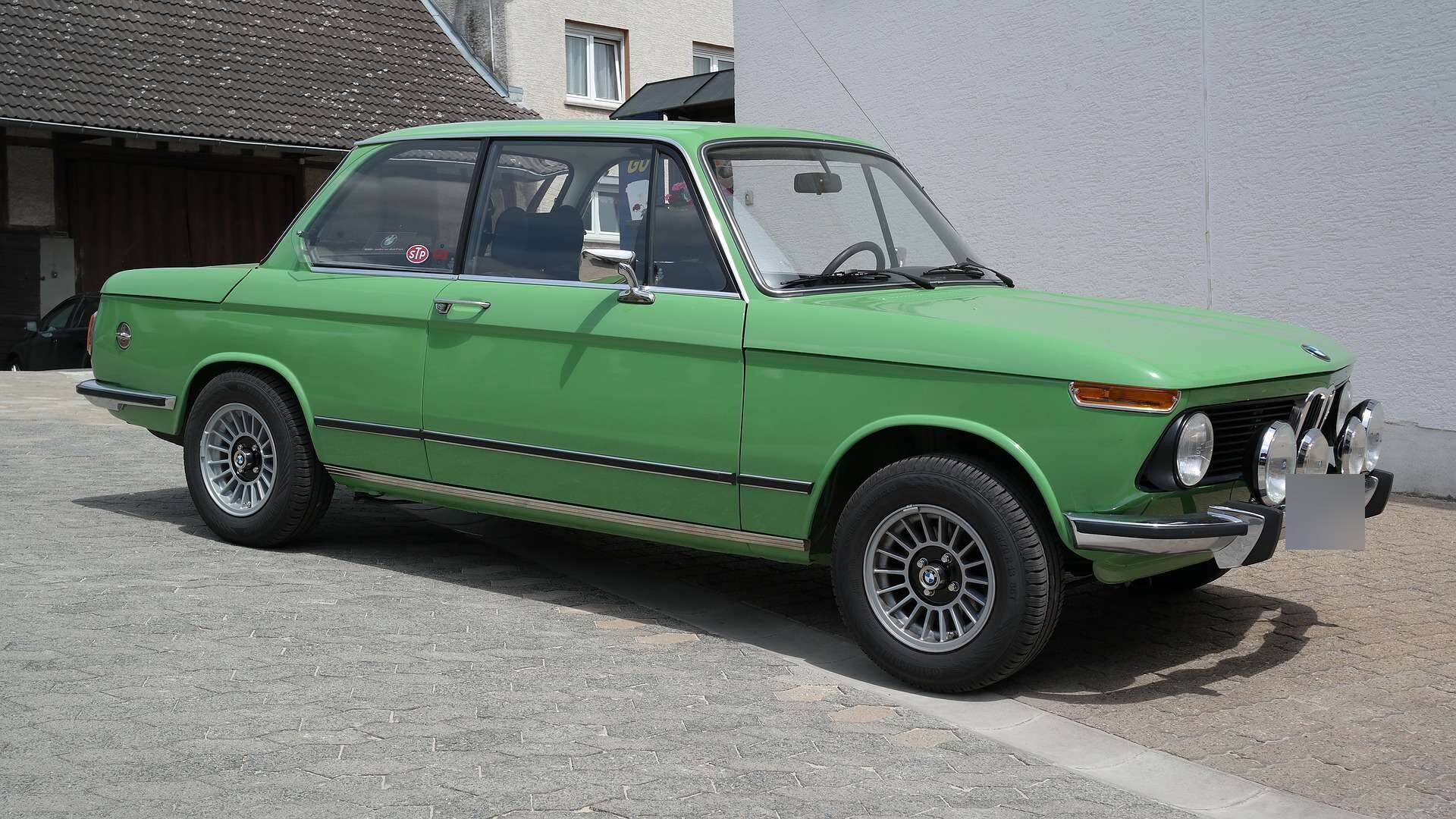
The year 1971 was a turning point. The whole range received wraparound bumpers, a new dashboard and new seats, and the 1600-2 officially became the 1602. Three novelties made the news:
Open-air fans were not forgotten. From the late 1960s, the Stuttgart coachbuilder Baur produced a four-seat cabriolet for BMW on the 1600 base. Its body lacked rigidity, and from 1971 it gave way to a cleverer model: a cabriolet on the 2002 base, with a fixed roll hoop and retained window frames, a formula close to a targa. It remained available until 1975. These cabriolets, built in small numbers, are today among the rarest 02s.
In autumn 1973, BMW unveiled the 2002 turbo at the Frankfurt show. The tii's engine received a turbocharger and reached 170 hp: it was the first German production car to be turbocharged. Front spoiler and rear wing: the car did not go unnoticed. The timing, though, was disastrous. It arrived just as the first oil shock broke, and its thirst drew sharp criticism. Production stopped as early as 1974, after 1,672 examples, which makes it the most coveted 02 today.
Light, rigid and fitted with an engine that willingly accepts being pushed, the 02 quickly made its mark in competition. You find it in touring-car racing, rallying, hill climbs and slaloms, driven by the works as well as by a host of amateurs. It also served as a springboard for several German tuners who became famous, Alpina and Schnitzer foremost. Their kits, cylinder heads and settings helped forge the sporting reputation of the little BMW, and a "period-tuned" 02 remains an inexhaustible talking point at gatherings today. If you come across one, check carefully what is original and what has been added over the years: the value and the availability of parts are worlds apart.
Since summer 1973, 02s can be recognised by their black plastic grille and square tail lights, which replaced the round lights of the early years (the Touring kept its own design). In 1975, the first-generation 3 Series, the E21, took over. But BMW kept one 02 in the catalogue: the 1502, an economy model launched in 1975. Its lower-compression 1.6-litre is content with ordinary petrol and produces 75 hp. It remained in production until 1977, which brings the series' career to eleven years.
A few simple pointers help place an 02 before ordering parts:
The table of BMW 02 series engines summarises the versions by body style: saloon, Touring, cabriolet.
A 02 is now fifty to sixty years old, and its body is its sensitive point. Like most saloons of its era, it fears corrosion: sills, floors, wheel arches, door bottoms and the base of the windscreen pillars should be inspected closely, ideally on a lift. Mechanically, the M10 is a robust engine, provided it has been maintained: timing, cooling and carburettor or injection settings deserve a check. On a tii, the Kugelfischer injection needs a specialist.
Without the 02 series, the 3 Series would probably not have had the same face. Compact, light, well suspended and powered by an engine that loves revs, it defined a recipe that BMW still follows. Whether it is a late-run 1502 or a rare 2002 tii, a well-maintained 02 remains a real driving pleasure. All the parts are gathered on the BMW 02 series (E10) page.
Harald
Le partage de la Passion, simplement.
Subscribe to our MECATECHNIC newsletter