Your vehicle
No vehicle selected
Identify yours to refine your search results
No vehicle selected
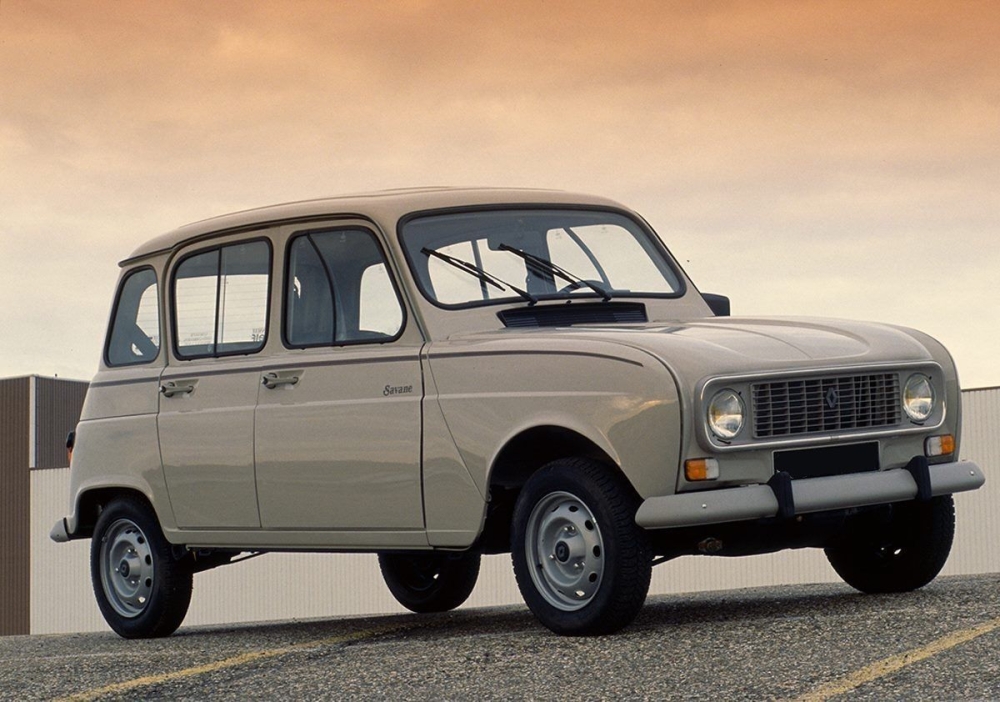
The most iconic limited editions of the Renault 4, from the Parisienne to the Clan Bye-Bye
17/02/2026
Harald
8 minutes read
Renault
Renault 4L
Like the 2cv, the 4L was produced in many small series, limited in quantity or in the number of years built, to the great delight of today's collectors. Most of the time, they stand out through their equipment, their exterior stickers and their interior upholstery, not with wide wheels, spoilers or wings. These Quatrelles are simply fun and trendy and let the manufacturer boost sales of a model losing momentum or lacking an image.
For the 4L, it therefore makes more sense to talk about limited editions … that are special!
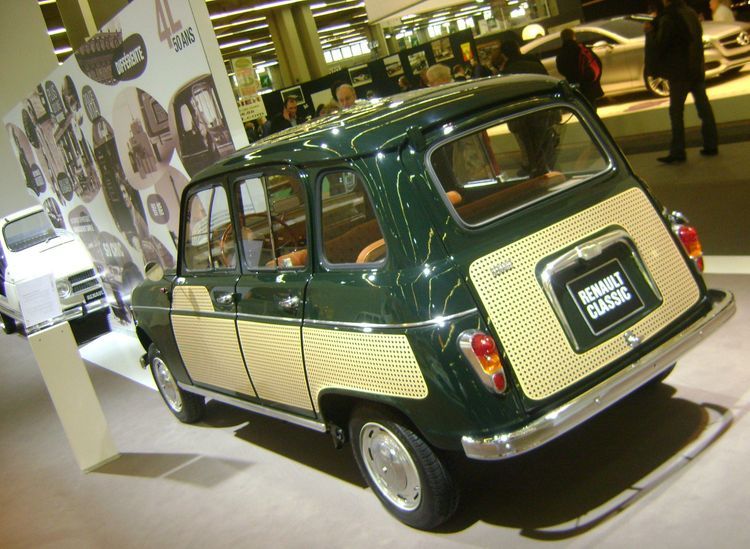
Built from 1964 to 1968, it was black at the start with elegant gold cane-effect trim or with a tartan-style facing offered in 3 colours, yellow, green or red. Later, in addition to its original black, it was also sold in navy blue, in green and then in burgundy red.
The Parisienne is a version made famous by the lovely Sheila and her kilt matching her black 4L, draped in red.
It aimed to charm urban women and ended up helping to push the whole R4 range towards an increasingly important clientele, women. In 1963, Renault teamed up with women's magazine Elle and launched the operation "Elle prend le volant" ("Elle takes the wheel"). More than 4,000 readers of the magazine tried out R4 Super "La Parisienne" cars for 2 days. A hell of a PR coup and a success that led the Régie to include the Parisienne in the 4L range.
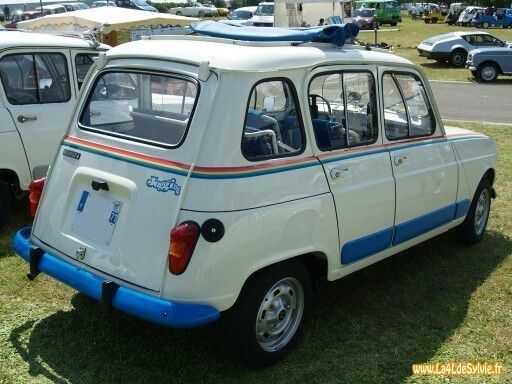
A GTL in a tracksuit … launched in 1981 and produced in 5,000 units. White dominates and is dressed with blue on the bumpers, the sunroof canvas and the plastic sill strips on the door bottoms. A rainbow-style stripe brightens up its waistline.
The interior is electric blue, crossed by a rainbow; the tubular-type seats are very spartan. The magazine ad shows it drawn in the form of a sneaker-car.
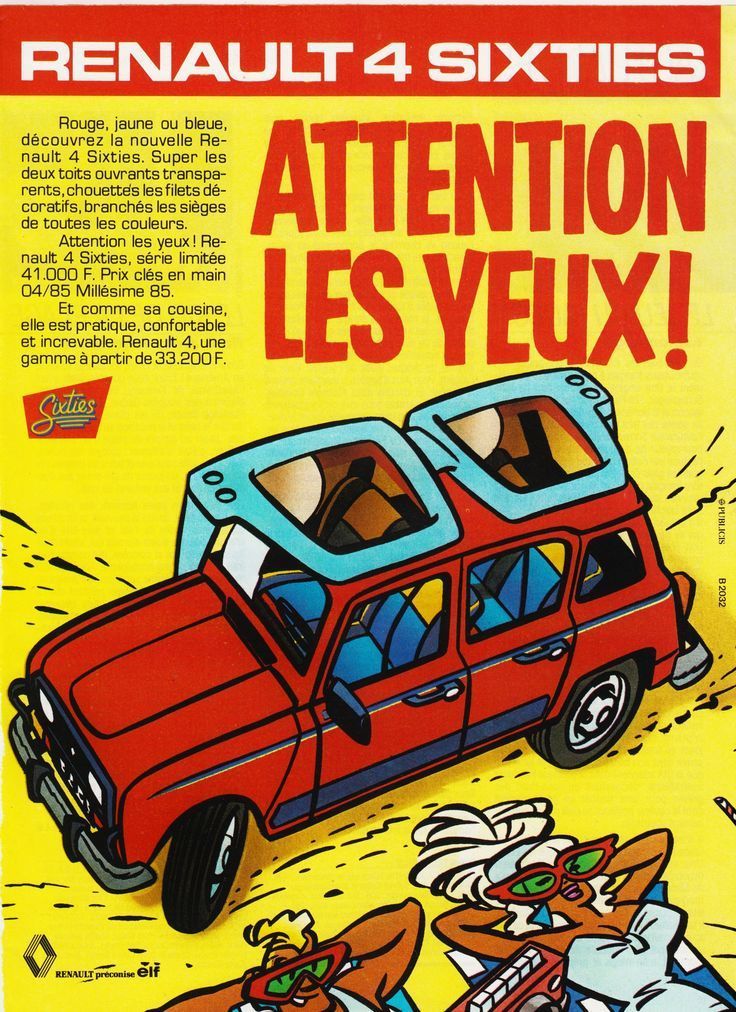
Based on the GTL in 1985, and therefore well equipped, in red, blue or a loud yellow with black bumpers and protective trim. Its 2 glass sunroofs make it recognisable at first glance.
It aims to be easy to live with, comfortable in its own skin with that fun side.
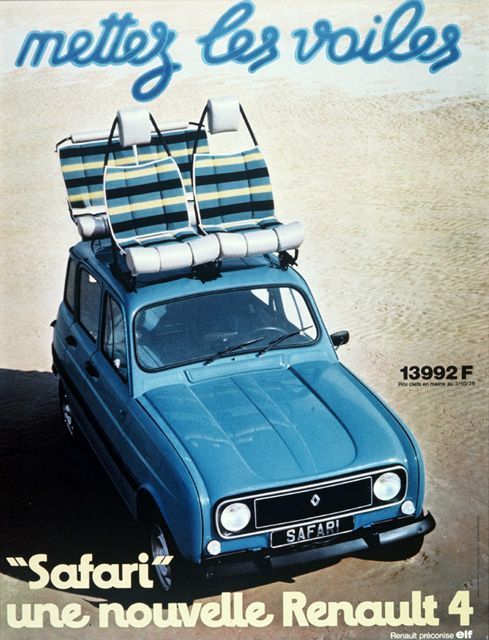
In the catalogue from 1975 to 1978 and in several colours: green, turquoise blue, suede, dark blue, orange and metal grey. Its interior, its seats (bucket seats at the front) in a colour-striped fabric, evokes the beach.
Outside, handles, mirrors, bumpers and protective side strips are black.
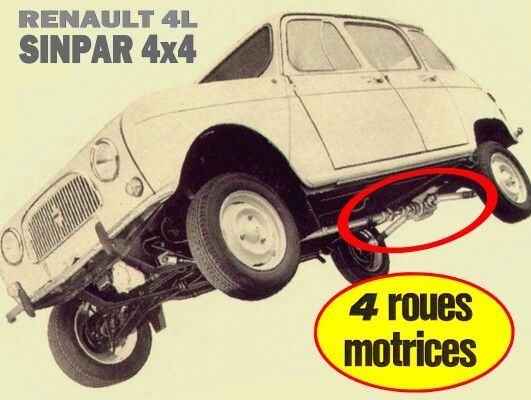
This is the 4x4 version of the Quatrelle. The saloon and the van were modified at first in Colombes (92) by SINPAR, specialists in all-wheel-drive transmissions and long-standing partners of the Régie (Goélette for the army). The 4L therefore got its 4x4 treatment from 1963 to 1993; a conversion that makes it very capable off-road, so much so that it is said to "climb trees". It is not strictly speaking a "limited edition" but its low distribution de facto places the 4L Sinpar among the special editions of the 4L.
The cost of the conversion made the bill climb (up the trees?) since you had to add 2 thirds of the price of the 4L … to the price of the 4L! That "stings" and, apart from a few forestry operators, surveyors or vets, most of the cars were destined for the Post Office, EDF-GDF, the water and forestry authorities, the army, firefighters and gendarmes.
The 4L Sinpars were sold and serviced by the Renault network.
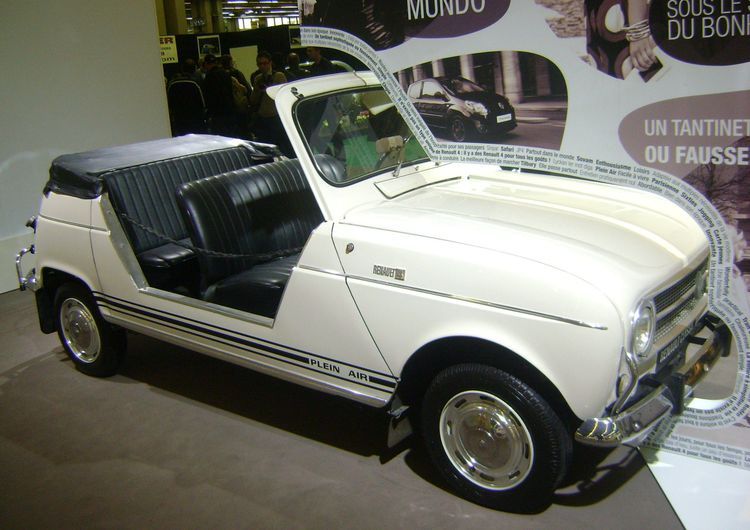
A cabriolet-torpedo version (in standard or 4x4 form) that, with its cut-away body and its lack of doors, comes close to what the Méhari was offering at the same time.
Much more expensive than the Citroën, it was (itself) produced for only two years.
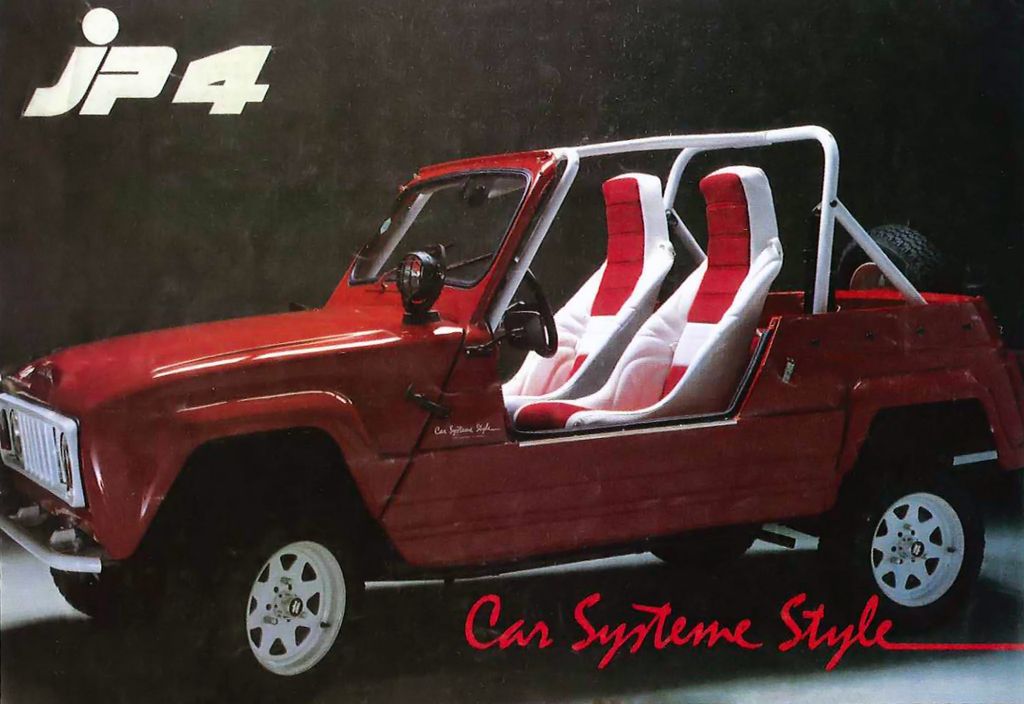
A more modern version of the Plein Air, offered by the French firm Car Système in 1981. The JP4 has a shortened chassis raised by 3 cm, a 6-point roll bar, 2 bucket seats and a rugged look with white Delta Mics wheels and so on. At first, the Breton company approved a conversion of the chassis and bodywork of a used 4L supplied by the customer.
Later, a European approval on new chassis and assemblies allowed the JP4 to be sold directly in the Renault network, for 3 years.
It was shown there in 3 trim levels:
Fewer than 2,000 JP4s are thought to have been made; they are therefore much sought after.
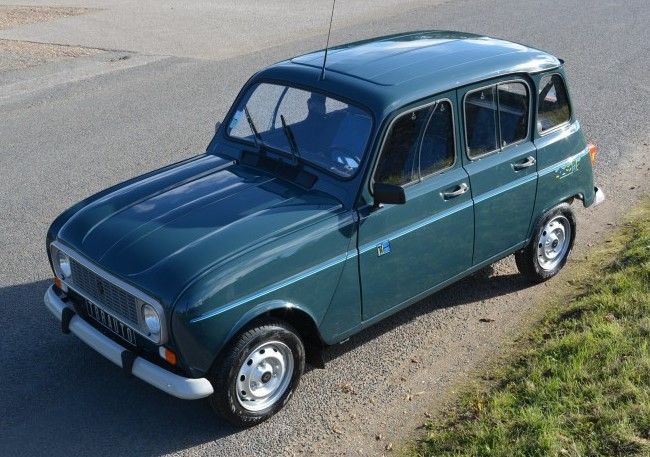
It came out at a time when the 4L was in decline, in 1991. The recipes that work were reused: take a 4L TL and apply a very eye-catching colour; it came out in yellow, red, white and green. It has no protective strips around the body, no sunroof, its bumpers and fittings stay grey and it is based on the small engine (956 cc).
Only its blue seats and its "yoof" pinstripe around the waistline set it apart from a standard one. At that time, it was common for manufacturers to produce a special edition to use up a batch of engines, seats and so on at the end of a car's life.
It is a safe bet that this was the case for this version, given its poor level of equipment.
Limited editions or not?
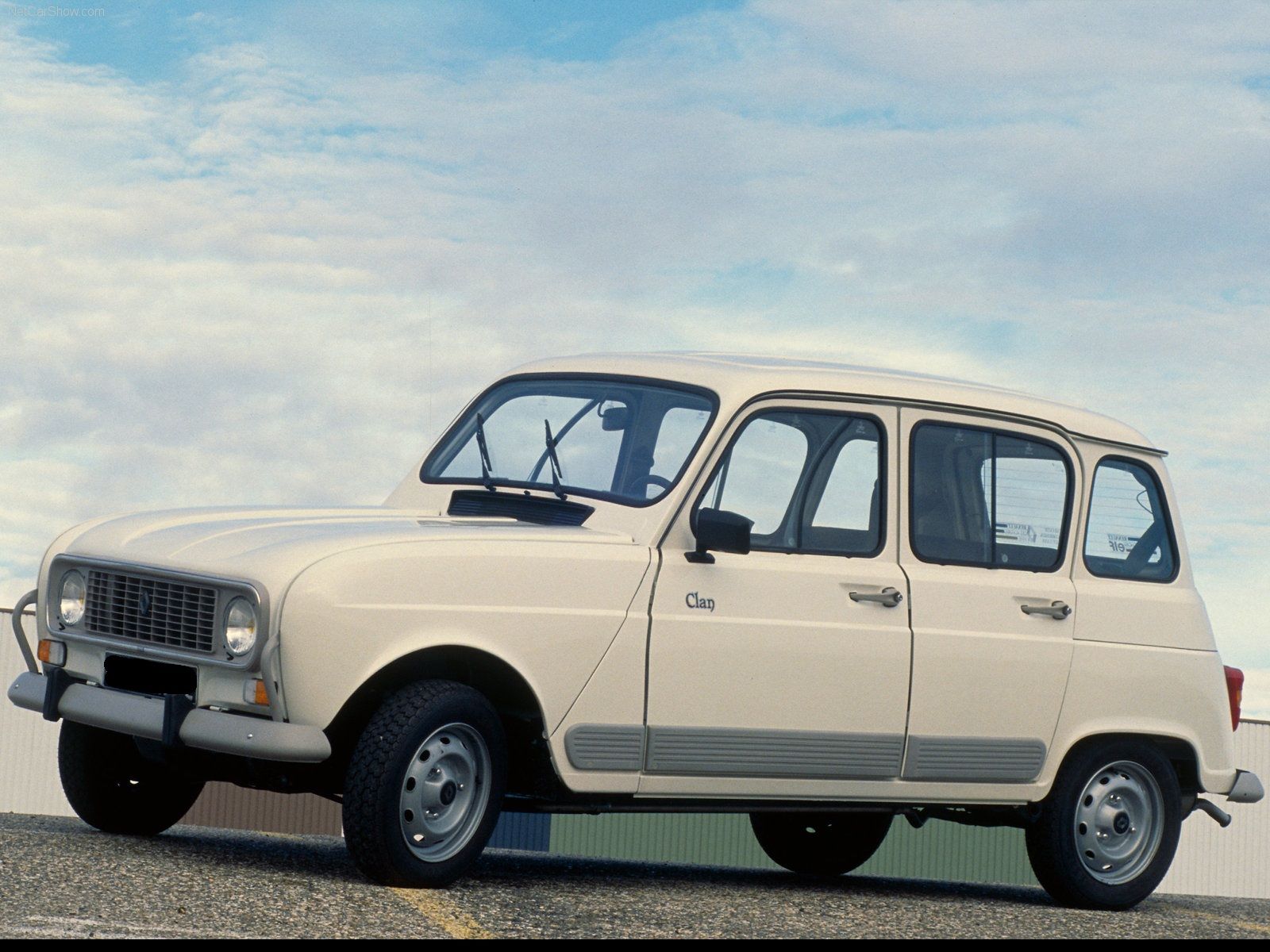
With the 1987 model year, when 4L sales were doing badly, competed against internally by the R5 and with the F4 van about to leave the stage, Renault made a new change to the naming of its models. The base 4L TL became "Savane" and the top-of-the-range GTL became "Clan".
Only their names, applied as stickers on the tailgate and the doors, might suggest a limited edition, but there is nothing special about them.
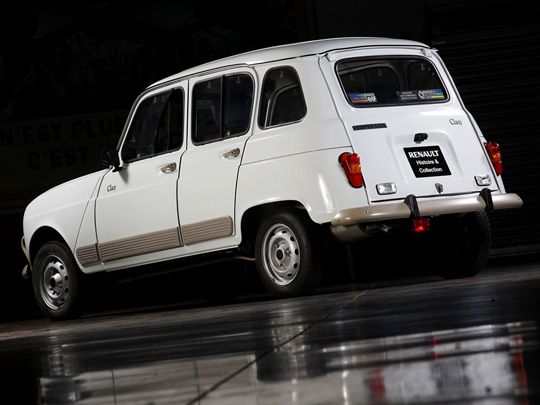
It marked the 4L's farewell in 1993. It is a Clan like the previous year's, just numbered. A thousand units were produced in Slovenia to be sold in France; built in countdown mode: from number 1,000, then 999 and so on down to number 1, which was kept in the Renault collection.
Several other limited editions of the 4L were made by or for export destinations; with the same recipe, all in all quite simple: what works for the French public also hits the mark abroad.
The Funny and the Salü in Germany, the Suissaquatre in Switzerland and the Shopping in Belgium are all "4 the collectors" … released in small numbers, they have become very rare.
In 2025 Renault reinterprets the past to name its future. The rugged concept of the E-Quatrelle, fitted with 2 electric motors, was presented under the name "Renault Savane Concept 4x4". A model that departs a little from Grandpa's 4L … doesn't it?
Photo source: la4ldesylvie.fr
Harald
Le partage de la Passion, simplement.
Subscribe to our MECATECHNIC newsletter