Your vehicle
No vehicle selected
Identify yours to refine your search results
No vehicle selected
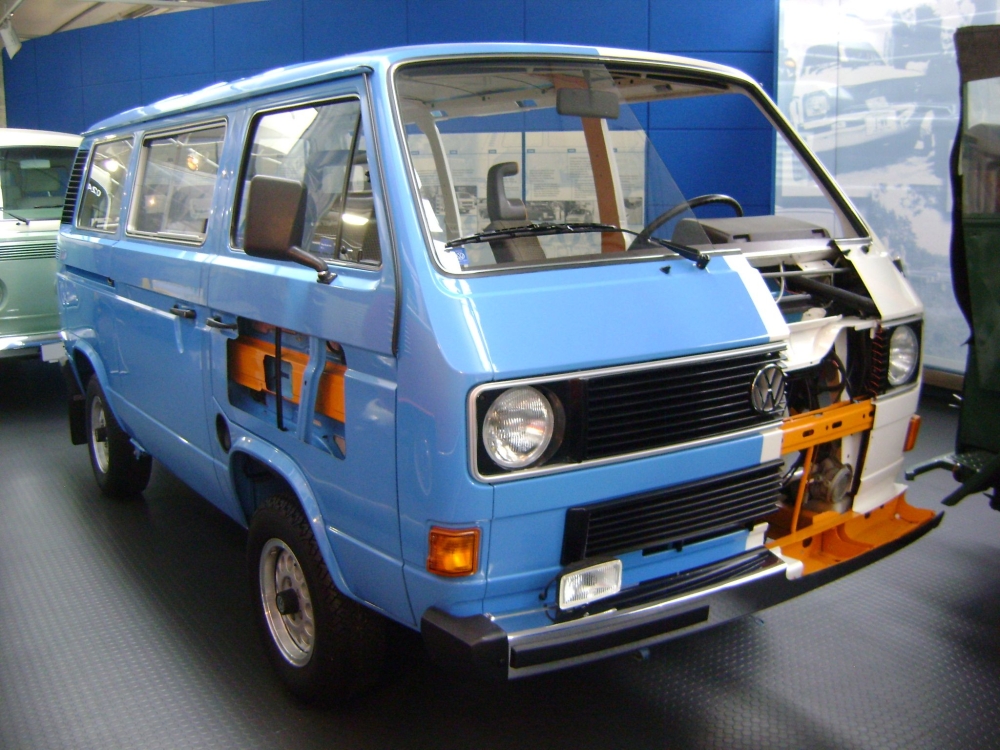
Boxy, tough and ultra-versatile, the Transporter T3 succeeds the legendary Camper with a more modern style. Panel van, minibus, motorhome or 4x4 adventurer, it embodies van life before its time, from long-distance trips to everyday jobs on site.
24/02/2026
Harald
7 minutes read
Volkswagen
In 1979, the Camper became the Transporter and the sausage became a shoebox.
Moving away from rounded bodywork seemed to be in the air at the end of the 70s. With its new Transporter, VW continued what had been started with the Golf 1, the Polo, the Passat and, in its commercial range, with the big (fat) brother, the LT.
The T3's straight lines and its front end, with its round headlights and large black grille, recall those of the Golf 1.
The VW minibus was modernised but kept its rear-mounted engine and stayed in the line of its predecessors: a versatile, practical, solid and reliable vehicle.
The choice of engines with an end-mounted cooling fan, derived from the Bay Window Camper, made it possible to lower the loading floor and carry 1 tonne or 5.7 m3 of goods (7.6 m3 in the high-roof version).
Compared with earlier versions, it became easy to drive, you could work with it, carpool up to 9 and sleep 4 in it. Its design gave it better living space, notably thanks to a bigger tailgate and side door.
The use of plastics to trim the dashboard makes you believe you are in a car and not a commercial vehicle, and on top of that... it drives as easily as a car!
Designed for work, building sites, deliveries and carrying people, the T3 is also made for holidays, family getaways, road trips or heading off on an adventure to the other end of the earth, with or without a windsurf board or kitesurf.
The third generation, mainly built in Hanover, was offered from the outset as a Van or a Bus, as a pick-up and as a motorhome; every customer, as usual with VW, able to find something to suit.
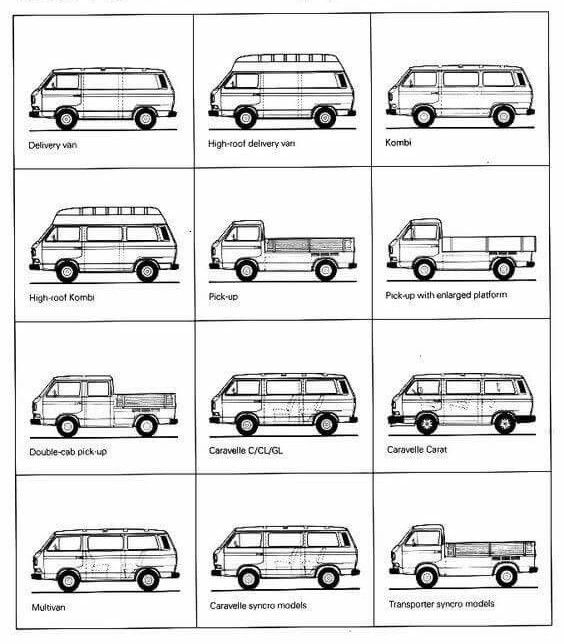
This is the third generation of the Transporter: so logically we talk about the T3. The British were probably first off the mark in calling it the T25 or "T2 and a half"; the first versions having been fitted with the 1600 and 2.0L engines of the previous Type 2 (Bay Window).
More methodically, note that type 25 appears on the registration document under the model (253...) and at the start of the serial number (ZZZ25...); the 3rd type having already been used at Volkswagen to name its 1500 and 1600 coupés, derived from the Beetle.
As usual, VW uses the type to number spare parts specific to, or that first appeared on, a type of vehicle. T3 parts have a number that starts with 25.
Here, the other everyday names for the Transporter are Transpo and... Popo for those close to it.
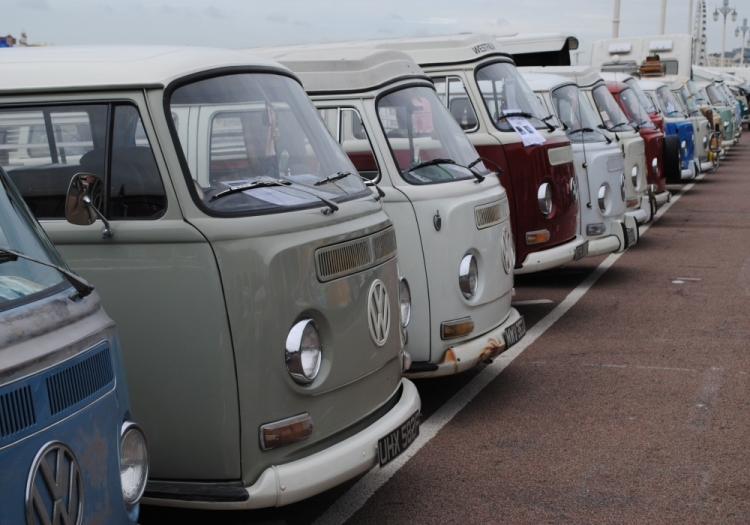
Following the Split-Screen T1 and Bay Window T2 Campers, the Transporter T3 was naturally offered, whether by VW or by many converters, in a Camper version.
Westfalia is certainly the most emblematic name in VW motorhomes; its Multivan, Joker and California T3 were sold through the network. Other versions with ever more ingenious equipment were offered by Karmann, Reimo, Camperève, Devon and others.
With the T3, the Volkswagen van entered "modernity" and became more practical and easier to live with. Apart from the Transporter T4, which would appear in 1990, it is certainly the VW leisure van you meet most often on our roads today. Whether factory-fitted as a motorhome or converted, the T3 delights travellers craving a change of scene and Van Life.
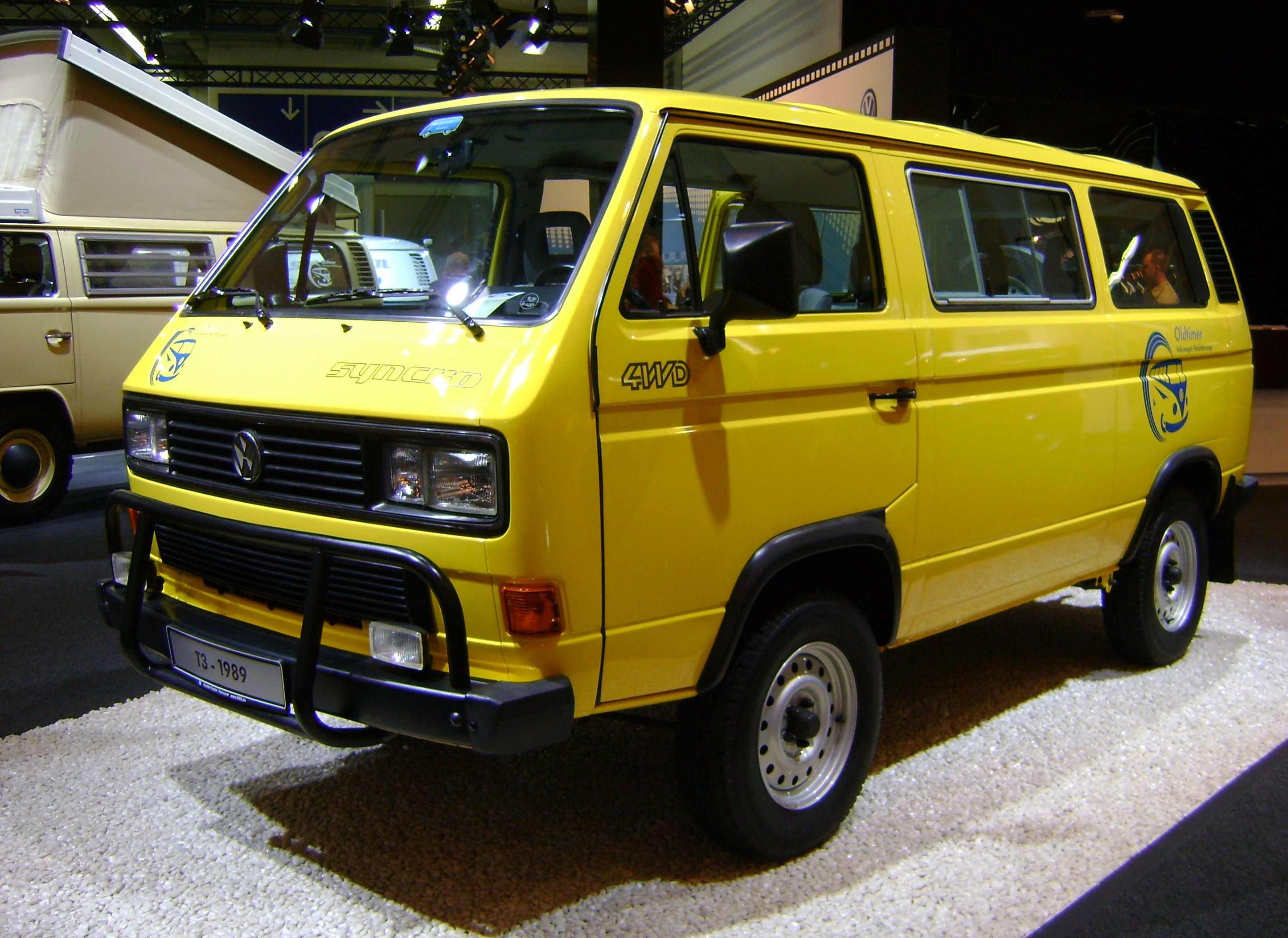
The Transporter T3 Syncro, which lets you leave the beaten track, joined the range in spring 1985. Developed at Steyr Puch in Austria, the Transpo, an all-round vehicle, became capable of anything, going everywhere.
The Syncro system distributes traction to all 4 wheels, automatically according to grip needs; its differential lock lets it get out of any perilous situation. Besides the leisure 4x4, there are many applications thanks to its off-road ability: from construction sites to forestry work, and including equipment for some government departments and the army. A real success. Syncros are very effective off-road vans and highly sought after today, like the luxurious Tristar version.
Also worth reading: The Volkswagen T3-T25 engines
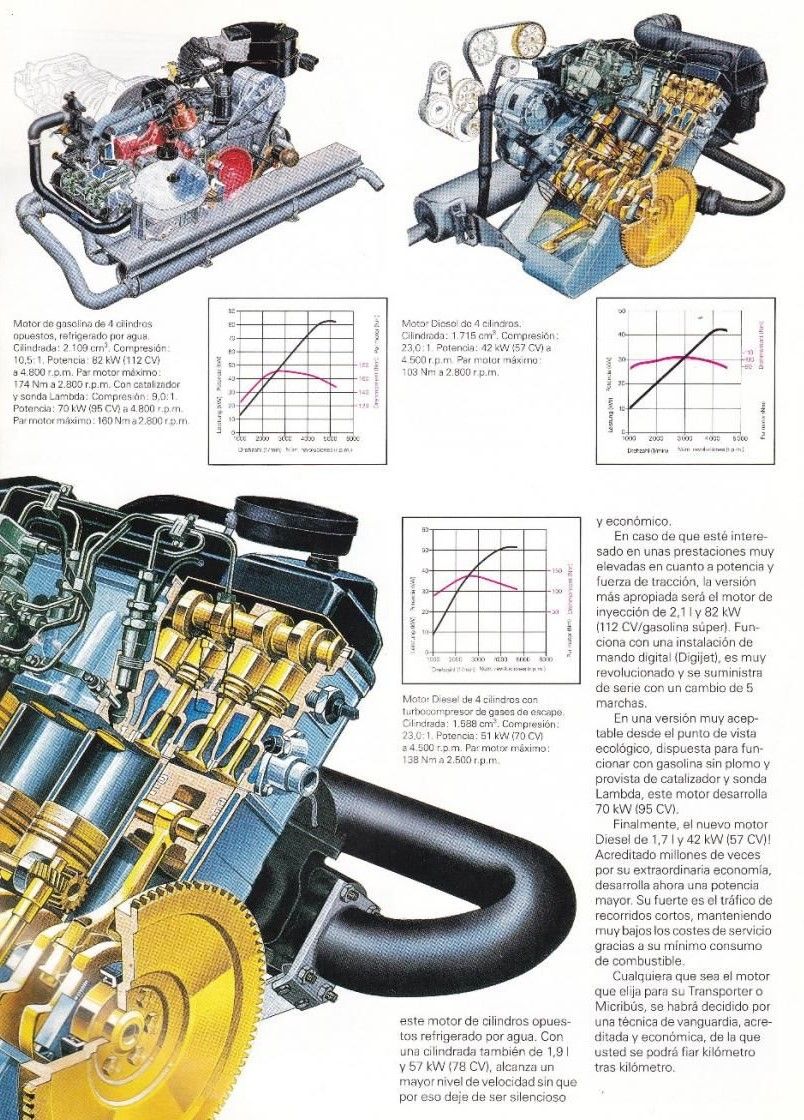
. The T3 was offered with a 1600 engine, in continuity with the Bay Window Camper. This 1600 CT is basically a Bay Camper 1600, still air-cooled, fitted with electronic ignition, an oil filter, hydraulic lifters and a "flat" cooling fan. It is a rather wheezy engine that struggles to haul the 1,400 kg and breeze-block drag coefficient of the Popo.
. Alongside the CT, VW offered a 2.0L air-cooled engine also from the Camper, with carburettors and then 70hp fuel injection, better suited to moving the machine.
. From the 1983 model year, the Transporter gained power and torque with two new engines: the 1.9L (60, 78, then 90 hp) and the 2.1L injection (112 and 95 hp). They were still boxer engines known as "flat 4s" but switched to liquid cooling. The arrival of the five-speed gearbox brought even more comfort on long journeys.
A final evolution, while across Europe Diesel, more economical, was becoming the norm on commercial vehicles and for high-mileage drivers:
. September 1981: VW offered its Transporter T25 fitted with the 50 hp 1600 engine from the Golf; it is tilted 50° onto its side in order to fit in the engine bay.
. August 1985, launch of the powerful and torquey 1600 Turbo Diesel (70 hp), again from the Golf.
The Transporter Type 3 had a good life, built in Germany between 1979 and 1992 to the tune of 1.3 million units. For a long time it was snubbed in the trendy VW scene, which preferred the curves and the "cooler" atmosphere of the first Campers. It now has its revenge, because it is sought after and its value has soared post-COVID. Aficionados at last recognise its strengths as a Youngtimer Van and Diesel versions are prized again for their economy and reliability. Now it is the fourth generation's turn to become "affordable", but hurry, because good examples of the Transporter T4 won't stay that way for long!

Harald
Le partage de la Passion, simplement.
Previous article
The 4L and its special editions
Next article
The Volkswagen Split-Screen Camper: the Swiss Army knife of the 50s and 60s
Similar articles
Volkswagen Bay Window Camper: the legendary van of the hippie years
An icon of freedom and Van Life, the Bay Window Camper replaced the Split in 1967 with its panoramic windscreen and rounded look. Panel van, bus, pick-up or motorhome, it conquered the roads of the whole world until it became a rolling legend, with toughness, versatility and a hippie spirit.
Read the article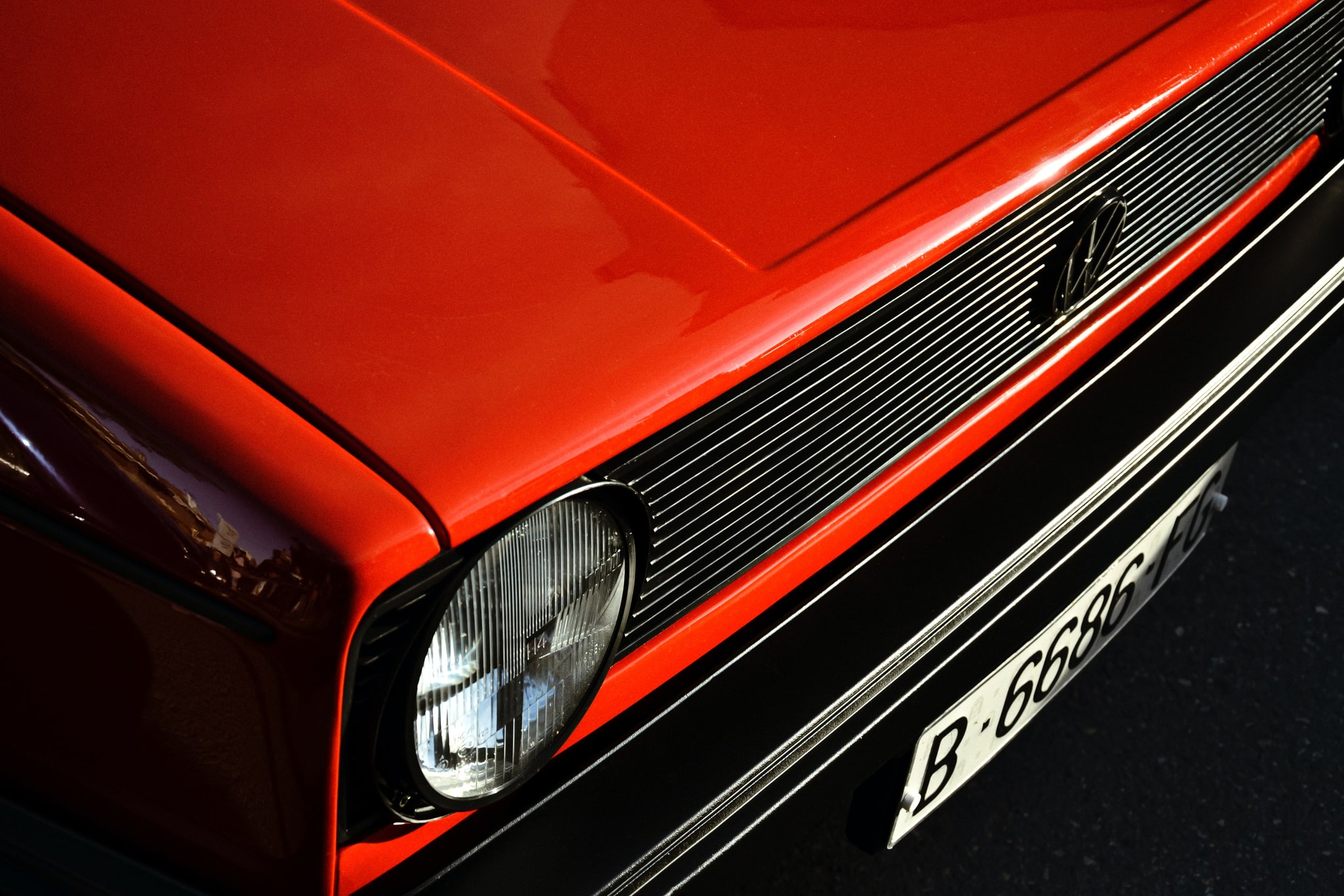
Subscribe to our MECATECHNIC newsletter