Your vehicle
No vehicle selected
Identify yours to refine your search results
No vehicle selected
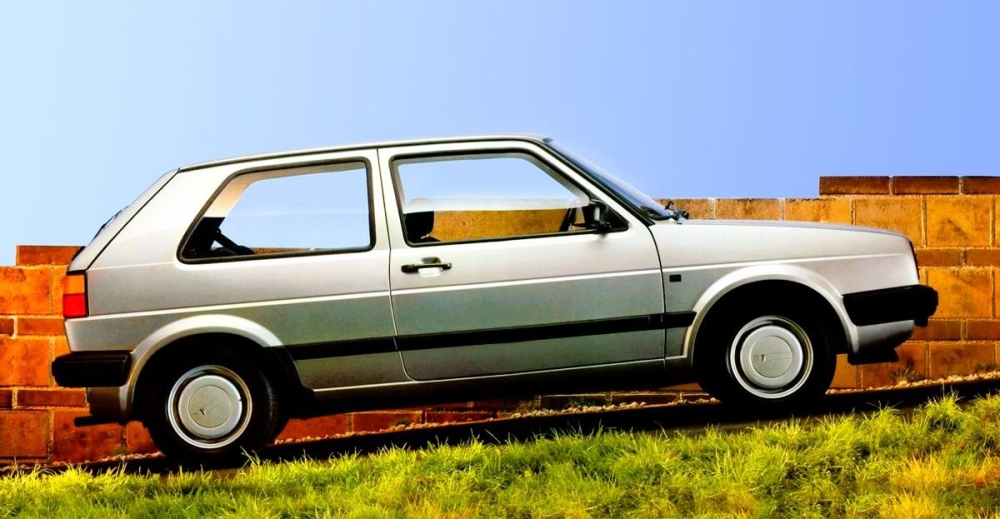
Bigger, roomier, better finished, the Golf 2 keeps the codes of its predecessor without upending everything. GTI 8s, 16s, GTD or G60, it marked the 80s with its reliability, performance and move upmarket without losing the VW DNA.
26/03/2026
Harald
9 minutes read
Volkswagen
Volkswagen Golf 2
Following the Golf 1 was never going to be easy, so imperial had its success been.
As with a good film, the sequel has to work and, if possible, beat the first one's box office. Volkswagen was under pressure at the launch of the Golf 2 in the summer of 1983: to bring off a change without disorienting the customers who had endorsed the first version of the "everything at the front" layout.
Just as there had been "revolution" at VW in going from the Beetle to the Golf 1, there had to be "evolution" to succeed the first of the GOLFs.
All the foundations of what customers could expect were laid, VW was no longer starting from a blank sheet and had to work with 2 essential factors: a sales history and a clientele potentially tempted by competitors who had had time to react since the Golf's launch in 1974.
Study of the Golf 2 began in... 1978, while the One was a smash hit. Starting from what existed, several styling studies were launched and in the end it was the one from the brand's own design office that was kept. At launch, the Golf 2 was characterised by a more generous stance, growing 17 cm in length, 5 in width and 7 in wheelbase. Clearly, the 2 was shaping up to be roomier than its older sister and did not deny its lineage.
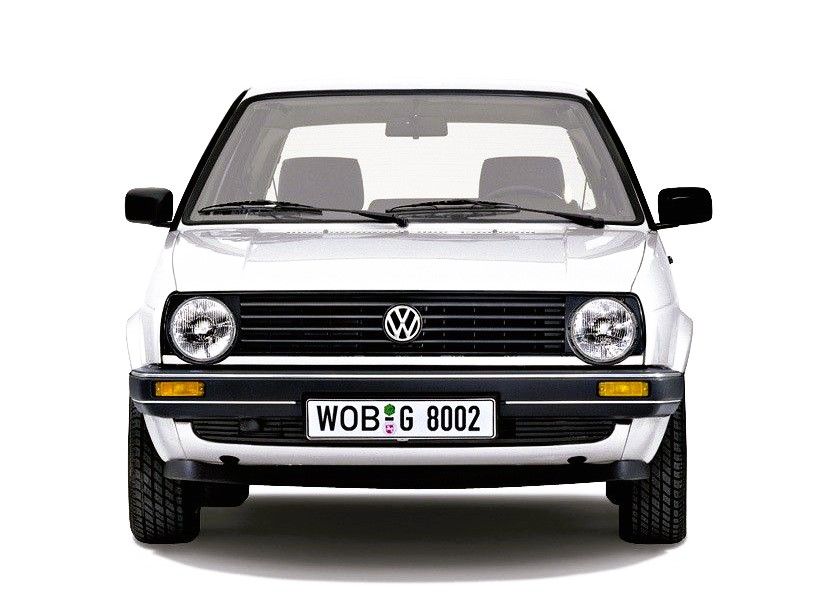
The Golf 2 was rounded off a little at the edges and shows a Cd of 0.34 against 0.40 for its predecessor. The visual landmarks stay in place: from the front you find a slatted grille, the badge in the centre, and the headlights (2 or 4) remain round. From the side, you clearly recognise the Golf's silhouette, whether in 2 or 4 doors; the "A, B and C" pillars, the doors, the windows, the shape of the tailgate … it's all there. The rear is modernised a little on the lights side, the very practical tailgate is still there, even the bumpers seem to come from the same mould as those of the Golf 1. Everything is done so that the customer isn't disoriented in his VW world.
The major changes, apart from its dimensions, are in build quality and anti-corrosion treatment; VW would offer a 6-year anti-rust warranty on its Golf.
The new Golf is roomier, better soundproofed, its interior is as "Germanic" as ever (read "not very fun"), its front seats are more enveloping and (a little) more comfortable. On the chassis side, a bolted-on engine subframe, better-designed engine and gearbox mounts, provide ride comfort and reduce the machine's vibrations … if you've ever driven a Golf 1 Diesel, you'll get the idea.
New spring and damper units also contribute to comfort and road holding. The big winners are therefore the rear passengers: as well as feeling good, there is finally room in the back of the Golf.
Power steering appeared as an option on some versions, as did ABS. On the braking side, the GTIs would finally benefit from discs on the rear axle.
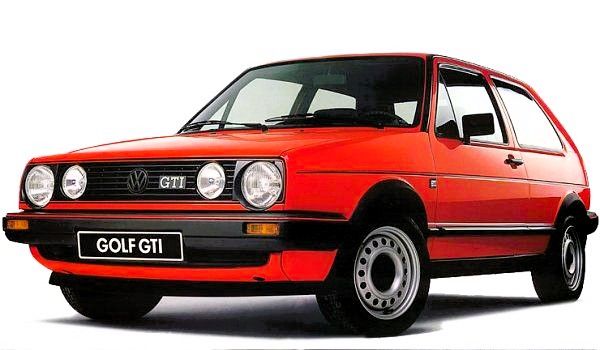
The Golf 2 had only one real styling change between 1984 and 1991; this facelift took place with the 1988 model year.
In the 90s, many Golf 2 owners freshened up their cars by swapping the bumpers for second-generation ones. Most of the time, this conversion came with a change of wheel arch extensions and mouldings to those of the G60.
Nowadays, people do the opposite … go figure!
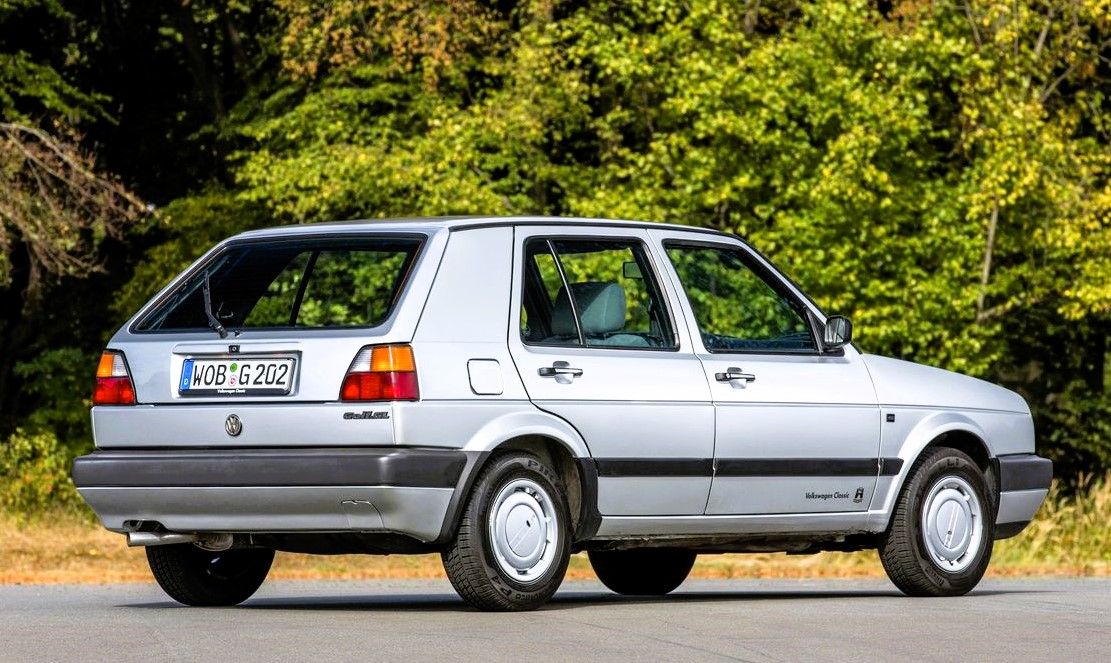
The big engine development at VW, in the Golf 2 era, was the arrival of hydraulic tappets from August 1985 and with them, an end to rocker adjustments and wear-compensation shims.
At its launch, the reliable engines of the Golf 1 were reused to power the Golf 2; the gearboxes were revised and adapted to the needs and above all the extra weight of the new versions.
More details on our page dedicated to Golf 2 engines.
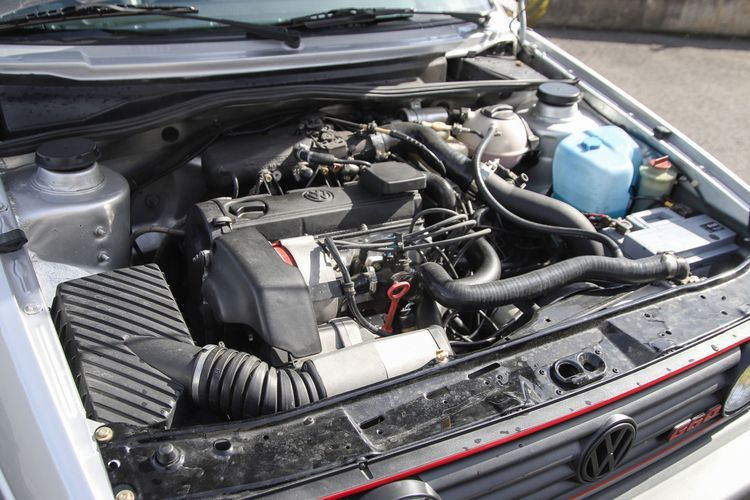
The 1050 to 1600 carburettor engines are evolutions of those of the first Golfs. These engines are proven, use little fuel and would do the job as a basis for future developments.
VW thus made major economies of scale, like many other manufacturers (Renault with its "Cléon", Ford with its V8 FE, Peugeot with its X and TU engines etc.), at a time when Europe and common sense still allowed combustion engines to be reliable. The new 90 hp carburettor 1800 is a mix of the carb 1600 and the GTI's 1800.
The Golf 2 GTD uses the 70 hp engine of the indestructible One Turbo D (CY). This Golf that takes up the GTI's look is as thrifty as a camel and runs like a zebra, thanks to its little turbo that takes it to 160. It is full of qualities, quieter and more comfortable, roomier etc., and it would delight "high-mileage drivers". In the 1990 model year, it benefited from the addition of an air/air intercooler that took its 1600 to 80 hp (RA/SB engines). For its part, the 1600 Diesel carried on its way like the tireless tractor it is.
At its launch, journalists and customers were left hungry: they were waiting for it around the corner and it came down the straight. 50 kg more and no change to its engine; decidedly, VW kept everything that worked on the engine side. Its engine (EV) is a Golf 1 GTI 1800 (DX) engine, fed by the same K-Jetronic injection. From March 1987 it moved to Digifant electronic injection (PB engine) to use less fuel and kept its 112 hp (at 5,400 rpm).
This engine ended up catalysed, like the others, at the end of the 80s, on the German markets and in Europe … but not in France. Phew… because with 98 hp, the GTI 2 8s was no longer really one.
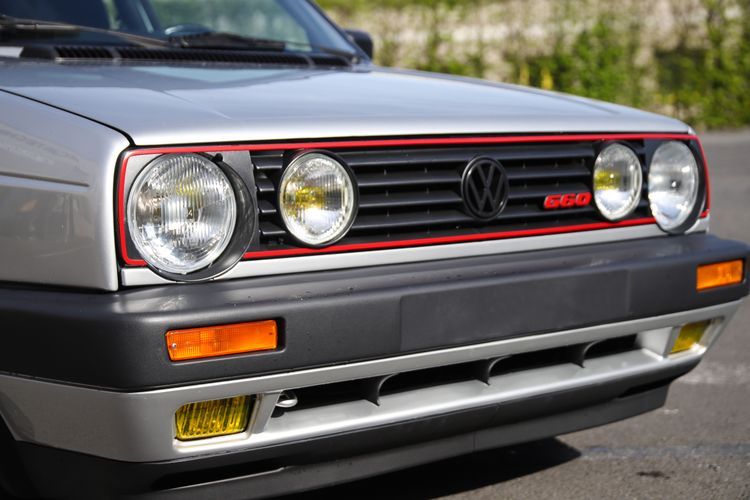
The GTI lacked the watts to counter the liveliness of the 205 GTI and its 130 hp. Volkswagen brought out the Golf 2 GTI 16s (KR) in 1986; with it, GTI fans disappointed by the 8-valve found their smile again, their hunger eased. This 139 hp 16s engine (at 6,100 rpm) with K-Jetronic injection had proved itself in the Scirocco coupé from October 1985 and everyone was waiting for it in the compact.
The KR engine is lively and loves to climb through the revs; like the small 1600 of the first GTI, it likes to be whipped to bring out its quintessence (SP 98 only).
VW struck hard with this supercharged engine that landed in the Golf in 1989 with the Rallye, then in 1990 with the G60. It is a torquey engine, with linear power; an 8-valve (PG and 1H, catalysed) that develops 160 hp at 5,600 rpm thanks to a positive-displacement supercharger already used on the little Polo G40.
This technology allows forced induction by compressing the air via a snail-shaped scroll; it would equip the G60, Rallye G60 and the Corrado G60 coupé. The car VW built around it takes over almost everything from the second generation of the Golf 2 16s: big bumpers and big arch extensions (even more bulging).
The G60 arrived in time to hit back at the 160 ponies of the 309 GTI 16s.
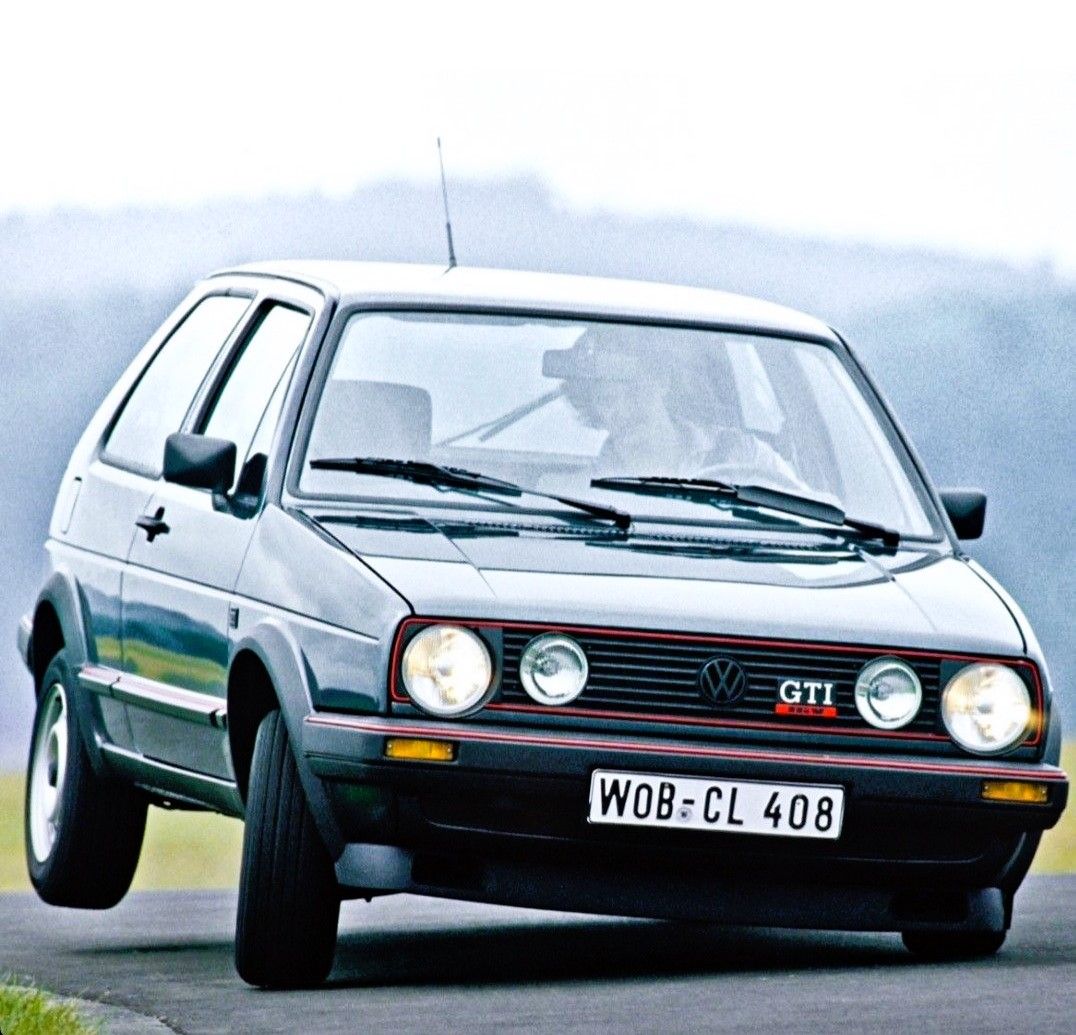
A classic among classics, the Golf 2 managed to take over from a Golf 1 that had been a huge hit. Volkswagen won its bet to evolve its icon without revolutionising its customers; with 6,300,000 customers who said "yes" (or "Ja"), it raised the bar even higher than its elder.
At the pinnacle of its range, the GTI 2, which had got off to a bad start in the succession, soon recovered with a 16s version and managed to rekindle the flame of its fans with its bewitching G60.
The Golf 3, arriving in late 1991, would tune itself to the spirit of the times. It would continue a move upmarket started with the second generation, miss the mark again on its first GTI before making up for it with a certain VR6 … but that's another story, to be found here.

Harald
Le partage de la Passion, simplement.
Previous article
The Golf 1: the most famous compact of all
Next article
The Volkswagen Beetle: THE car that defined the 20th century
Similar articles
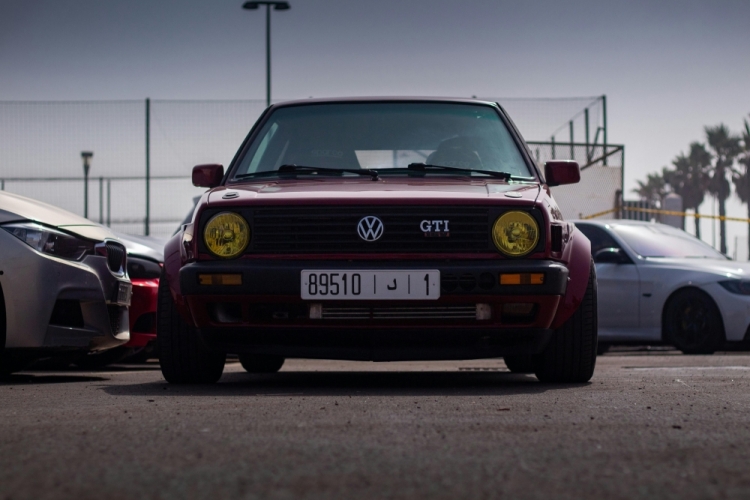
The saga of the Golf 2 GTI and its derivatives
Golf 2 GTI: all the versions that made the history of a sporting icon.
Read the article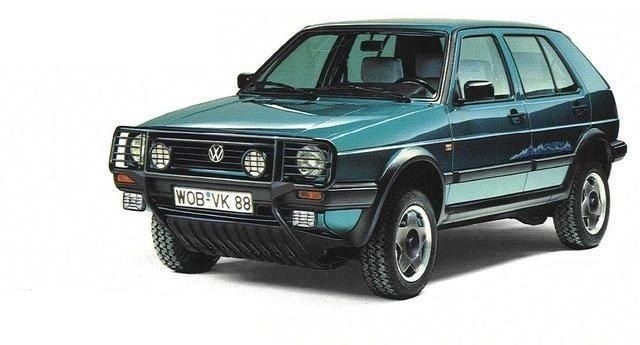
The Golf 2 and its special editions
Special editions of the Golf 2: rare, sporty or budget models that marked the 80s and 90s
Read the article
Subscribe to our MECATECHNIC newsletter