Your vehicle
No vehicle selected
Identify yours to refine your search results
No vehicle selected
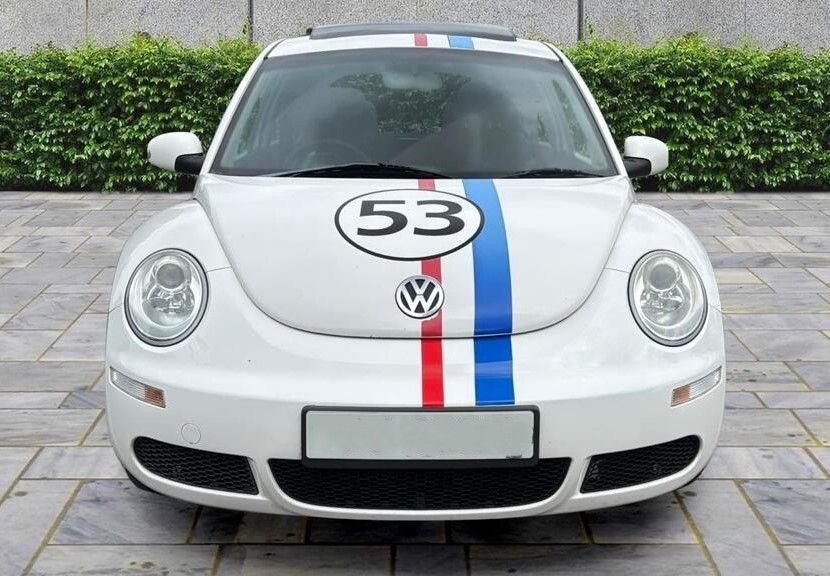
The New Beetle is the modern comeback of an icon. With its retro-inspired design, Beetle heritage and innovations borrowed from the Golf, it won over a new audience and defined the late 1990s with its unique, emotional style.
09/03/2026
Harald
8 minutes read
Volkswagen
Volkswagen New Beetle
It is not easy to follow an automotive icon like the Beetle.
The New Beetle was not a replacement for the original Beetle, but a pure marketing product from Volkswagen as the year 2000 approached. The New Beetle is not just a car but also a way of life, where emotion and feeling take the place of simple transport. This new version of the Beetle is in fact a (radically) transformed Golf 4; it would be built in Mexico until 2011, setting off to conquer the USA before sweeping over Europe like a new wave.
The original Beetle had enjoyed a very successful career in the USA, so that is the market Volkswagen thought of first when developing its new "Beetle".
As early as 1993, VW's Californian design studio started looking at what could follow VW's first success story in Uncle Sam's country.
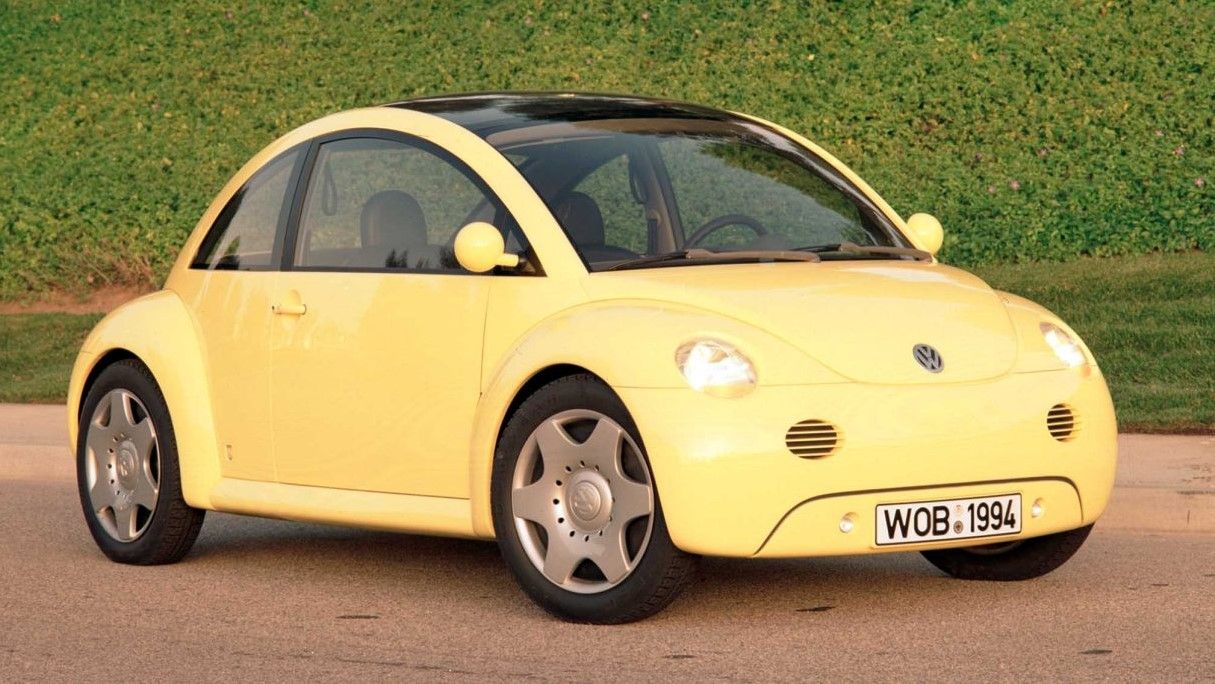
The Concept One, the prototype of the New Bi, was unveiled in January 1994 at the Detroit show.
Meant to create buzz on the VW stand, this prototype was used to take the temperature of the American market. And it was fever pitch! This modern design picks up the silhouette of the original Beetle, namely a rounded body framed by 4 round wings. These shapes, quirky for the time, were a smash hit in the land of the cigarette makers. Tokyo show 1995: VW hammered the point home and the decision to build this new model was well and truly confirmed. The whole world wanted it.
VW decided to build its Beetle 2 in a new factory in Puebla, Mexico, alongside its ancestor the Beetle (the Fusca), which would keep rolling off the lines until 2003. Mexico is right next to the USA and has cheap labour. All this took a little time and the first customers were finally delivered in March 1998.
Towards the end of the same year, the first European versions took the boat to the old continent. Europe, in turn, went wild for it.
This is the context in which the New Beetle landed in Europe. You could say it was with this car that VW launched the retro-modern wave on a large scale, with no real competition when it came out.
The New Beetle is a contemporary car with a whiff of Proust's madeleine. Retro-modern is a modern interpretation of an icon of the past; it combines technological novelty with a dose of nostalgia, reinterpreting a success of yesteryear, much as a remix can breathe new life into a song that was once a hit (I'm leaving Maître Gims out of the equation).
Other manufacturers followed Volkswagen's example: BMW released its vision of the Mini in 2000, the new Fiat 500 arrived much later in 2007, and the Alpine A110 returned to service in 2018.
The New Beetle is a popular car, but not a people's car. It is aimed more at the middle class and charms women, who rated it highly as a household's second car. Yet it is not the most practical, with its small boot, cramped rear seats that are hard to get into, not to mention its bell shape that makes it hard to tell where the wheels are when parking. Never mind... it is far too "cute".
From the side and from a distance, you struggle to tell the front from the back. Its silhouette is, in fact, symbolised by 3 semicircles. The New Beetle is all curves; its laid-back headlights recall those of pre-1967 Beetles, its tail lights those of the last 1200 and 1303, and its sills look like running boards. Its small round bonnets and roof, its two big doors, its big speedometer and its little bud vase take it back to a glorious past.
As for colours, alongside the classic grey, black, white and red, the sixties are back with blue and light green, orange, metallic green and sunflower yellow. So that you get noticed at the wheel of a sweet... if you embrace your "young and quirky" side.
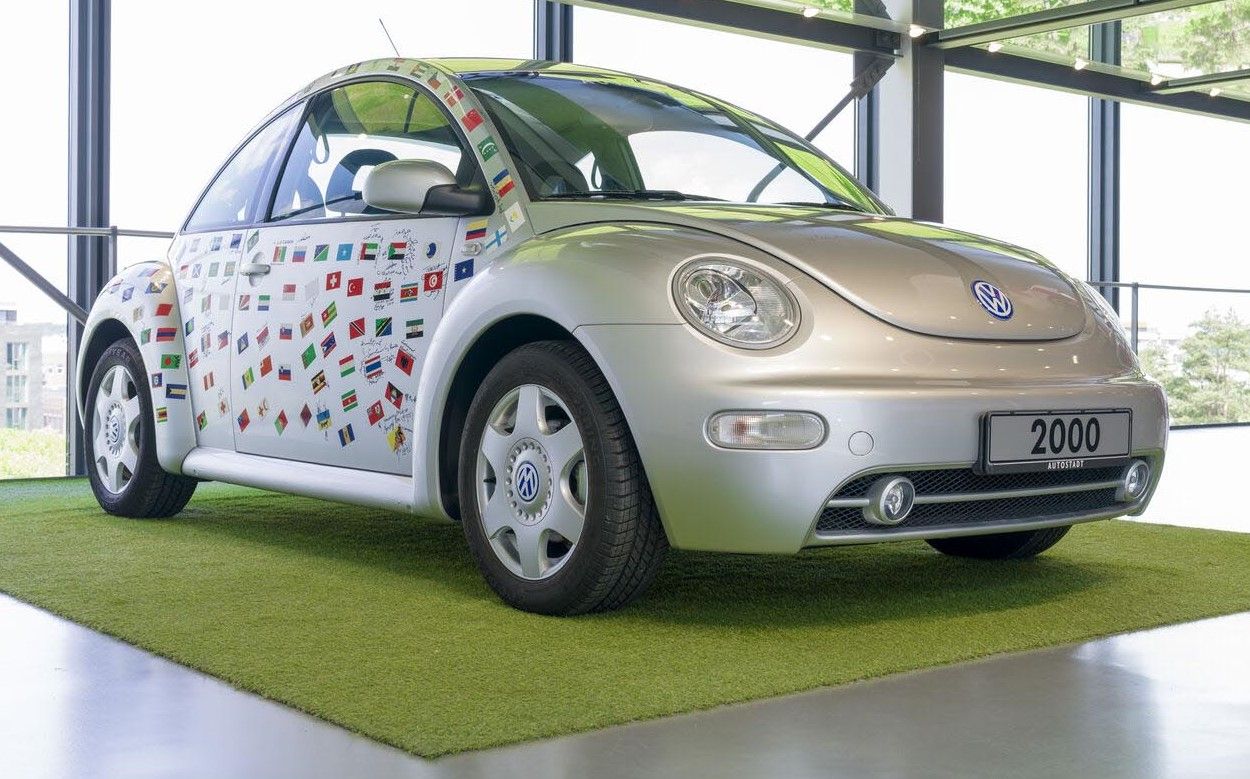
It received a small facelift that put the smile back on its face, with slightly enlarged oval headlights, slimmer front indicators, a new low 3-part grille and slightly less rounded bumpers. At the rear it is also refined, but nothing to make a song and dance about.
The New Beetle is not free of faults, mostly electrical ones. As for finish, it shows fit and fittings unworthy of Volkswagen. The rubberised coating on the buttons and accessories breaks down and turns sticky over time. Just like the Golf 4, it has problems with its electric window mechanisms.
The running gear and powertrains were reliable and came from the Golf.
A completely new car came out at the end of 2011, to succeed the New Beetle, and stayed on sale until 2019.
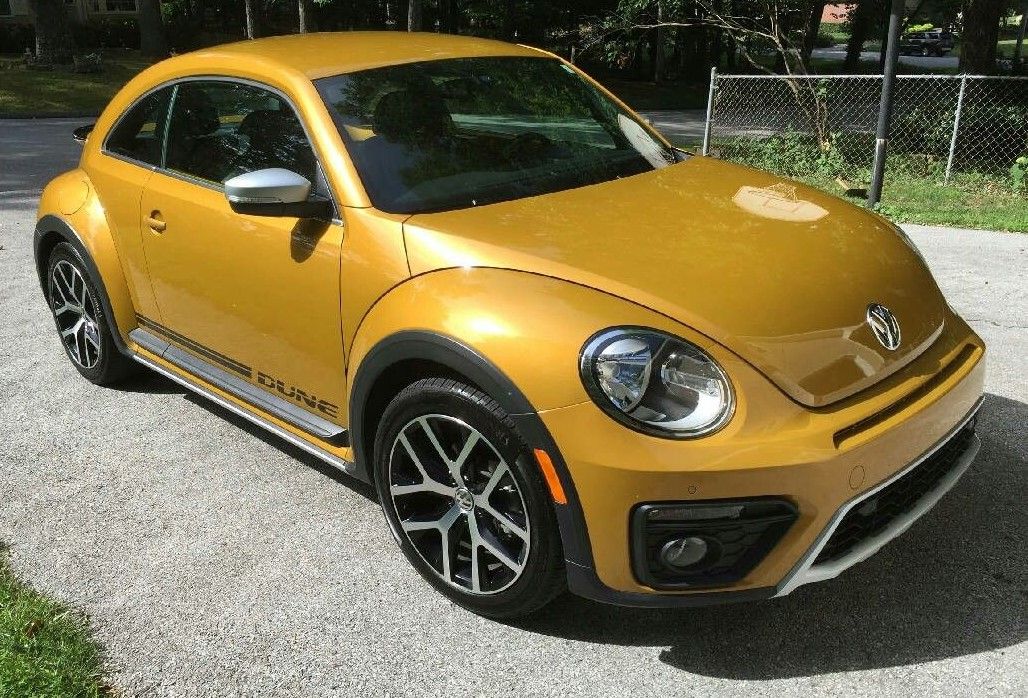
Cooked up on the Golf 6 platform, you cannot really speak of a phase 3. This new model, which we could call Beetle 2, turned out to be far better finished than the first. This new version is longer, wider and easier to drive. It is a... Golf 6. Owners of the Golf 4 who moved to the 6 felt the changes; the same goes for New Beetle fans. The model continued to evolve through the range and the little faults of the first generation seem to have been ironed out; all the better.
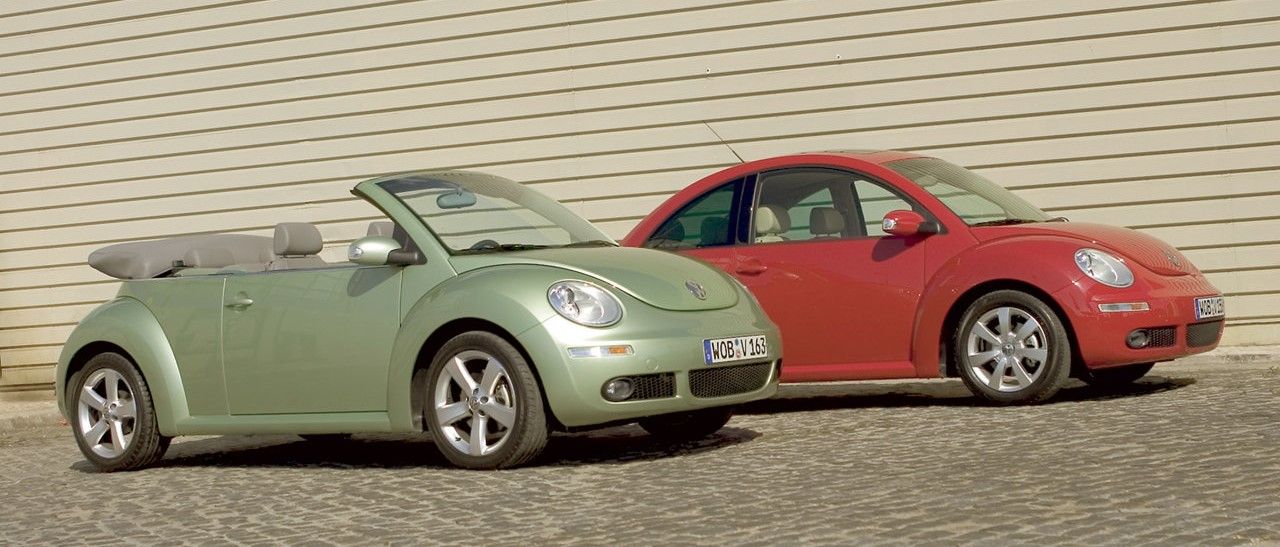
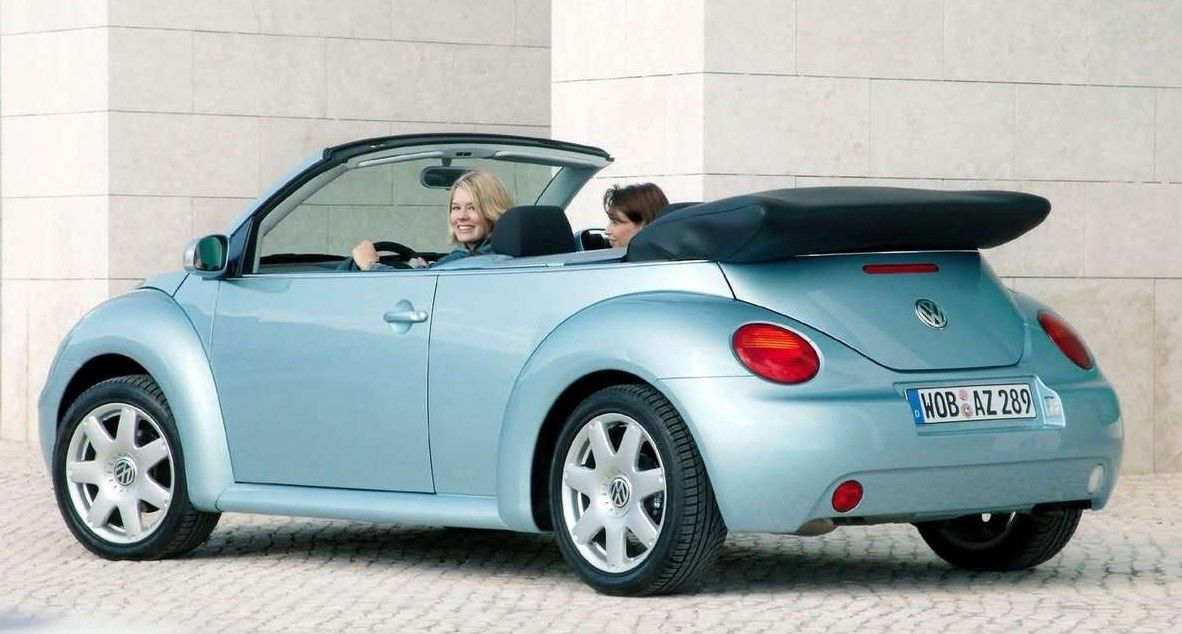
To continue in the same vein and keep paying tribute to the original Beetle, VW brought out its convertible version, as well as a crazy concept that got a lot of talk at the time, since it cost as much as two entry-level Porsche Boxsters.
Here again, success was assured. The cabrio and its hood keep the lovely curve of the roof; once folded, the fabric forms a sort of spoiler and takes you straight back to its famous ancestor built by Karmann.
It is available with 1.4L, 1.6L, 2.0L and 1.8L Turbo petrol engines, as well as the TDi 100 for the "diesel convertible".
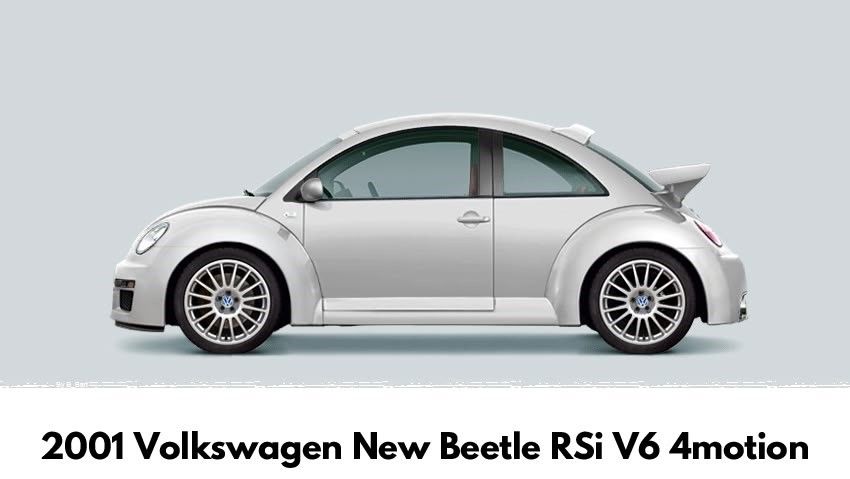
A car apart, built in a limited run of 250, this Super Beetle is above all a marketing stunt designed to get a lot of ink spilled. It received a body kit worthy of a Porsche 930 Turbo; the car is 16 cm wider at the hips than the standard version. With its metallic silver paintwork, orange-red interior and Recaro bucket seats, and its profusion of carbon and brushed aluminium, you could take it for a UFO (or rather a URO, an unidentified rolling object). It is a homologated motor-show concept car, an exuberant showcase of everything Volkswagen can do.
As standard it came with 18" OZ wheels, a sports chassis and 4Motion transmission, "big" brakes, a Remus exhaust, a 6-speed gearbox and, above all, the fabulous bored-out VR6 that would power the Golf 4 R32 a year later. Thinking about it, VW could (should?) have pushed this engine to 300 hp, to match that DTM racing-car look. Too heavy, underpowered and very expensive, it probably would not have found a lasting clientele if VW had not limited production.
Can you replace a legend? No.
The New Beetle was the continuation of the iconic Beetle; a fine marketing tribute, really. Its commercial success is perhaps due to the fact that its total originality arrived at just the right moment, at a time when motorists' eyes were turning to the past. The New Beetle was, and remains, a car you fall for, one that found a different audience from its ancestor.
Will VW try the marketing trick again with an ID Beetle?
Which is the most reliable engine in a New Beetle?
All the engines derived from the Golf 4 prove reliable. Apart from wear parts (clutch, dual-mass flywheel, water pump, air flow meters...), there were no notorious problems.
The TDis are best if you cover a lot of miles on the road, and to be avoided for short journeys and repeated stops. The petrol engines use a little more fuel but cope better with town driving.
Which engines were available on the New Beetle?
What should you watch for on a New Beetle?
Everything made of removable plastic does not last; it ages badly and becomes brittle. The rubber-textured buttons get dirty, turn sticky and feel unpleasant to the touch. Be careful if you are looking for one; test all the electrical functions and steer clear of cars with warning lights that stay on in the dashboard. The New Beetle ages less well than a Golf 4. It is a car that needs regular servicing (with invoices to prove it); also avoid versions with a string of previous owners.
In short, if you do not know much about mechanics and your budget does not let you take it to a garage when it breaks down, walk away.
Which is the rarest New Beetle?
Certainly the numbered RSi series, produced in just 250 units. Its price at the time, its equipment and its exclusivity put it at the top of the podium as the most desirable New Beetle.

Harald
Le partage de la Passion, simplement.
Subscribe to our MECATECHNIC newsletter