Your vehicle
No vehicle selected
Identify yours to refine your search results
No vehicle selected
PCD, diameter, offset (ET), fixings or approval: discover the key criteria for choosing the right wheels and ensuring safety, performance and compatibility.
23/03/2026
Harald
9 minutes read
Choosing wheels can be very complicated when you're not an expert...
"These wheels are fantastic, I absolutely have to have them on my car!" or "I need big-diameter wheels to improve the handling" ...
You hear these sentences regularly when you hang around car enthusiasts. Who has never fallen for a particular wheel design, picturing the new set on their car?
But beyond looks and performance, many parameters come into play to fit the right wheels to your vehicle.
MECATECHNIC goes over the different technical aspects you need to know to help you select wheels for your car!
Be aware that there are split-rim designs and several fixing systems. Here is some advice to help you choose your wheels well and make sure they sit properly under the arches!
Always make sure your vehicle can still pass the roadworthiness test (contrôle technique), while respecting its approval.
Let us go over the technical aspects you need to know to select the right wheels.
As mentioned above, it is important to look at every detail of a wheel to be sure it suits a car, for performance as well as for safety.
Here is a glossary:
The complete wheel of a vehicle is made up of a rim, a tyre, and a valve for inflation, or an inner tube for older vehicles with rims not designed for "tubeless" tyres. To keep it simple, it is the rim and tyre together.
If you have been following, it is a wheel without its tyre...
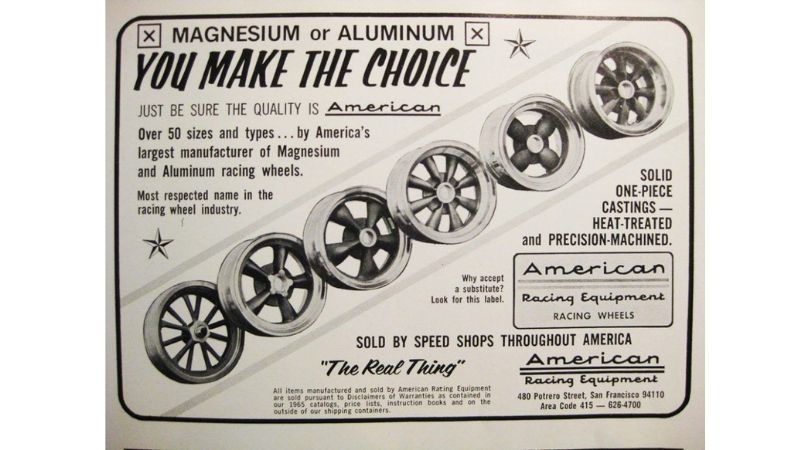
Rims are generally made of welded steel or aluminium, but some are magnesium or even carbon for racing-style cars.
For alloy models, there are premium versions that are die-cast or formed by centrifugal spinning (flow forming), and others that use the scrap from a first foundry run, poured by simple gravity casting (risk of micro-bubbles).
This explains the big differences in quality and price on the market, depending on makers and brands. The best are forged wheels (formed in a press), which offer greater resistance to impact and better balance thanks to the density of their alloy, while being lighter!
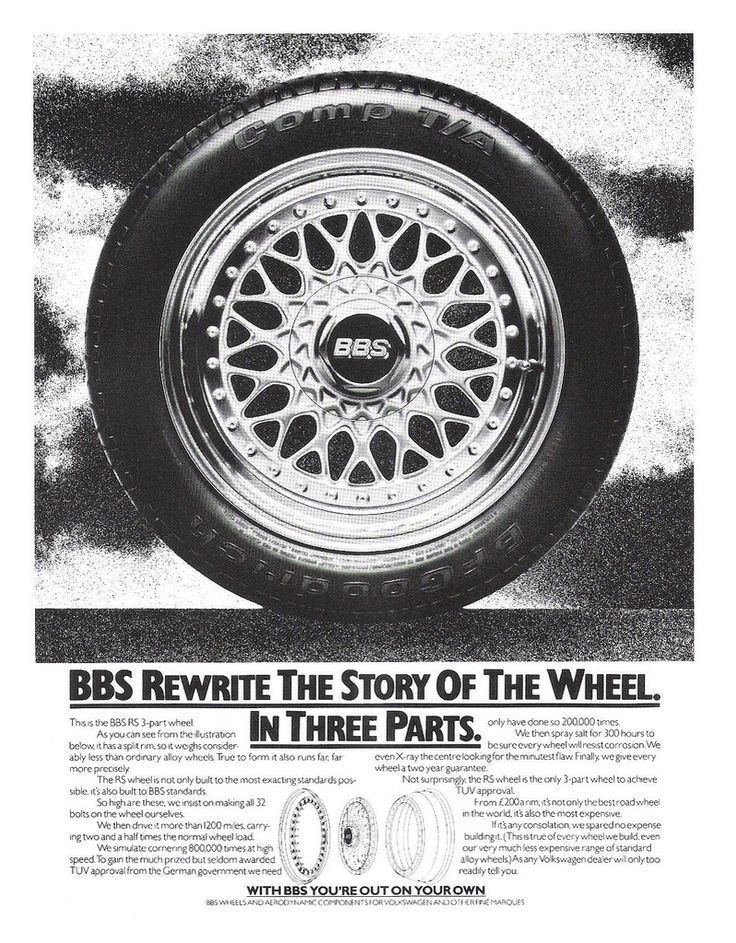
Wheels can come in different finishes. From full epoxy paint (oven-baked), to polished, lacquered lips on aluminium models, and fully chromed versions, in aluminium or steel.
Looks often come first in the choice, but you also need to think about the particular upkeep of each type and finish. Cleaning chunky painted wheels is easier than cleaning chrome wire wheels!
Specific products exist to make the job easier while respecting the material of the wheels.
Most recent rims are designed for modern tyres known as "tubeless", that is, without an inner tube.
On this type of rim you can see a small ridge all the way round, on both sides, close to the outer edges (see diagram). It is thanks to this profile that tubeless tyres provide an optimised seal and better resistance to the bead coming off the rim.
Old flat rims without these "lips" require inner tubes, otherwise the tyres will go down regularly.
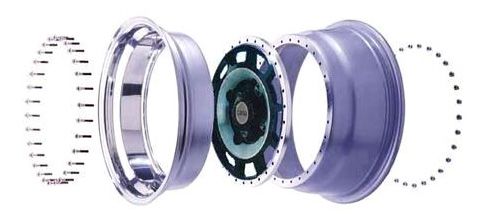
Some rim designs are known as "split". That's to say the rim is made up of 2 or 3 parts that can be changed independently of one another. This system, intended mainly for racing wheels, makes it possible to repair a damaged rim economically, or to adjust the width and diameter of the rim to suit the car, by selecting the right barrel and outer disc.
Example: 2-piece rim / BBS RM rim
Wheels are attached to the vehicle with several bolts (3, 4, 5, 6 per wheel depending on the model), or with nuts on studs.
There is also a single large central nut, a system mostly reserved for competition cars (Cobra, Porsche GT3 ...)
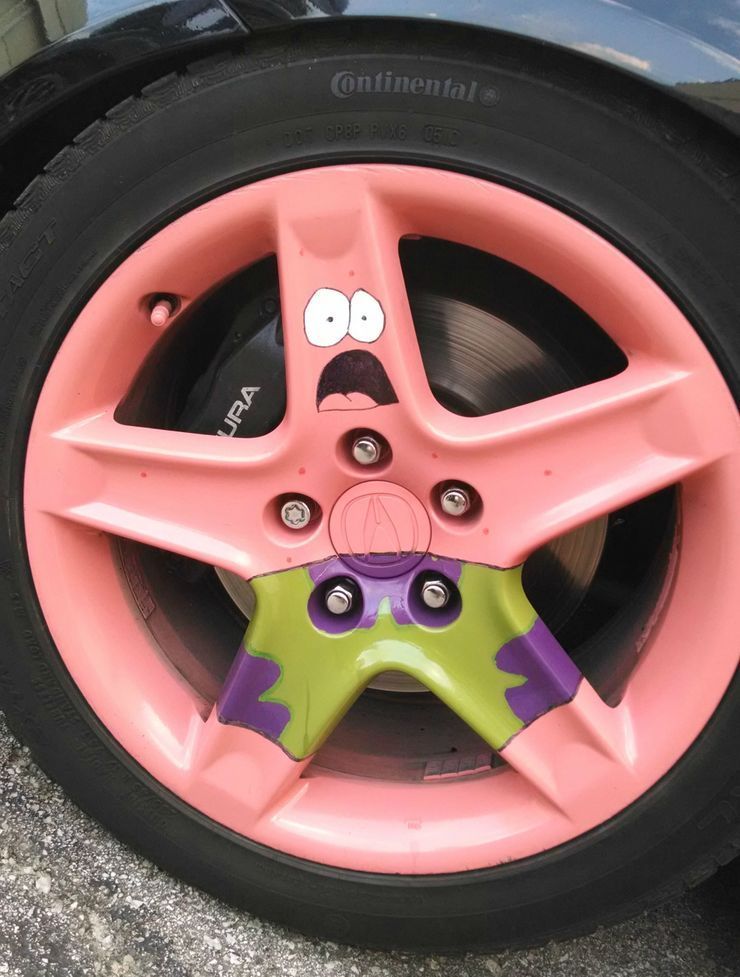
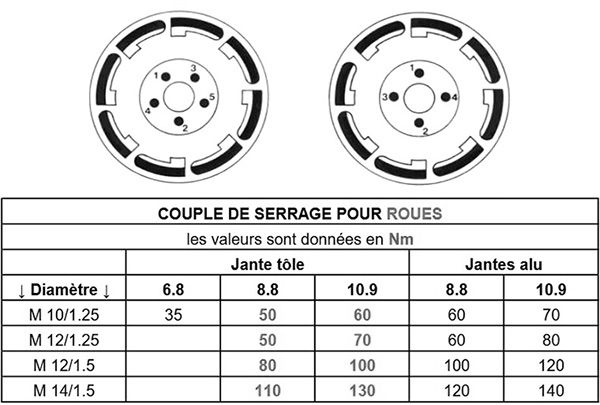
There is a tightening order and torque to respect for each type of rim and fixing. Tightening is done in a cross pattern to be sure the rim sits flat on the hub. That's to say you tighten one nut of your choice, then the one opposite, and so on to the last, in a star pattern. Then you must do a final tightening to the torque specified by the manufacturer with a torque wrench.
Depending on the type and diameter of bolt, steel wheels are tightened from 50 to 130 Nm, and aluminium ones from 60 to 140 Nm, as shown in the table.
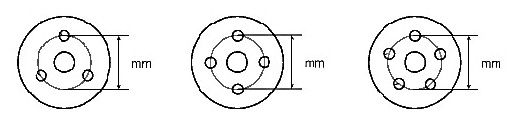
Also called the "PCD" (pitch circle diameter), this is determined by the number of holes and the diametrically opposite distance between them.
For example: 4x100 = 4 holes with 100mm between opposite holes (not to be confused with the distance between two neighbouring holes).
To work out the right measurement on a 5-hole rim, imagine a circle passing through the centre of all the holes (see diagram below).
The holes can also have different diameters depending on the brands or manufacturers. Wheels are generally drilled to take 12mm or 14mm bolts, but there can be 10mm or 18mm (4x4s).
The other important thing to check is the thread "pitch" on your car. Brake discs (hubs) and drums can be drilled to the same diameter (e.g. 12 mm) but tapped (or threaded) with a different pitch (e.g. 125 pitch or 150 pitch), and this can vary from one manufacturer to another.
Before buying, check that the diameter and thread match those of the car you are fitting them to.
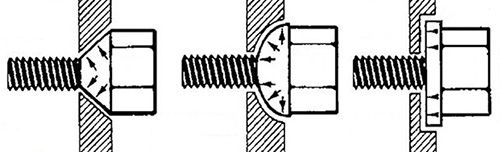
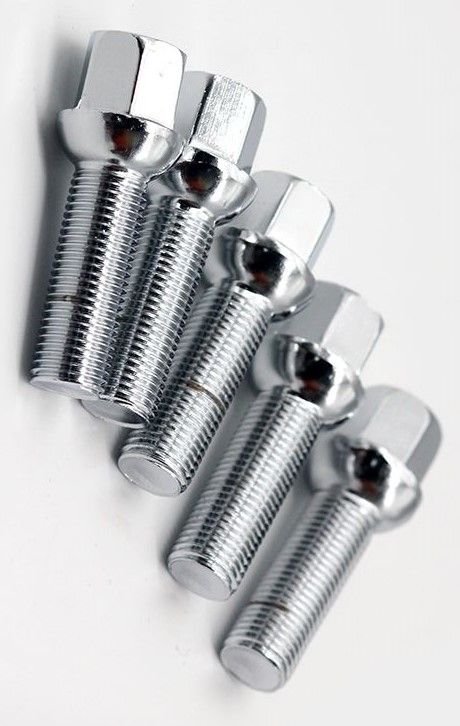
The shape of the seat of the holes where the bolts or nuts sit can vary.
In general there are three main shapes on the car market: conical, spherical and flat.
The shape of the bolt head must be identical to that of the seats, the holes in the wheels, to obtain optimal contact and ensure safe tightening. Do not use conical bolts on a rim whose bolt seats are rounded (spherical); the wheel could work loose!
There are many dimensions or sizes to know in order to master the subject of wheels. For rims as well as for tyres, you can read several measurements using different values.
For a rim, the diameter and width are given in inches (1 inch = 2.54 cm) and the offset (ET) is given in millimetres.
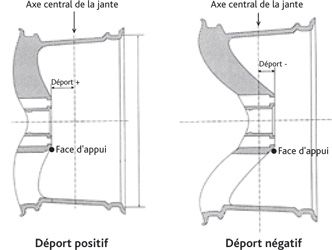
The offset, called "ET" and given in millimetres, defines the distance between the middle of the rim (the centre of its width) and its mounting face on the hub (disc, drum or spacer).
For example: a "positive" offset of +25 indicates a rim whose mounting point is 25mm away from the centre towards the outside, which pushes the rim 25mm further in towards the inside of the car.
Conversely, a "negative" offset of -15 pushes the rim out 15mm towards the edge of the arch (see diagram). So it matters a great deal if you want nothing to rub!
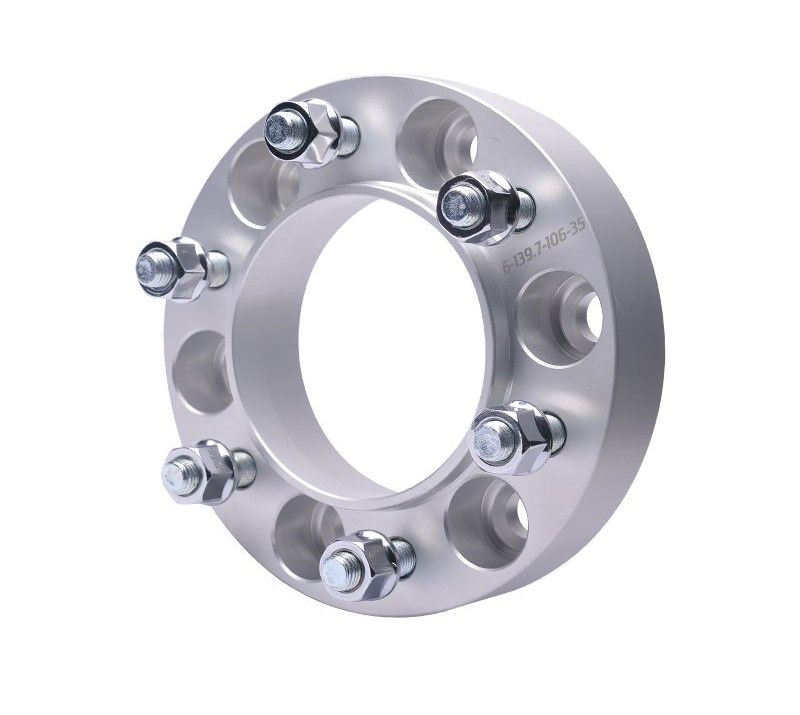
Wheel spacers are drilled shims in steel or aluminium, which sit between the mounting surface of the rims and the hubs.
These shims widen the track by pushing the wheels out from the car. The aim is to optimise handling, or simply to improve the look by bringing the tyres to the right distance from the arches.
Spacers can also make sure that wheels fitted in sizes different from the original ones do not touch the inside of the bodywork or mechanical parts such as the suspension.
Quite close to the principle of spacers, adapters are used to change the fixing PCD to fit wheels with a different drilling. For example, to fit Golf 3 GTi wheels with a 5x100 mm PCD on a Golf 2 with the original 4x100 mm hubs. Adapters are often made as a single-piece unit, with single or multiple drillings.
Be careful not to forget to take them into account: fitting adapters also widens the track.
Finally, on approval, the main thing to remember is that only the dimensions approved by your car manufacturer (optional sizes included) guarantee full cover from your insurer if the vehicle is assessed.
Mission "choosing your wheels" accomplished: Mecatechnic wishes you happy motoring on your smart new wheels!
We hope these different tips help you see more clearly through all the standards and dimensions out there.

Harald
Le partage de la Passion, simplement.
Subscribe to our MECATECHNIC newsletter