Your vehicle
No vehicle selected
Identify yours to refine your search results
No vehicle selected
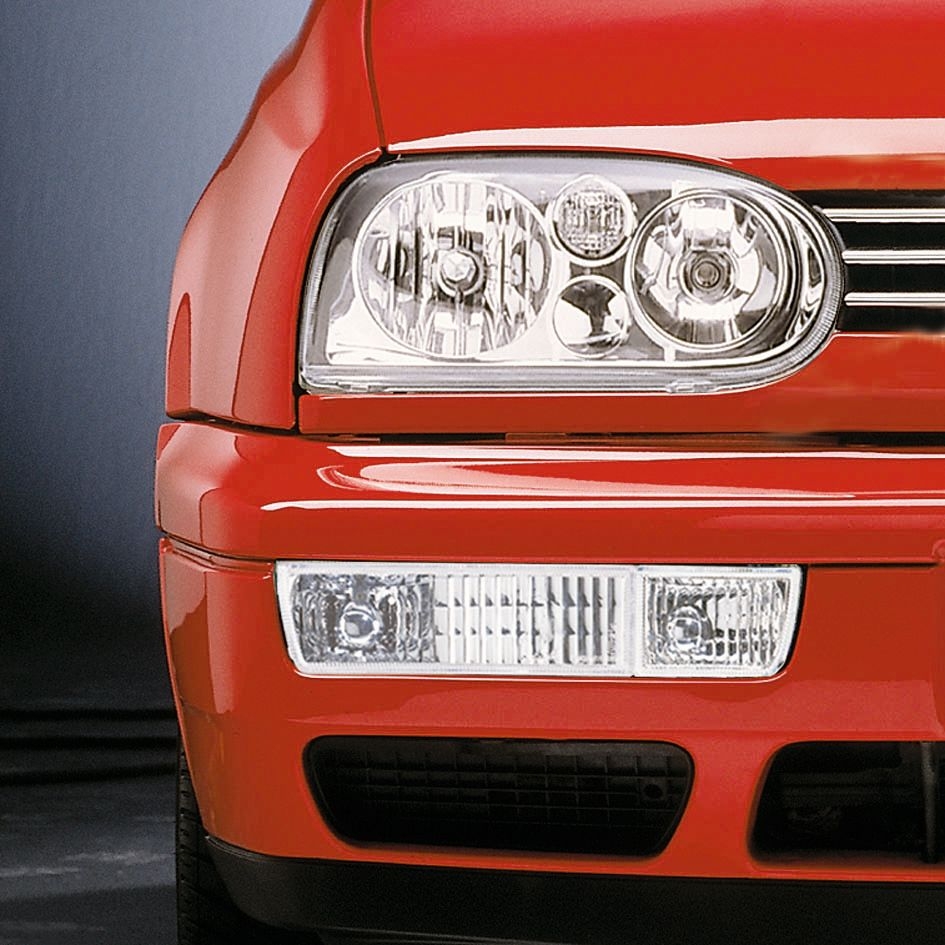
Rounder, heavier but also more comfortable, the Golf 3 marks a turning point. With modernity, safety and reliable engines, it made its mark in the 90s, even if it ruffled the purists. GTI 16s, VR6, TDI 110... the Golf 3 forges ahead, in style.
27/01/2026
Harald
7 minutes read
Volkswagen
Volkswagen Golf 3
Unveiled at the 1991 Frankfurt show, the third generation of the Golf kept evolving towards rounder shapes and its equipment weighs heavily (+ 200 kg on average). As always, its modernity was well received and... drew criticism.
Its new shapes and new look do not leave people indifferent. This segment is crucial to the future of Volkswagen, which cannot afford to slip up in evolving the codes of a model that is the benchmark (and the proud father). Besides the European market, VW has its sights on the important American market.
To make eyes at it, the Golf's face changes: its round headlights give way to almond-shaped units, in the Japanese style then all the rage across the Atlantic.
The Golf 3 matches (or should that be MATCHes?) its brief well: a versatile, well-built compact that, as the future would show, would once again be a success for VW.
Evolution, not revolution. That says it all: no question of shaking up customers. The Golf 3 was designed in-house with a rounded, dynamic body that inspires solidity and a sense of "it just goes".
The cabin stays within the German standard, that is to say black and somewhat austere, but well thought out and comfortable. Comfortable... at the front more than at the back. It is also quieter: the Golf 3 uses better sound-deadening materials.
Longer, wider, rounder and... roomier, with a dashboard that is also more rounded, in line with European standards in search of softer design.
The same recipes are taken and applied again. Nothing revolutionary: the chassis still rests on a wishbone MacPherson front end with an anti-roll bar; the rear keeps its beam axle + anti-roll bar configuration. The whole is, as ever, damped by excellent spring-and-damper units that provide very effective handling and comfort.
The wheelbase (distance between wheel centres on one side) stays that of the Golf 2 but the track widens and gives the car a better stance, gaining stability if not agility.
The wheel fitments are conventional: 13 to 14 inches for most models and 15" on the sporty versions (BBS RS in 16" on the 20th Anniversary).
Safety features such as ABS (available as an option) became standard across the range in 1996, the year side airbags arrived as an option.
From the 1400 to the 2.0L, via the 1.6L and the good old 1800. With catalytic converters now mandatory, carburettors were thrown in the bin and replaced by "carb-like" single-point injection, more reliable and more economical, while the sporty multipoint injection systems were refined.
They are all 1900 displacement, with 64 hp in Diesel, 75 hp in Turbo Diesel and from 90 to 110 hp in the TDI, with its efficient direct injection from a Bosch VE rotary pump enjoying legendary reliability. Might the TDI 110 AFN have launched VW into the "Sporty Diesel"?

While VW was being challenged from all sides in the GTI segment it had invented, and despite its customers expecting a response, the mountain gave birth to a mouse.
The third GTI of the name seems from the outset to have sacrificed the sporting spirit that was in its DNA, in order to go upmarket. Has the Wolfsburg wolf turned into grandma?
Released in early 1992 with a 2.0L engine of 115 hp; only 3 little horses more than the GTI 2 1800 it replaces. To make up for the small power output caused by the spread of the catalytic converter, it grows in displacement, which lets it recover torque and cope with its new waistline.
This famous 2 E engine is reputed to be unburstable but is no powerhouse; coupled to a poorly spaced 5-speed gearbox (cable-operated), the whole makes the 8s a car for cruising. The press and customers were not kind to VW and its GTI substitute.
Also a catalysed 2.0L, it put things right a year later with a 150 hp engine. The damage was repaired, the GTI had an engine again with character that revs freely! Fans of the GTI badge got their smile back. Gone was the mechanical injection fitted to the GTI 2's 16s KR engine; the 3 switched to electronic injection.
Mama mia! A 2.8L V-shaped 6-cylinder that gets 175 ponies galloping... and what a V6!
For the time, putting a V6 in the front of a compact was unheard of. This engine has a very particular architecture: it is a compact V6, opened to 15° (like a good bottle).
Michel Polnareff could have sung "it's a GTeeee... that goes VRROOOAAP"... At last an engine that sings, and what a spell it casts!
The engine went into the Passat and became legendary straight away with the Corrado. In 2.9L form and producing 190 hp, it powered the Corrado and the Passat in its Syncro (4x4) version. It was this 2.9L that VW then chose to move the Golf 3 Syncro (viscous coupling), weighed down by its 4-wheel-drive system.
To sum up, the GTI 8s is a grand tourer, the 16s a sports car, the VR6 a small GT, and all 3 versions are among the high-performing Youngtimers that are still riding high today.
You cannot cover the Golf 3 without talking about these two body styles.
The Golf 3 cabrio appeared in summer 1993. It was time to replace the previous version, which appeared in 1979 and was restyled until 1992, based on the Golf 1. So there was no Golf 2 cabriolet in between, and it is still to the KARMANN name that we owe the open-air version of the Golf. This comfortable and reliable cabriolet is now sought after by Youngtimer fans at a reasonable price. In the late 1990s (1998 in Europe, 1999 across the Atlantic), it received a front end inspired by the Golf 4 but kept its body and its Golf 3 dashboard: American enthusiasts nicknamed it the "MK3.5". It stayed in the catalogue until 2002. An American example from 2000 is told in our Golf 3 owners' stories.
As for the Golf 3 estate, otherwise known as the Golf 3 Variant, it is the first Golf estate sold in history. You would think the success of its Audi and Passat cousins gave the Golf ideas, perhaps aiming also at the "sales reps" used to Fords and Opels. In short, if you regularly go to the Swedish furniture store at the retail park, the VARIANT is a variant of the Golf made for you.
Did the Golf 3 put on weight? Not very important in the end, its customers did too; they are looking for comfort, well-being, ease, peace of mind... and the G3 brings them all that. Even on the GTI side, it evolved and favoured pleasant driving over sporting efficiency; what can you do, it was in the air in the early 90s. Shall we talk about the Golf 4?
If VW sold more than 4.8 million of its third-generation Golf, so it must have got something right, no?
How far away that time seems, when cars were solid and reliable, designed to live 400,000 km and more without a hitch.
Harald
Le partage de la Passion, simplement.
Previous article
The Citroën 2 CV: timeless icon of French motoring
Next article
The Peugeot 205: the success story of a real character
Similar articles
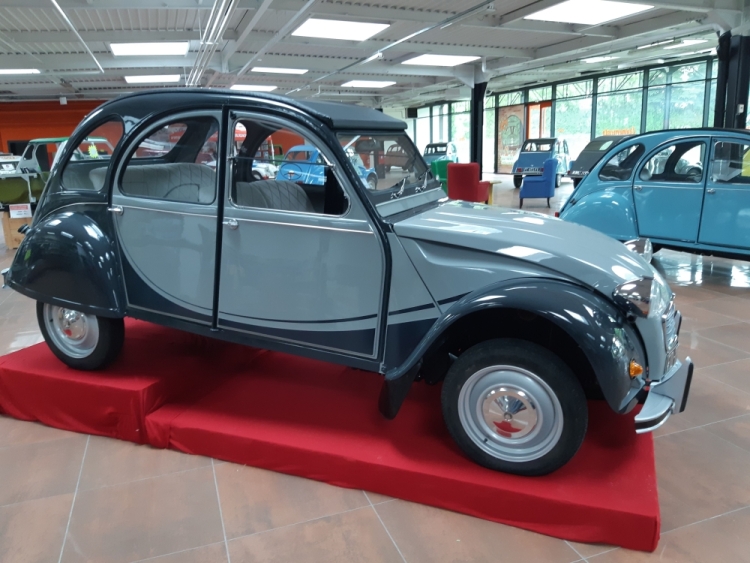
The Citroën 2 CV: timeless icon of French motoring
A true symbol of the French art of living, the 2CV won the hearts of the French with its simplicity, toughness and inimitable charm. Now a cult classic, it embodies the people's car par excellence.
Read the article
Subscribe to our MECATECHNIC newsletter