Your vehicle
No vehicle selected
Identify yours to refine your search results
No vehicle selected
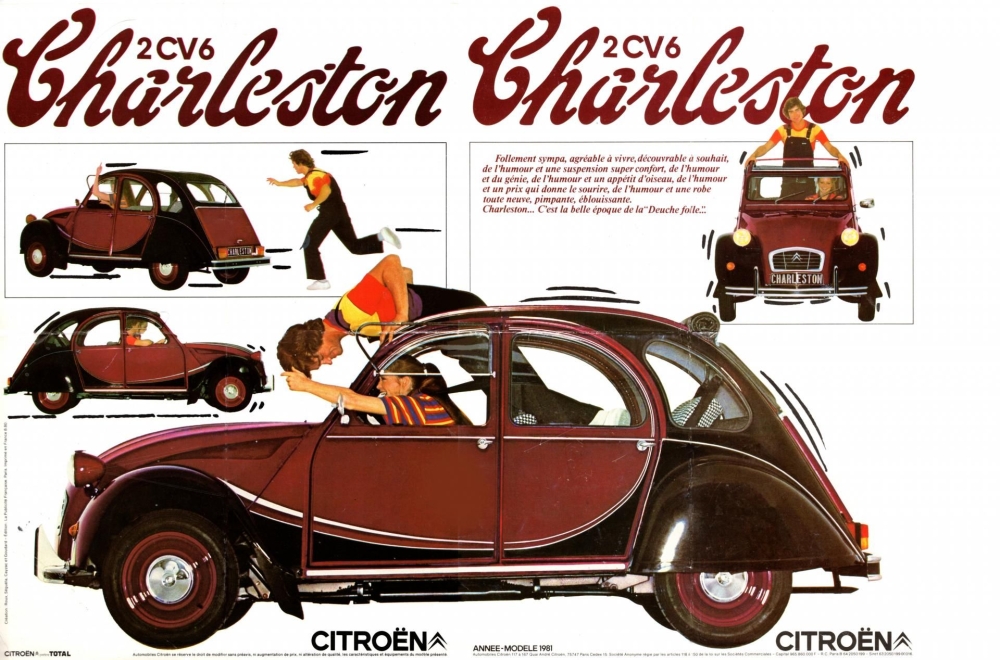
From the SPOT to the Charleston, the 2CV's limited editions have left their mark on French motoring history. A real playground for collectors.
16/03/2026
Harald
4 minutes read
Citroën
Limited editions, whether by the number of cars built, their presentation or their equipment, stand out from the crowd, to the delight of a growing number of drivers who want to drive something different. Limited editions are a real opportunity for a manufacturer to revive the image of a model that is losing momentum and/or to clear stocks of spare parts (interiors, steering wheels, engines, wheels, etc.).
Like any self-respecting icon, the Deuche was offered in several series built in small numbers, much to our delight.
Most of the time, only the exterior and interior colours changed, to "pimp" the old girl, not the equipment. A fashion icon of the motoring world, the Deuche could easily change outfits; everything suited her!
Before the Charleston, there was the Spot. Launched on 10 April 1976 in a run of 1,800 cars, it was the first official limited edition of the 2CV, and indeed of Citroën. Its two-tone Ténéré orange and Meije white paintwork, designed by Serge Gevin, carries through to the canvas roof and the door panels, striped orange and white.
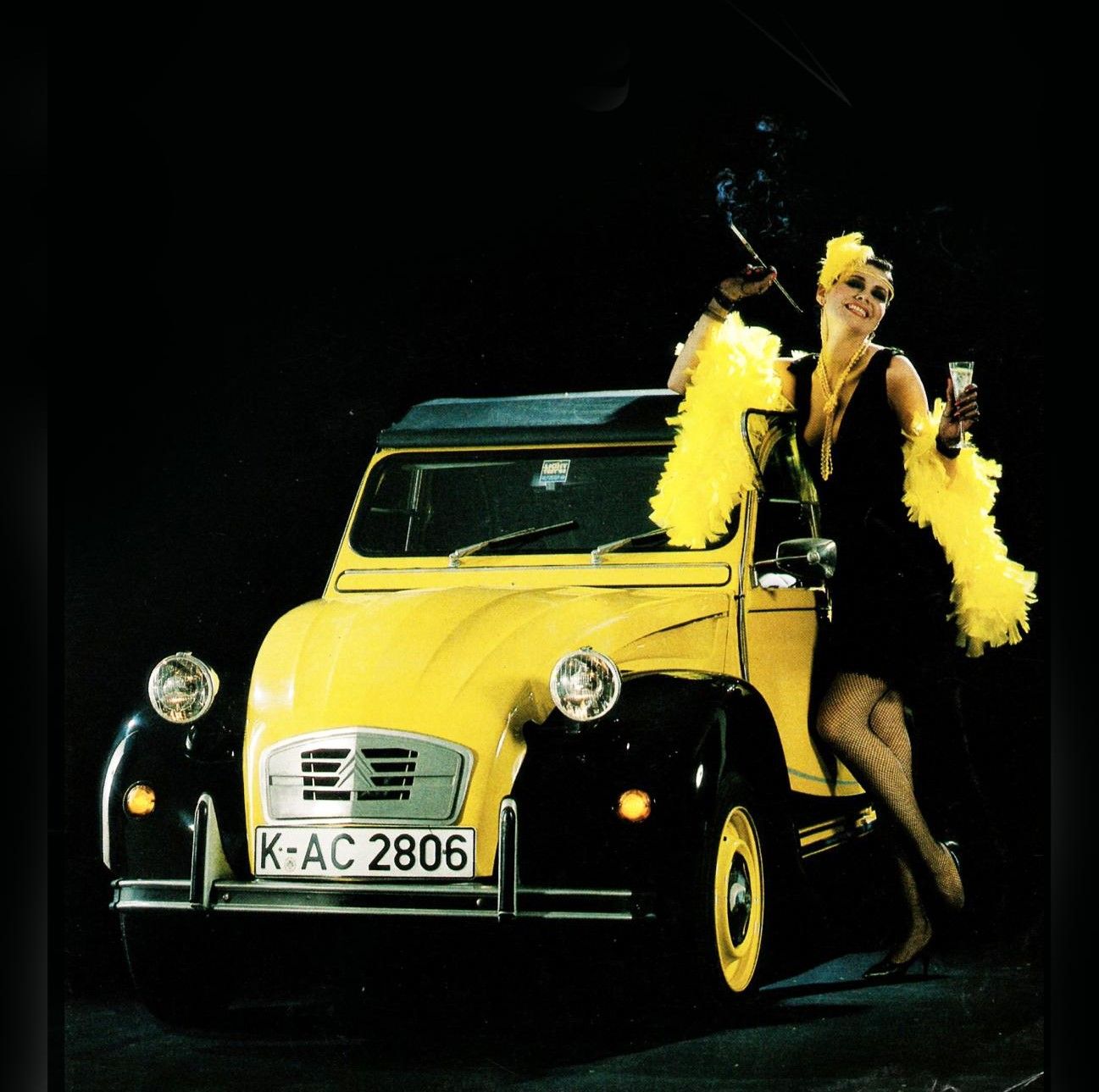
Very elegant in two-tone, it appeared in 1980. First shown in Delage red and black, it gained another touch of class with chrome headlights and two new colour schemes: Hélios yellow and black (built for 1 year) and Cormoran grey and Nocturne grey.
Given the success of the Charleston, it became a full model in the 2CV range in 1982, and was then the top of the range among 2CVs.
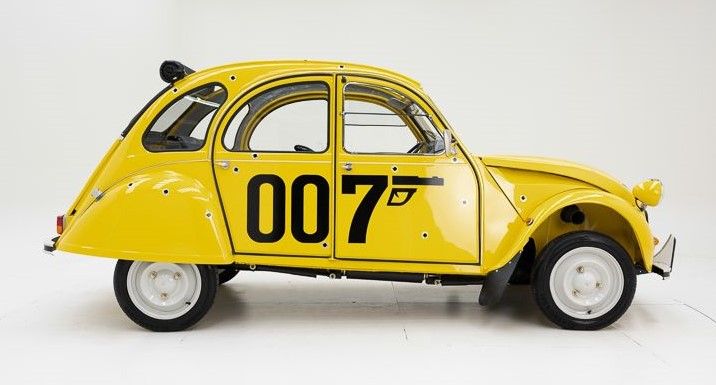
In "For Your Eyes Only", a yellow DEUDEUCHE lets 007 and Carole Bouquet escape the baddies in a 504 in a spectacular chase. Riding the success of the film, Citroën brought out a limited edition of 500 cars: the 007, based on a Hélios yellow 2CV6, decked out with huge 007 logos and fake bullet holes.
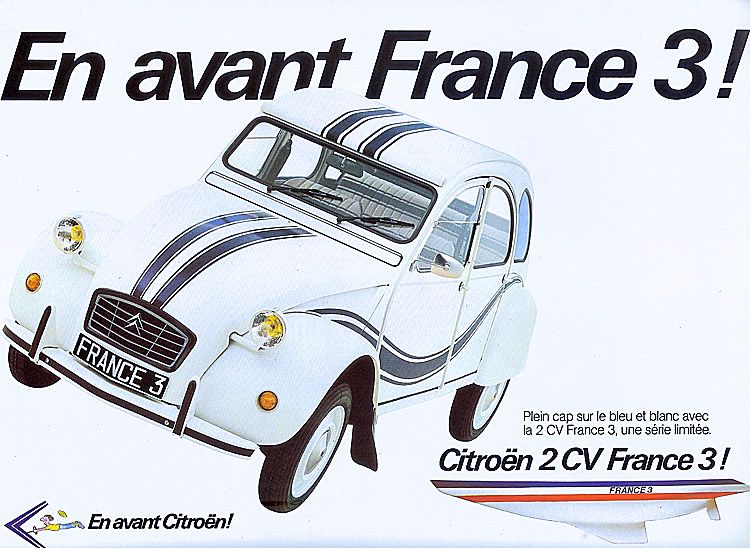
A limited edition of 4,000 cars, echoing Citroën's backing of the yacht France 3 in the America's Cup. An elegant nautical look in blue on white, with a beach feel, like the Méhari AZUR, also released in 1983.
Released in 1985 and 1986 in a run of more than 5,000, it took up the winning formula of the Charleston with an old-fashioned two-tone finish. Several colour combinations were available to reach a wider audience.
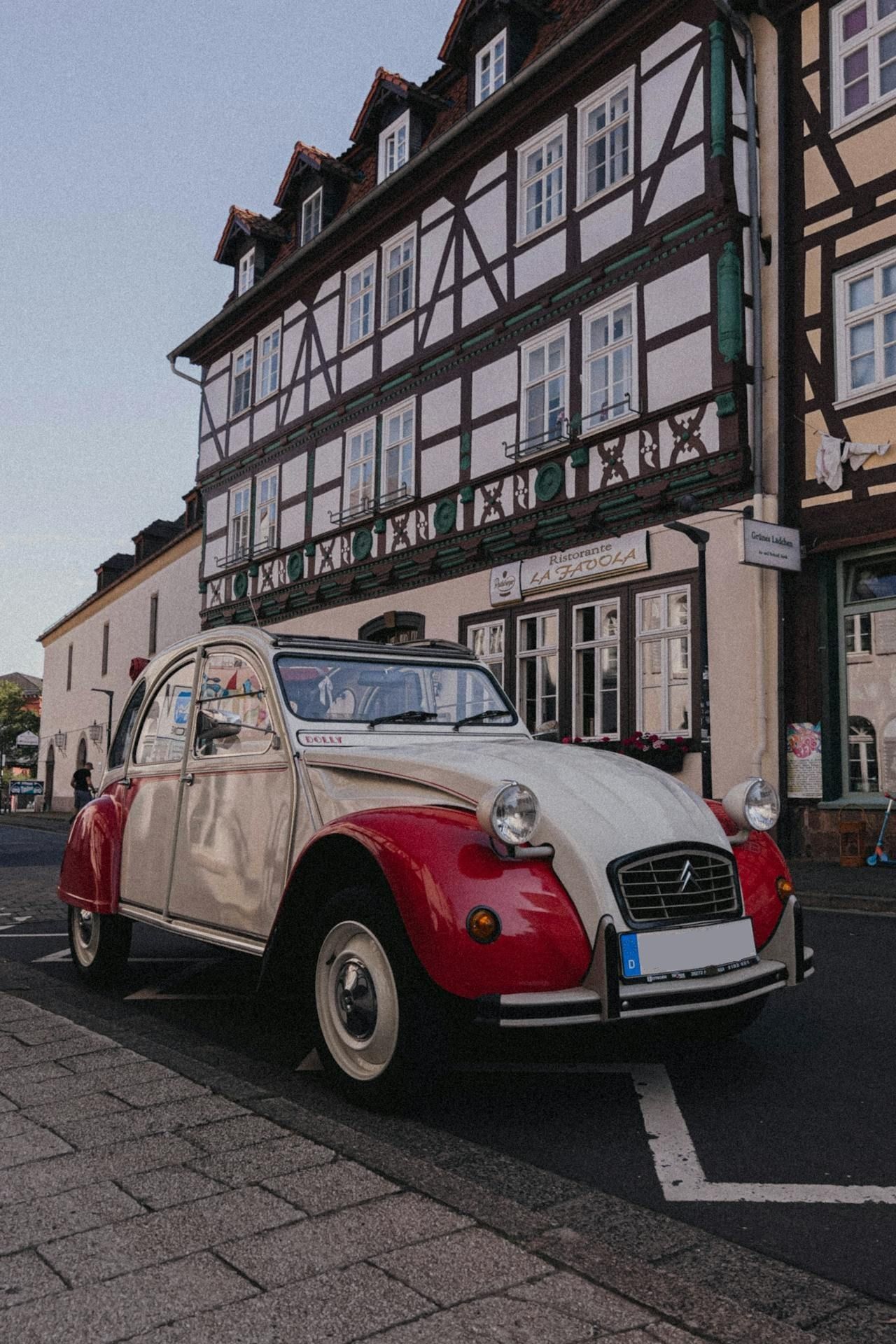
Built to celebrate a possible World Cup victory, it is white with blue and red sides. France only reached the semi-final, and the 1,000 patriotic cars struggled to find buyers.
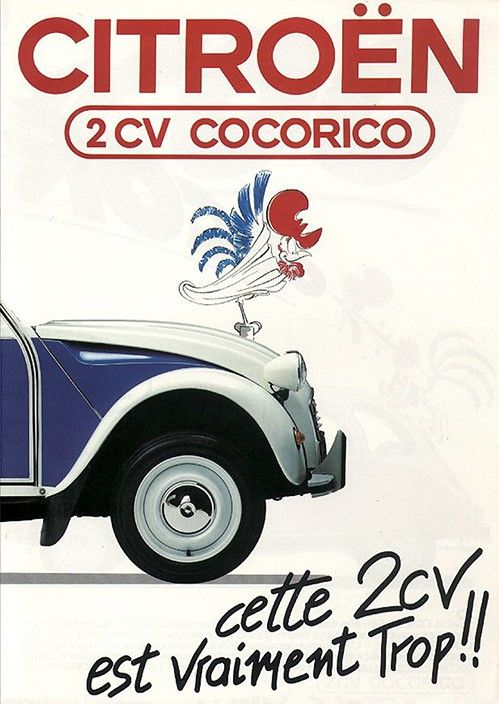
Produced from 1960 to 1966, it was part of the regular catalogue, and its low output of almost 700 units makes it a rarity, but the first true 2CV limited edition remains the 1976 Spot (1,800 cars, orange and white). Its (too?) revolutionary design, with two engines, meant it cost as much as 2 standard Deux Pattes.
Despite its ability to climb trees, it did not find the success expected. Which makes the SAHARA the most sought-after 2CV.
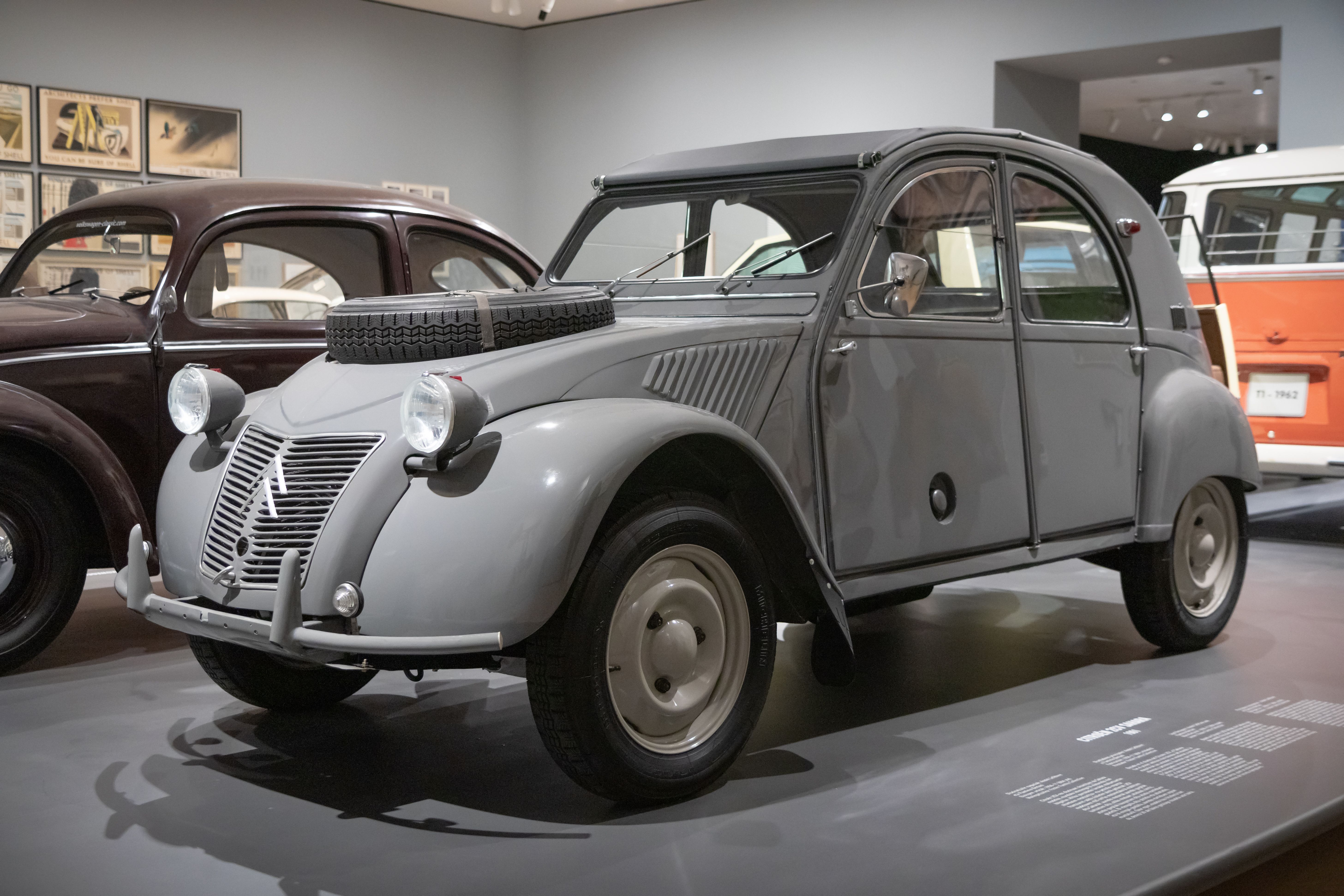
There were also special editions created exclusively for export markets:
Intended for Spain in 1982. Built in a run of 300, white and orange in the colours of the national football team (a basketball-shoe look)
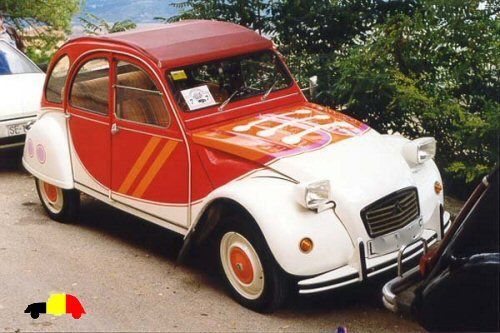
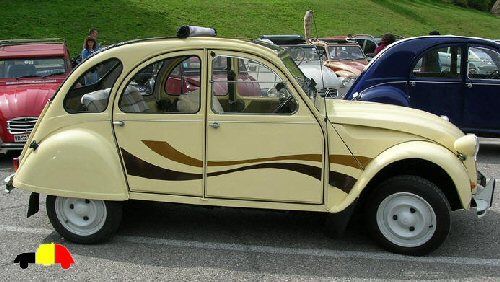
Produced for Switzerland in 1984: beige with brown stripe decals.
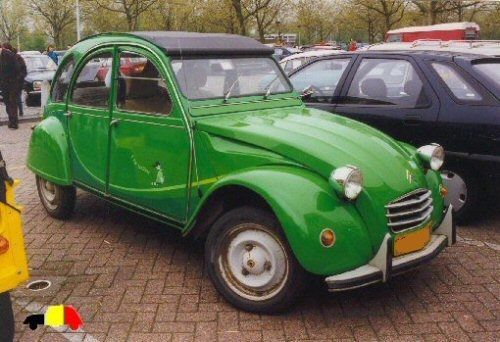
A bamboo green 2CV 6 that took up its nickname in Germany, "green duck". Also sold in Switzerland, it rode an environmental concern that was very much alive in these countries in the 80s. With a slightly reduced displacement, its engine was even fitted with a catalytic converter and its body with a little duck carrying the following message: "I run on unleaded"
The list of editions reserved for foreign markets grew right up to the end of the Deuche's career: the Sausss-Ente for Germany and Switzerland in 1987, the Bamboo for the United Kingdom the same year, then the Perrier for Belgium in 1988, named after the famous sparkling water.
The limited editions allowed Citroën to give the 2CV a new burst of energy during periods when it was running out of steam. These restricted editions are now a great joy to the collectors who own them or hunt them down.

Harald
Le partage de la Passion, simplement.
Previous article
Volkswagen Transporter T4: the first modern camper van
Next article
The Golf 2 and its special editions
Similar articles
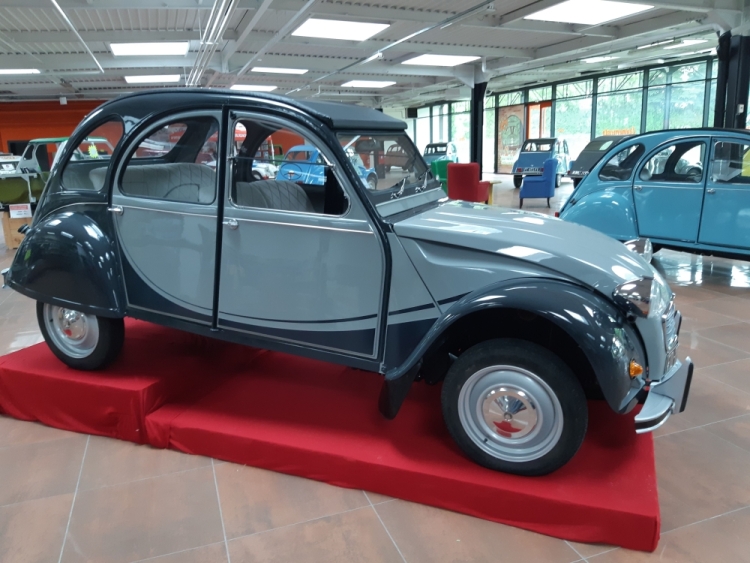
The Citroën 2 CV: timeless icon of French motoring
A true symbol of the French art of living, the 2CV won the hearts of the French with its simplicity, toughness and inimitable charm. Now a cult classic, it embodies the people's car par excellence.
Read the article
Subscribe to our MECATECHNIC newsletter