Your vehicle
No vehicle selected
Identify yours to refine your search results
No vehicle selected
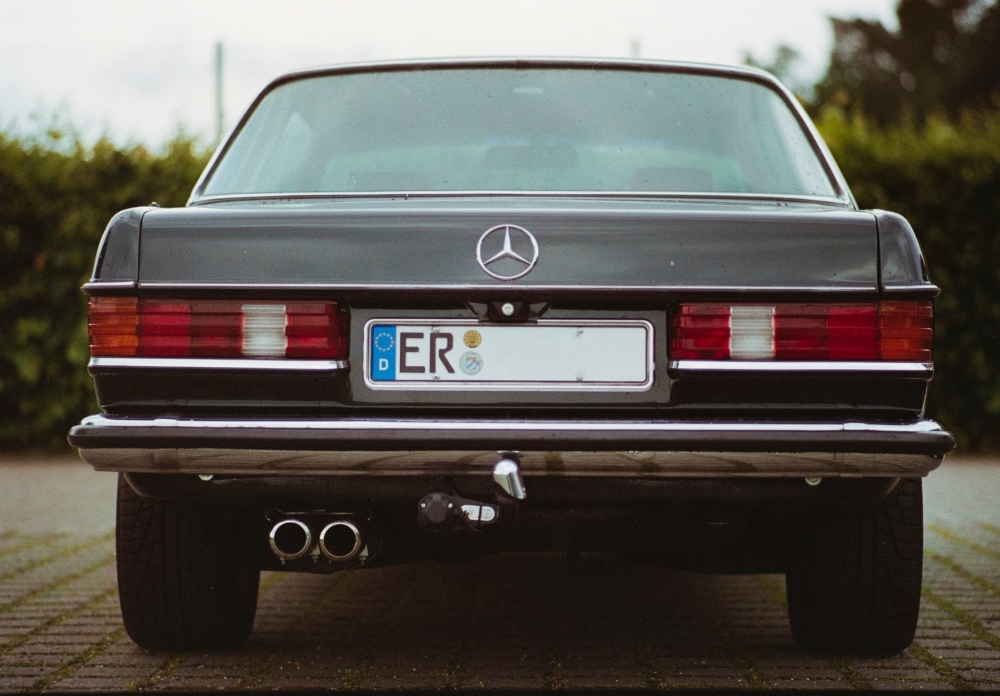
Nearly 2.7 million built, taxis that clock up more than 500,000 km: the Mercedes W123 built the marque's reputation for indestructibility. A look back at its career, from 1976 to 1986.
22/10/2026
Harald
7 minutes read
Just say its name to a former taxi driver and watch his eyes light up. The Mercedes W123 is neither the fastest nor the most luxurious Mercedes, but it may be the one that best embodied the marque's promise: a car built to last. With nearly 2.7 million built in ten years, it is also one of the greatest successes in Stuttgart's history. A look back at the career of a saloon that became a legend of robustness.
The W123 took over from the W114 and W115 series, the famous "Strich Acht" (/8). Production began in November 1975, and the international press discovered it at the end of January 1976 on the roads of the south of France.
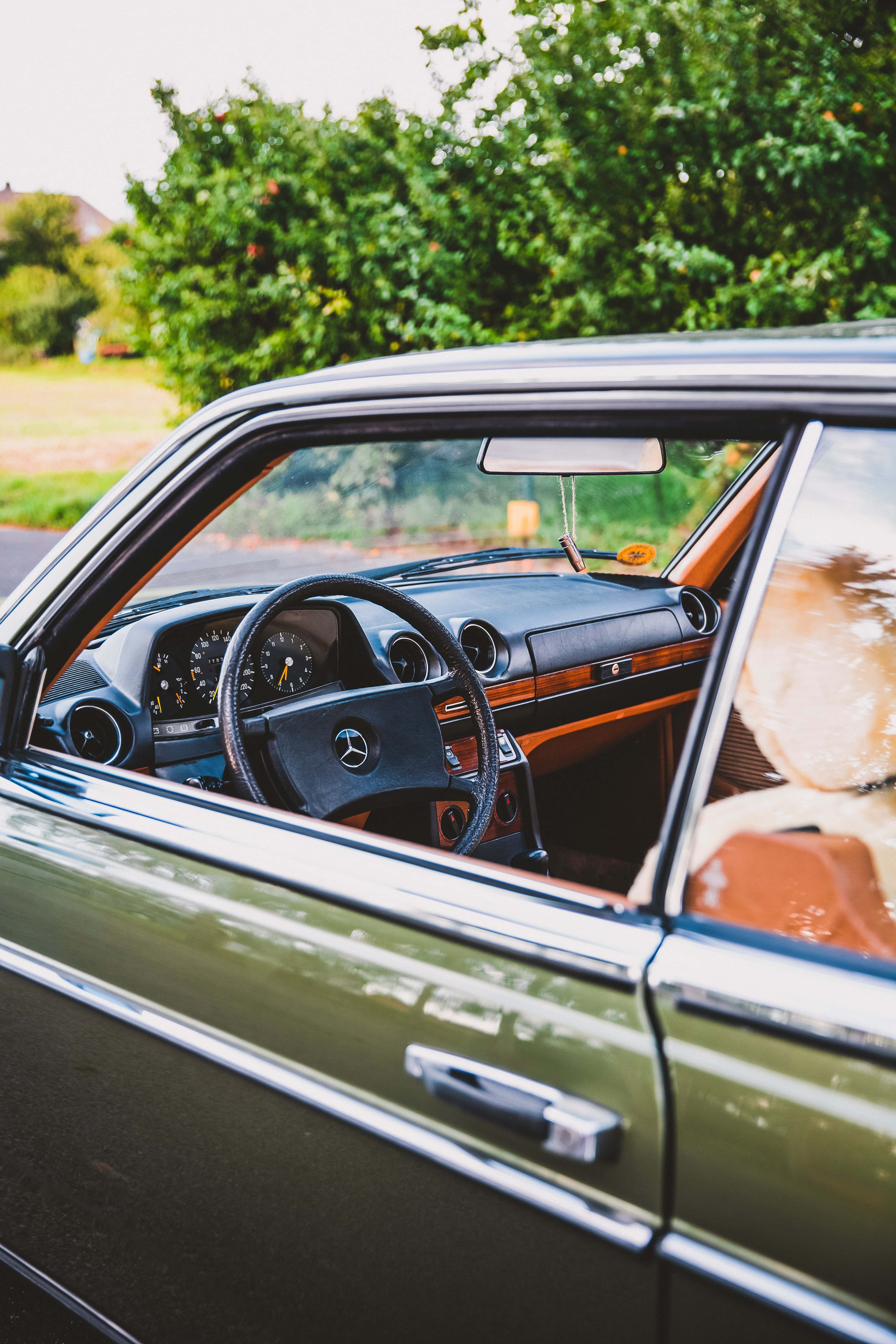
In terms of style, the lineage from the /8 is obvious, but everything was reworked: longer wheelbase, horizontal headlights, redesigned dashboard. Above all, the W123 took over most of its predecessor's engines, which let it reach the market with mechanicals that were already proven.
The four-door saloon, code W123, led the way and would remain by far the most-produced version, with around 2.4 million built. It was joined in 1977 by the C123 coupé, lower, with no central pillar, and with its wheelbase shortened by 85 mm. In 1978 came the estate, which Mercedes calls "T" and whose internal code is S123. It was assembled in Bremen, and the very last W123s would roll out from there.
Two more niche versions complete the range:
The designations follow the Mercedes tradition of the time: the number gives the displacement, the "D" signals a Diesel and the "E" petrol injection. The catalogue is wide, from the 2-litre four-cylinder to the 2.7-litre six-cylinder.
At the bottom, the four-cylinder 200 and 230; above, the 250 and its 2.5-litre six-cylinder. The top of the range goes to the 280 and 280 E, powered by the M110 twin-overhead-cam six-cylinder of 2,746 cm³, carburettor or injection, which reaches 185 hp in its final version. In June 1980, a new four-cylinder, the M102, replaced the old engine in the 200 and 230, the latter becoming the fuel-injected 230 E.
This is where the W123 forged its reputation. The range starts with the four-cylinder 200 D, 220 D and 240 D, whose first versions top out at around fifty horsepower, and continues with the 3-litre five-cylinder of the 300 D. These engines are no powerhouses, but they seem impossible to wear out. German taxis made them their tool of the trade, and passing 500,000 km without major work was nothing exceptional.
Presented in September 1979 and built from 1980, the 300 TD Turbodiesel estate pushes the five-cylinder to 125 hp thanks to a turbocharger. On the W123, this turbocharged engine was also offered in saloon and coupé form, but only for export, to the United States in particular. In Europe, it remained reserved for the estate.
The W123's robustness was also proven in competition. In 1977, a barely modified 280 E won the London-Sydney marathon rally, an event lasting several weeks across Europe, Asia and Australia. For Mercedes, absent from competition for many years, it was a high-profile comeback.
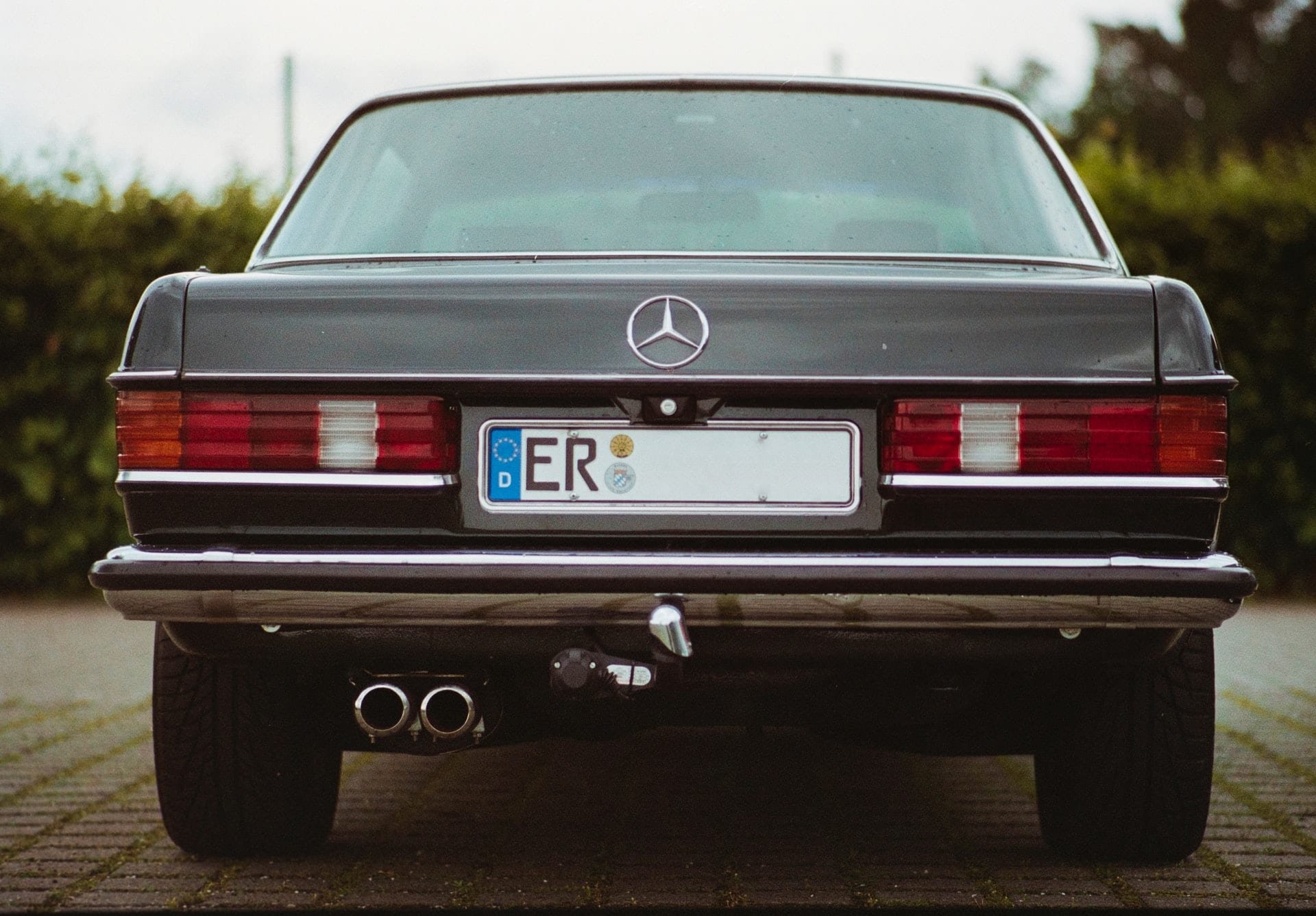
The W123 is nothing spectacular at first sight, but its body was designed to protect its occupants. The passenger compartment forms a rigid cell, reinforced at the roof and pillars, while the front and rear deform to absorb the energy of an impact. The doors receive reinforcements against side impacts, and the steering column is connected to the steering box by a corrugated tube designed to collapse, to stop it moving back towards the driver in an accident.
The electronic equipment arrived during its career and as an option, at high prices: ABS from 1980, then the driver's airbag in autumn 1982, paired with a seat belt pretensioner on the passenger side. A 1976 W123 therefore has neither: beware of adverts that promise equipment that is impossible for the year.
The W123 evolved through small changes. Enthusiasts tell three series apart:
These pointers are useful when ordering parts: lights, trim and controls change from one series to another, and a car may have received parts from a later series over the course of repairs.
At the end of 1984, Mercedes presented the W124, which gradually took over. W123 saloons and coupés left the lines in 1985, and the last estates rolled out of the Bremen plant in January 1986. The final tally was 2,696,915 units, all body styles combined.
One note on vocabulary, to finish: you often read that the W123 is the first "E-Class". The name did not exist at the time. It only appeared in July 1993, when Mercedes reorganised its range into Classes and renamed the facelifted W124. The W123 is the ancestor of the E-Class, not an E-Class.
The W123's mechanicals largely live up to their reputation, provided they have been maintained. The weak points are rather to be found in the bodywork and the components that age with time:
Before ordering anything, identify your model precisely using the table of Mercedes W123 engines: model type and engine code are detailed there for each version. And if your W123 spends the winter in the garage, our tips on winterising a classic car properly will help you find it in good shape in spring.
Nearly fifty years after its launch, the W123 remains one of the easiest classics to live with day to day. Robust, simple to maintain, comfortable: it never needed to try too hard to win people over.

Harald
Le partage de la Passion, simplement.
Subscribe to our MECATECHNIC newsletter