Your vehicle
No vehicle selected
Identify yours to refine your search results
No vehicle selected
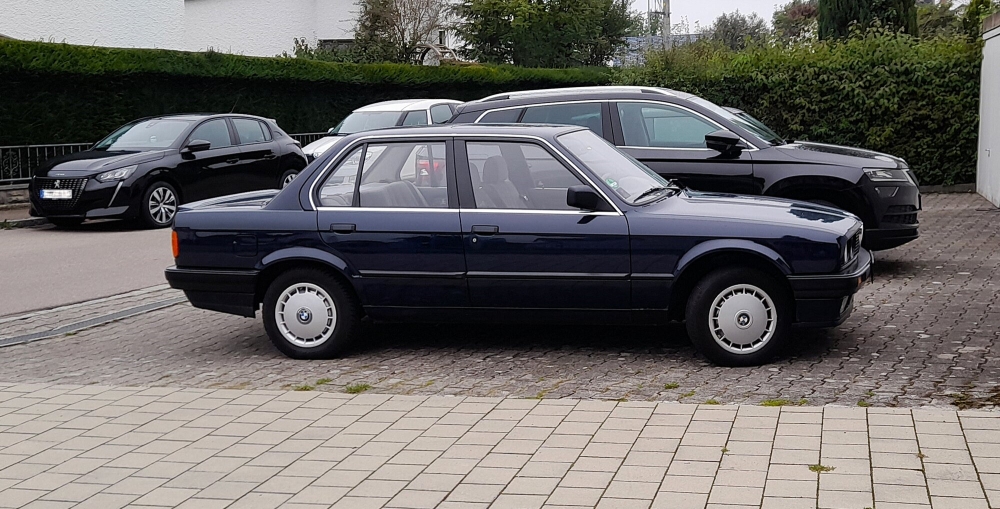
The 3 Series E30 and its replacement the E36 have become sought-after youngtimers. Two owners tell the story of their cars: a 318is restored line by line, an original 325i saloon and a coupé built for the track.
22/10/2026
Harald
6 minutes read
For more than fifteen years, the BMW 3 Series was the benchmark for sporting compact saloons. Two generations in particular have become sought-after youngtimers: the E30, the last 3 Series with angular lines, and the E36, which took the range into the 1990s. Two owners told us about their cars, and each shows a different way of keeping a 3 Series alive.
The E30 succeeded the E21 at the end of 1982. It was built until 1994 in more than 2.3 million examples. The range quickly widened: two and four-door saloon, cabriolet, then the Touring estate, introduced with the facelift presented in September 1987. The catalogue brought together economical four-cylinders, smooth straight-sixes and, at the top, the M3.
Between the two slipped a version that became a cult: the 318is, built from 1989 to 1991 and offered only as a two-door. Its 1.8-litre 16-valve M42 four-cylinder produces 136 hp. It introduced the four-valves-per-cylinder technique at BMW on a mass-market 3 Series.
The E36 was presented in autumn 1990, at first as a saloon. It is wider and more modern. The coupé arrived in early 1992, followed by the cabriolet, the Compact and the Touring. The 325i received the 2.5-litre, 192 hp M50 straight-six, which adopted Vanos variable camshaft timing at the end of 1992. The E46 took over in 1998.
The parts for each generation can be found on the BMW 3 Series E30 and BMW 3 Series E36 pages, with access by engine for the E30 as for the E36.
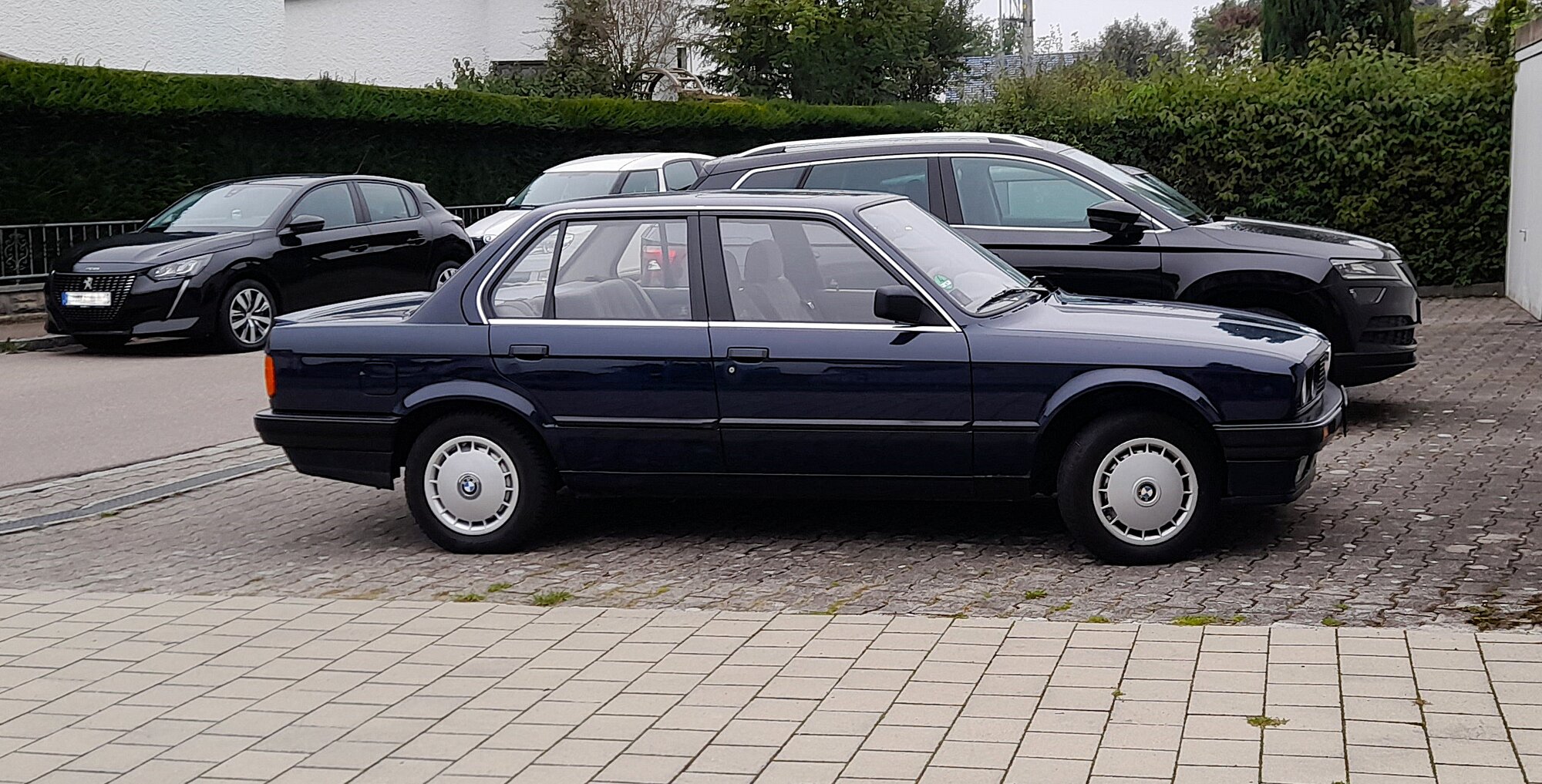
Clément bought his 318is from a private seller who no longer wanted to undertake the costly repairs it called for. He became its second owner. A particular feature of this example: a leather interior, whereas most standard 318is cars received, according to him, tartan cloth upholstery.
It took him a little over a year to restore it almost completely. His list of work is a good aide-memoire for anyone tackling an E30:
The rear valance and the engine parts came from Mecatechnic. To find the same references, start from the list of E30 engines: the 318is's M42, with its 16-valve head, has its own cylinder head and timing references.
An E30 bought "needing work" can become a sound car again, provided you tackle the project in the right order: basic mechanics first (sealing, timing, clutch, steering), then bodywork and paint. On a chain-driven engine like the M42, replacing the chain and its guides is one of the operations to expect on a car that has lived a life. Finally, an interior or a rare option should be checked against the car's original documents before paying a premium.
Paolo has loved cars since childhood, and BMWs in particular. With a few friends, he started by buying one E36, then two, then three... and never stopped. Two cars stand out from his collection.
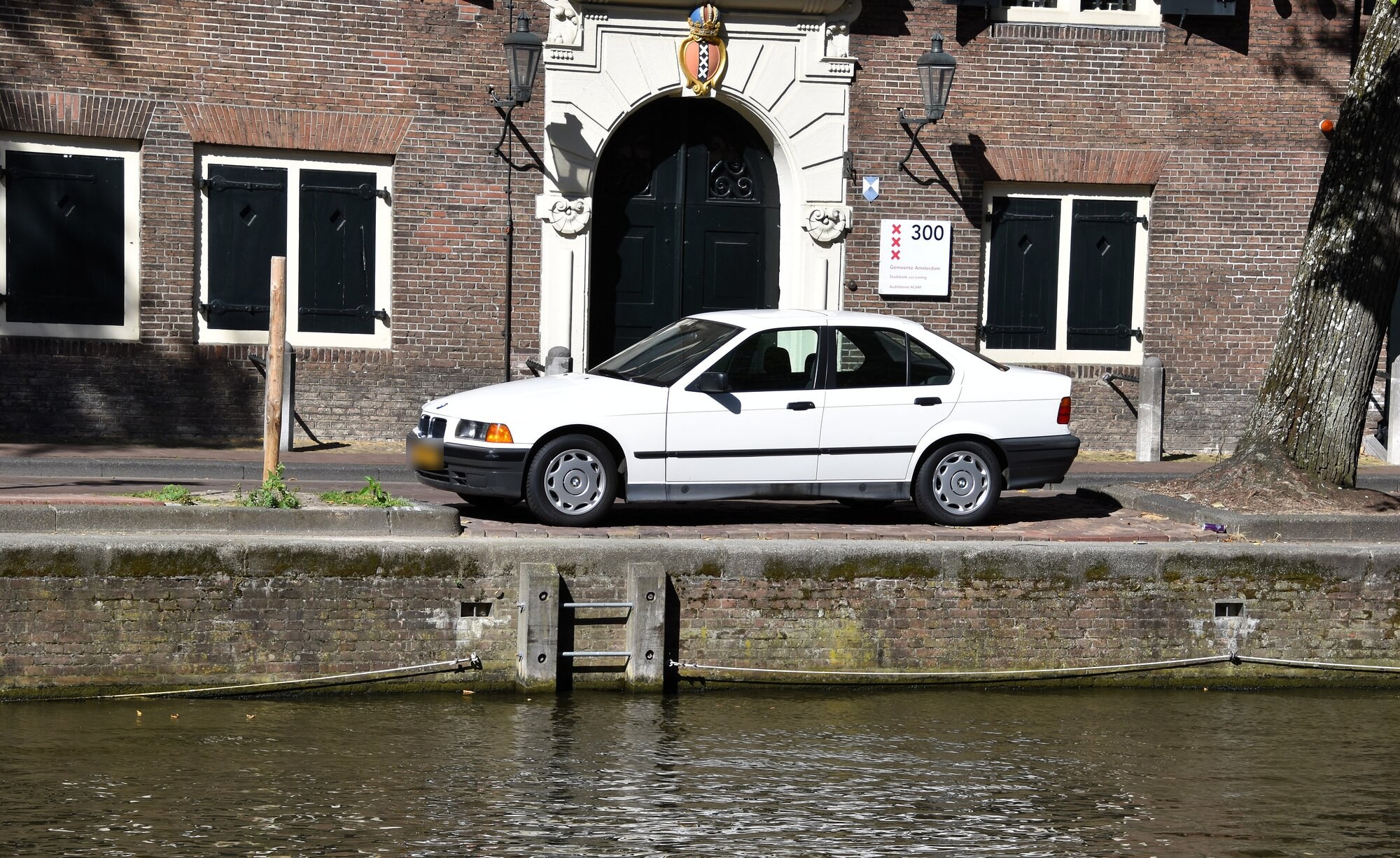
The first is a period 325i E36 saloon, in a condition he considers faultless. It has kept its yellow headlights and its original car radio. These are precisely the details that make an E36 valuable today: many have been modified, and a saloon that has stayed original is becoming rare.
The second is the one closest to his heart: a 1993 325i coupé, bought in 2015. Fitted with the 2.5-litre Vanos M50 straight-six, it is the car on which he learned everything about drifting. The car was transformed for this use:
These modifications only make sense on a circuit, in an organised setting. A welded differential and increased steering lock make a car tricky and non-compliant on the open road. Drifting is done on track, with the appropriate safety equipment.
For a road-going E36, a kit of adjustable threaded coilovers for the 3 Series E36 lets you adjust the height and firmness without touching the rest of the rear axle. Parts for the next generation are on the BMW 3 Series E46 page.
Do you drive an E30, an E36 or another older BMW? Tell us its story: we will publish the best ones with your agreement. The whole range is accessible from the BMW page.
Harald
Le partage de la Passion, simplement.
Subscribe to our MECATECHNIC newsletter