Your vehicle
No vehicle selected
Identify yours to refine your search results
No vehicle selected
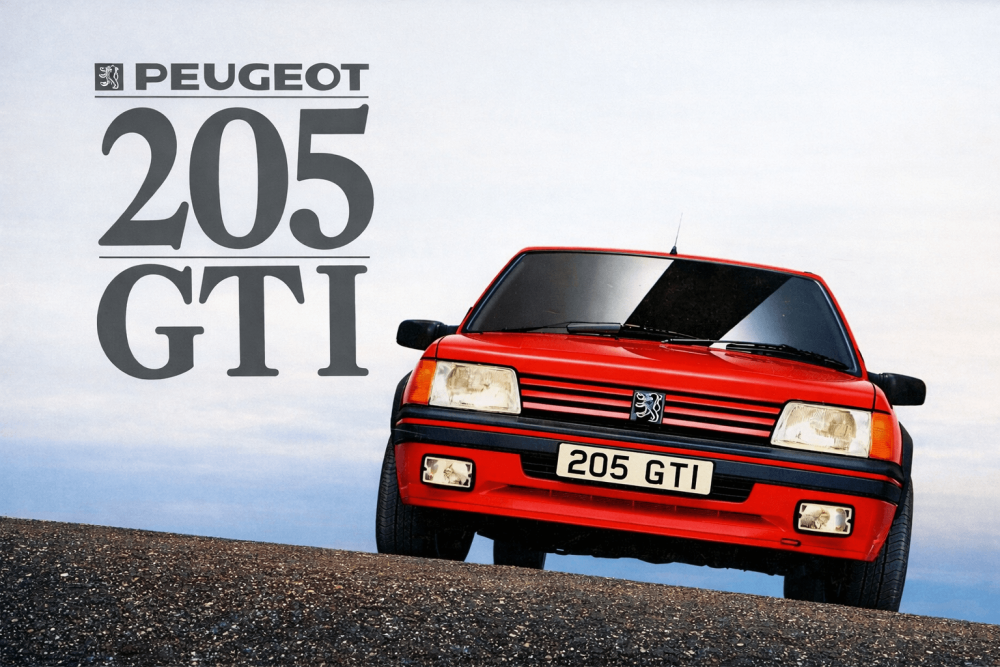
Small in size, huge in aura, the Peugeot 205 GTI defined the 1980s with its formidable chassis and its 1.6 and 1.9 engines. From the Rallye to the legendary Turbo 16, we look back at an icon that became the benchmark of the Youngtimer movement.
19/03/2026
Harald
10 minutes read
Peugeot
In 1984 Peugeot finally bared its claws and hit back at the Golf, by then on its second generation of GTI.
Peugeot was not in great shape at the end of the 70s and the Peugeot 205 was slow to leave the drawing board; the lion was dozing and its belly was rumbling a little. So the 205's "TI project" was eagerly awaited by enthusiasts who wanted a replacement for their beloved but underpowered 104 ZS (80 hp).
The 205 GTI is versatile, you can do anything with it, let's not forget that it is first and foremost a 205; you just do everything faster and with a grin on your face … and that is where the difference lies.
The 205 became a cult car, and its GTI version became a myth; a benchmark among small sports cars, following in the wake of the R8 Gordini in the pantheon of French sports cars.
This little firecracker has a real chassis, and a well thought-out one; that is the strong point of Peugeot's sports cars.
Its engines, 8-valve 4-cylinders, the 1600 (pronounced "16-100") which came out with 105 hp and then 115 hp, and the fiery 1900 ("19-100") with 130 hp, put it right in the race among the "B segment" sports cars.
Or rather the 205 GTI 1.6L models, plural: first the 105 hp, then the 115 hp. The example was set by the wolf of Wolfsburg (VW); the lion of Sochaux followed the recipe and even improved on it.
Take a good engine, here the XU from the 305 coming from Française de Mécanique, fit fuel injection (BOSCH L-Jetronic), sprinkle in a few hundred grams of brute force and have it rev to 6,250 rpm. To handle all that, the front end was reworked: anti-roll bar, wishbones, ventilated front discs, stiffer dampers and springs; a lowered chassis and 4 alloy wheels in 14" fitted with low-profile tyres completed the package.
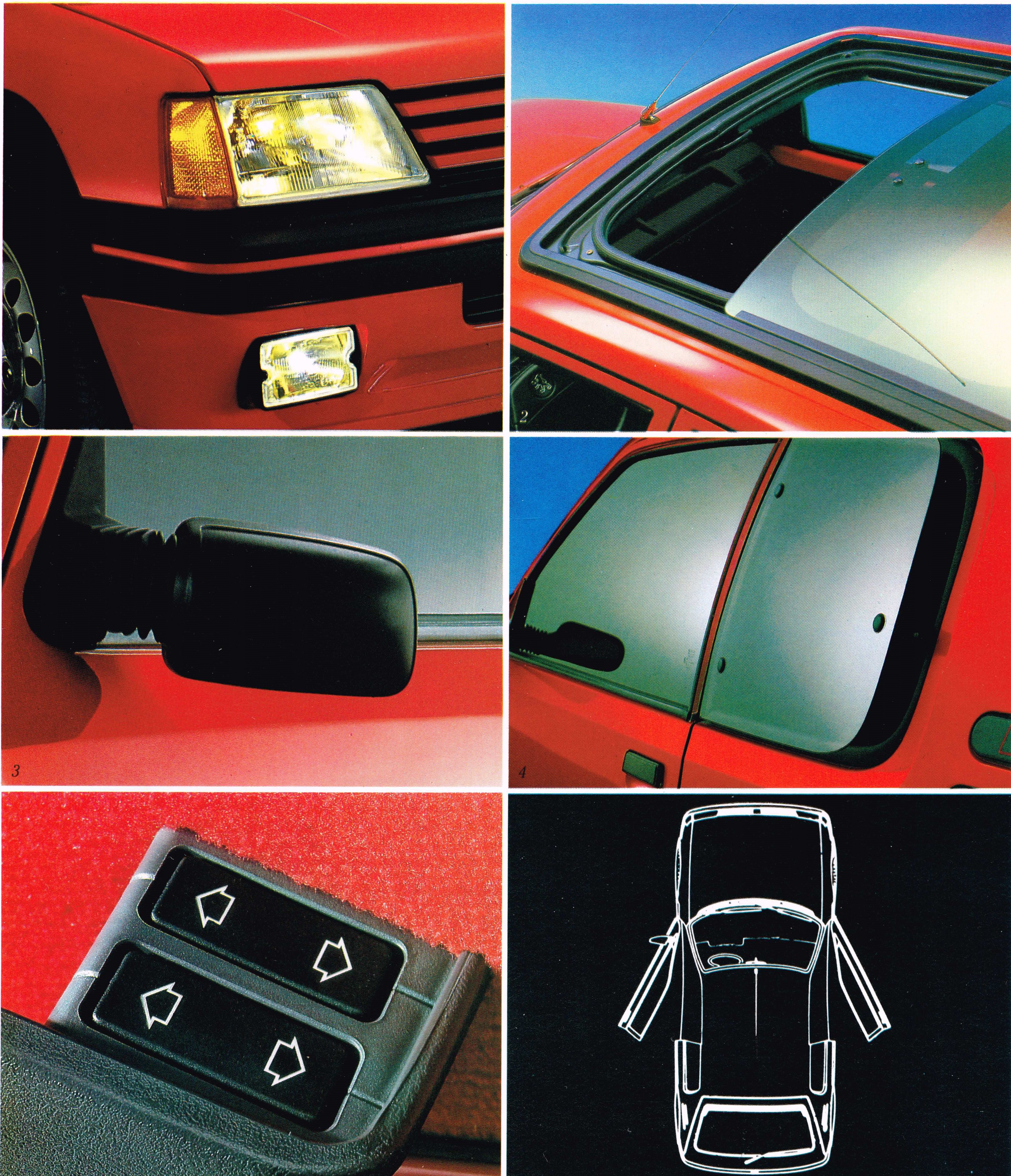
The top-of-the-range 205s had an options list that could be ticked on the GTI to make it cosier. Central locking, electric windows, sports seats, a large sliding glass sunroof. In return, the GTI passed on its steering wheel, its bucket seats and its red carpet to several very select limited editions such as the 205 Roland-Garros, the 205 Indiana and the 205 Lacoste.
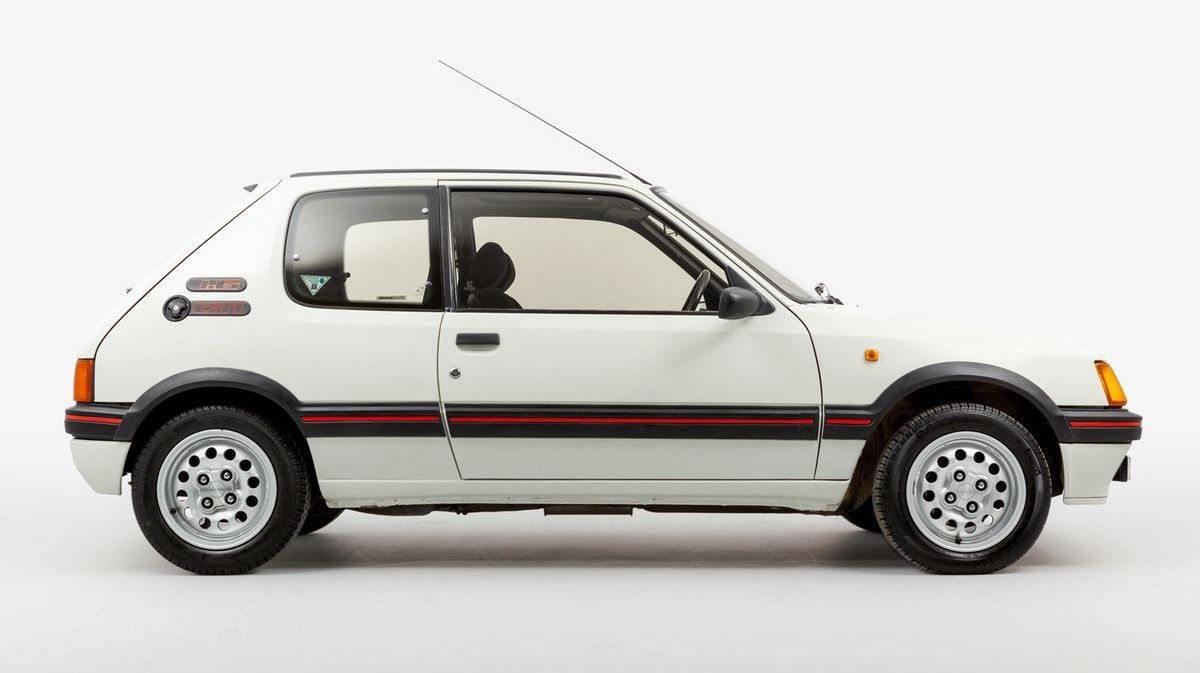
The looks are not left behind either: sill and wheel-arch protectors with a red pinstripe, wing extensions, GTI badges, cloth bucket seats, sports steering wheel, gear knob with red lettering and so on.
To take on the boiling Supercinq GT Turbo that had just come out, Peugeot added 10 horses to its 1600 and levelled the score at 115 hp. The 5 has more of a "rally" feel, while the 2 without a 5 is "classier" and was very popular with "dynamic young executives".
The GTI 115 was facelifted along with the other 205s, for the 1988 model year.
Inside: new dashboard, rounded stalks; steering wheel and door cards were modernised.
Outside: new mirrors and spoiler, white indicators and red-and-white or smoked rear lights (1990 +), long-range driving lamps with yellow reflectors and clear glass.
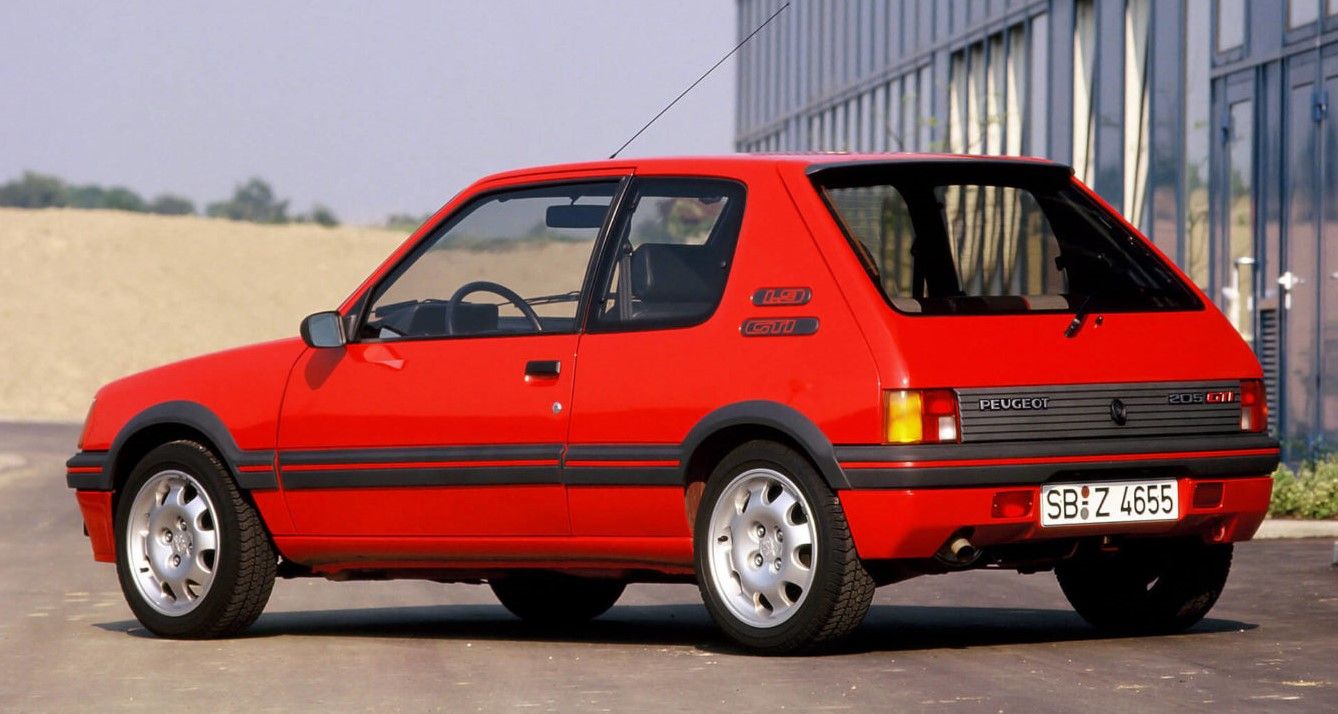
It arrived just in time to counter the Golf 2 and its 139 hp in 16s form (a heavier car). With the 1.9L (pronounced "one-nine-litre"), Peugeot asserted itself in a "who's the boss now?!" way. The 205 GTI 1900 was hailed by the press of the day as the most well-rounded GTI of its time, against the Kadett GSI 16s, the Golf GTI 16s and the R5 GT Turbo.
Its plucky, torquey engine came from the 305 GTX; it combines temperament, flexibility and pick-up, and the 205 GTI became smoother thanks to its capacity and its BOSCH L-Jetronic injection. The 1900 is less fierce than the 1600 but more usable at every rev range.
The 130 hp car has "sharp" handling in corners taken at speed: beware of the snap when you plant the stick. Flat out, the 1900 is unforgiving where the 1600 was forgiving; you don't lift off when it lets go … you stay on the throttle to get it through, otherwise a spin is guaranteed. Quite a few 1900s ended up in the scenery.
The last development, or rather regression, for this 1900 engine: the arrival of the catalytic converter with the 1993 model year. The cat was a catastrophe … the death of the little horses. People who drive a 205 GTI 1.9L speak of "the 130" to set it apart from the catalysed "122". But rest assured, every 205 GTI finds its audience.
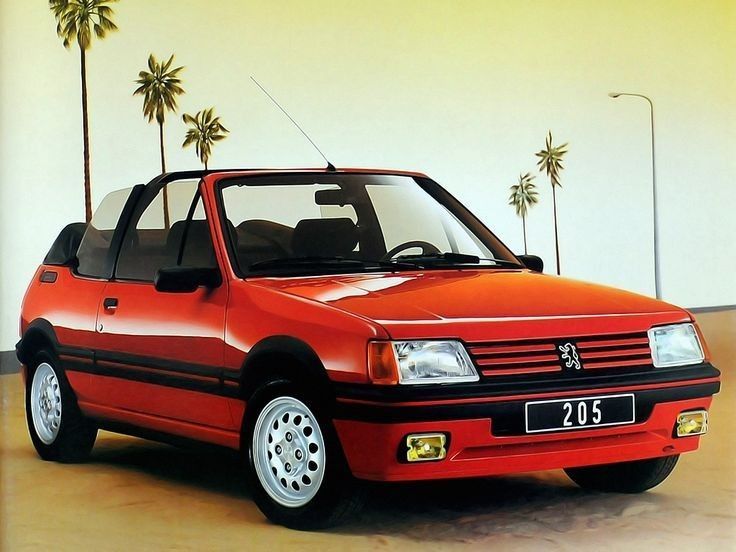
Peugeot launched its cabriolet in 1986, in two versions, CT (80 hp) and CTI (115 hp), to respond to a market turning towards VW, Ford and Opel. To make a (good-looking) cabrio, you take a 205 GTI 115 hp and chop the roof off? That is more or less it, and the Italian coachbuilder Pininfarina took care of it.
While the 205 CTI Cabriolet kept the engine and the looks of its coupé sister the GTI, it is not sporty for all that. Its monocoque lacks rigidity and its extra weight does not let it tackle corners like a 115: it wriggles.
The "GTI cabriolet" was therefore a delight for a trendy and somewhat bourgeois public, led by appearances.
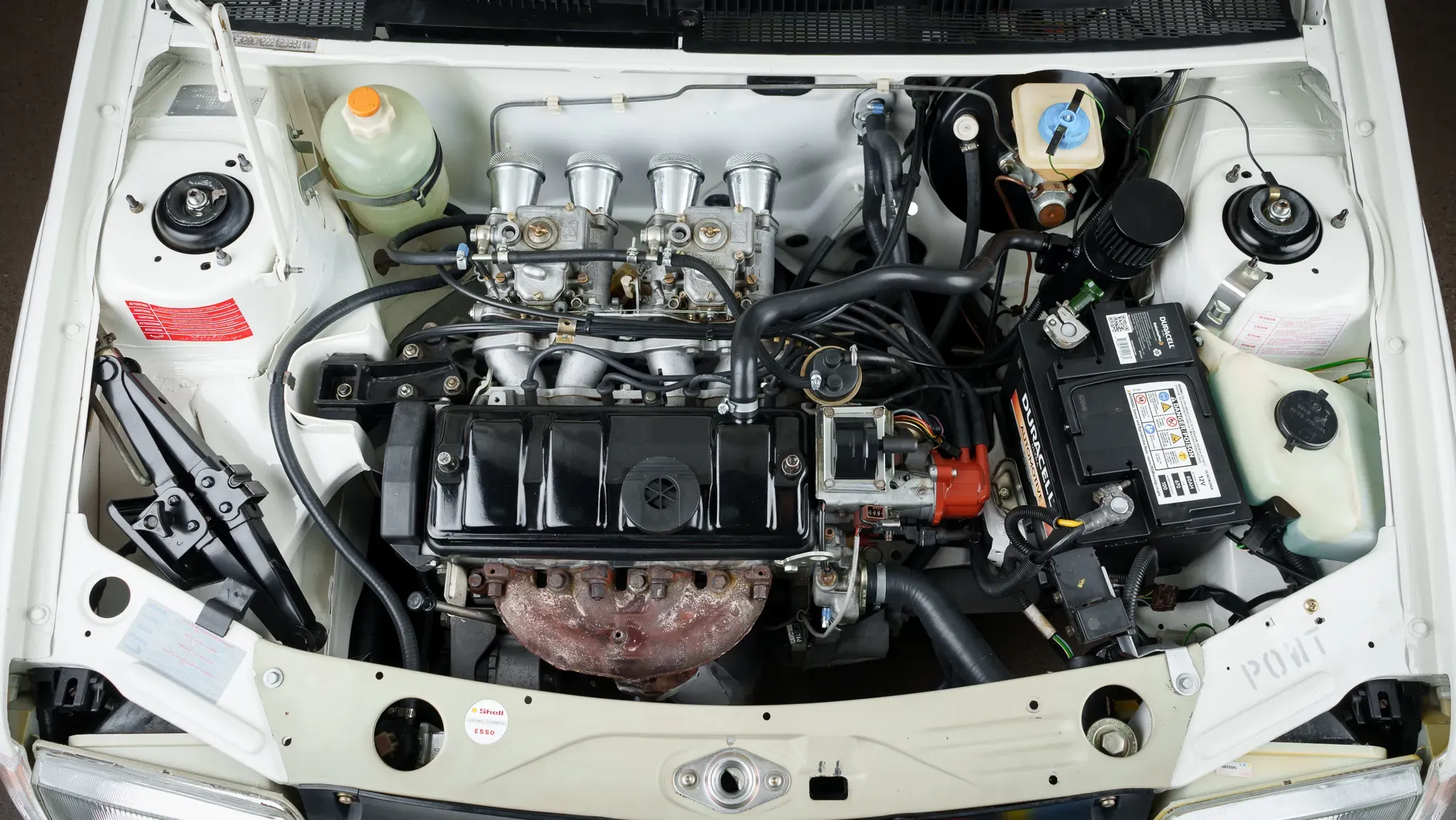
An affordable Sport series, allowing plenty of young talents to get a foot in the door of competition, through Group N. The Rallye is a cousin of the Visa Chrono, the Samba Rallye and the AX Sport, whose engine base (the TU24) it shares; it smells of performance and competition, and it has character.
Its vigorous 1300, tuned by DANIELSON (no, not Daniel's son), is fitted with 2 Weber DCOE 40 carburettors that really make a racket, produces 103 hp at 6,800 rpm and, driven hard, outruns the GTI 115.
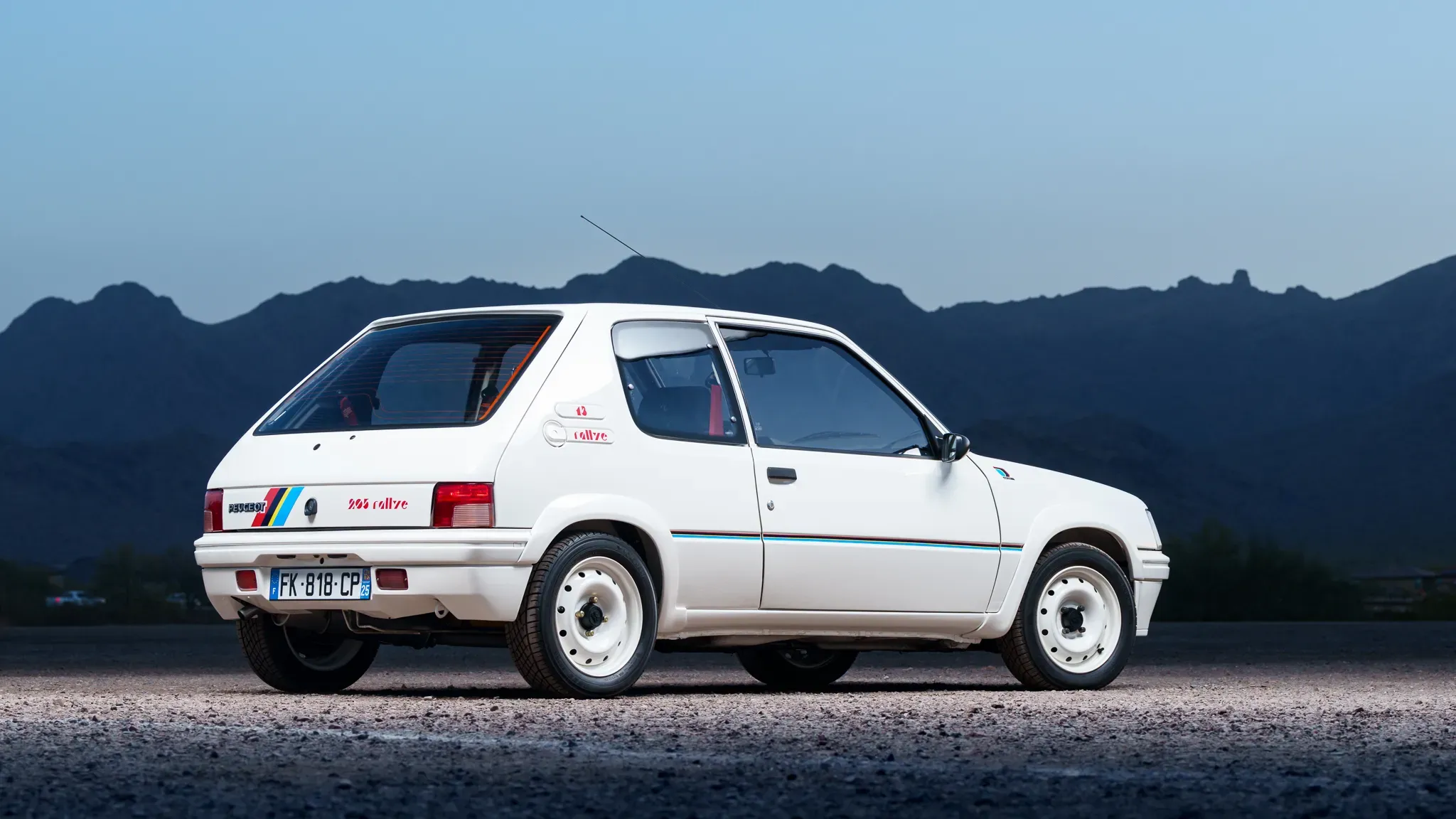
A 205 for racing and cheap, but not made for town, which it hardly enjoys; it is stripped of everything superfluous to weigh in at just 780 kg, which gives it remarkable agility, planted on its GTI 115 front end. The Rallye came in only one colour, all white, from the 13" steel wheels up to the roof.
At first glance you would think that, given what it is, it must be a limited series … not at all: 30,111 were produced over 4 years. Racing killed many of them and, like the GTIs, many were crashed out in the countryside.
Finding a good original Rallye is quite a challenge.
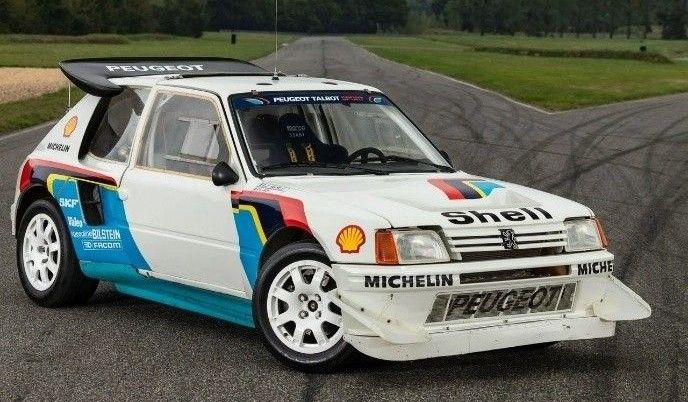
The "road-going" T16 was built in 1984 in a run of 200 "road" cars so that the 205 could enter the World Rally Championship in Group B.
This out-of-the-ordinary 205, devoted to competition, laid the foundations of the Group B version. To balance the car as well as possible, its engine and gearbox were placed in a central rear position. Its monocoque, built by partner coachbuilder HEULIEZ, received a gearbox and axle assembly for 4-wheel drive.
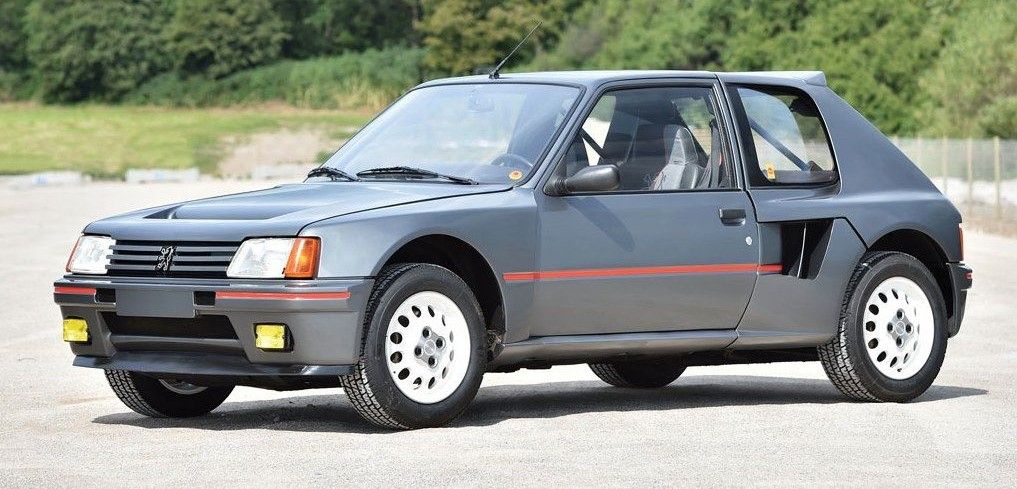
Its 1.8L engine, topped with 16 valves and force-fed by a turbo, develops 200 hp (430 and 600 hp in the racing versions).
It sold for more than a Porsche 911, the price of four 205 GTIs of the time! Despite its prohibitive price, this born collector's item found buyers without difficulty given its limited numbers and its lineage with Peugeot Talbot Sport (PTS).
If there is one French car that is a smash hit as a "young classic", it is the 205, which keeps putting on its show, and the GTI in particular. The 205 is like the 2cv and the 4L: it appeals to younger generations in search of little madeleines (as Proust would say, not Prost), because every youngster, young-young or young-old, had a 205 in the family at some point. It was the car passed from one generation to the next, and from one new licence-holder to the next within a family.
Another reason for the 205's success today: it is simple, has reliable engines, it is an economical car that ages well, parts are easy to find at good prices, every garage knows it inside out and it is not a complicated car to maintain yourself. Its wide distribution makes it a car that is still easy to track down, as far as basic 205s are concerned.
When you get to the cabriolets, the very well-equipped limited series and the GTIs … nostalgia comes at a price! The flip side is that these timeless versions are now in high demand, even though they were built in good numbers in their day. The value of the 205 GTI has exploded with the Youngtimer phenomenon; enthusiasts are fighting over them now that they can afford them. The 205 is a car for pleasure, and a good investment if you pay a fair price.
Did you know?
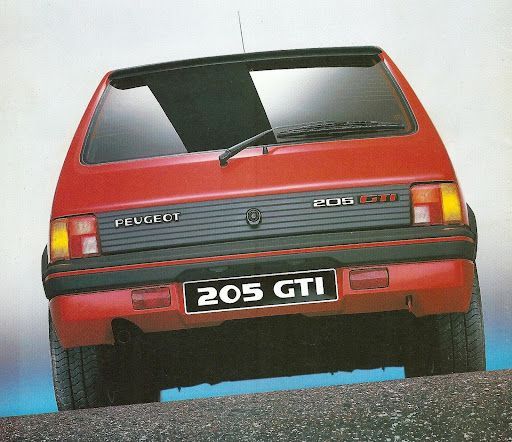
The success of the 205 exceeded all of Peugeot's forecasts, and the same went for its GTI versions. Nearly 295,000 of these little firecrackers were built in 10 years, so they are not rare. The 205 GTI became the most adored French GTI there is, an icon in the great Youngtimer family; it is much sought after in good condition and therefore expensive relative to the numbers made.
With it, you treat yourself to a trip back in time; it is a sort of sporty little DE LOREAN.
We would have loved to see a 205 GTI 16s …. Fitted with the engine of the 309 of the same name. Why was it never released?! So as not to overshadow its big sister and/or because Peugeot had other fish to fry at that time. A shame, we wanted more!

Harald
Le partage de la Passion, simplement.
Previous article
The Golf 2 and its special editions
Next article
The Brazilian Split Camper: a good alternative to the original Split?
Similar articles
The Peugeot 205: the success story of a real character
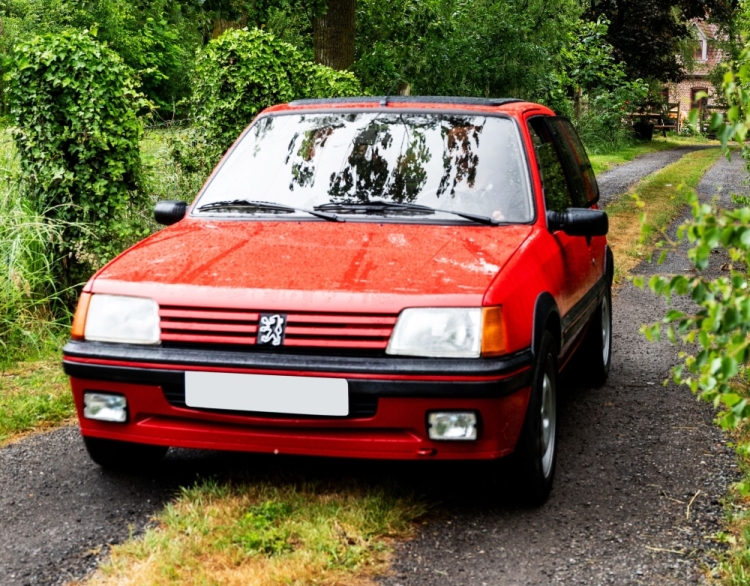
City car, GTI, convertible, diesel or rally beast: the Peugeot 205 did it all, won it all, and conquered it all. From 1983 to 1998, it put Peugeot back on its feet, left its mark on French motoring history and an unforgettable imprint in the hearts of enthusiasts.
Read the article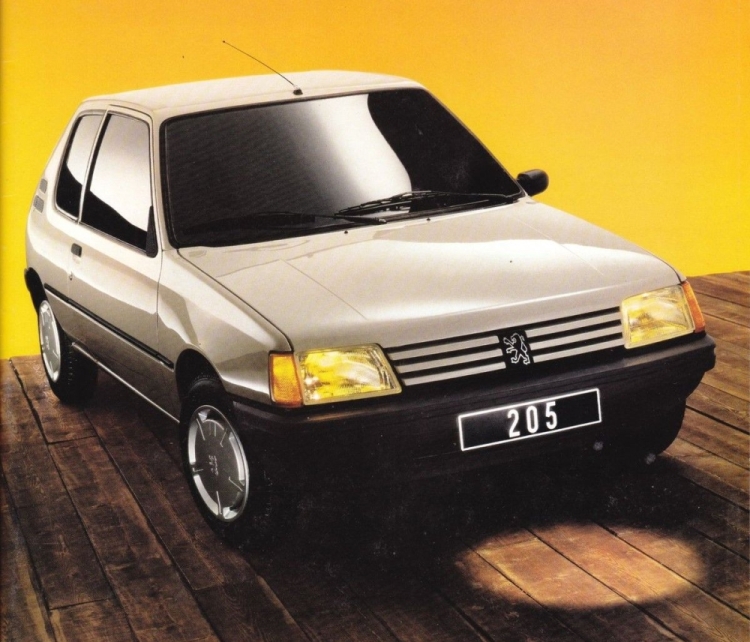
The Peugeot 205 special editions: the right numbers to stand out
205: the most original limited editions, from the Lacoste to the Roland-Garros.
Read the article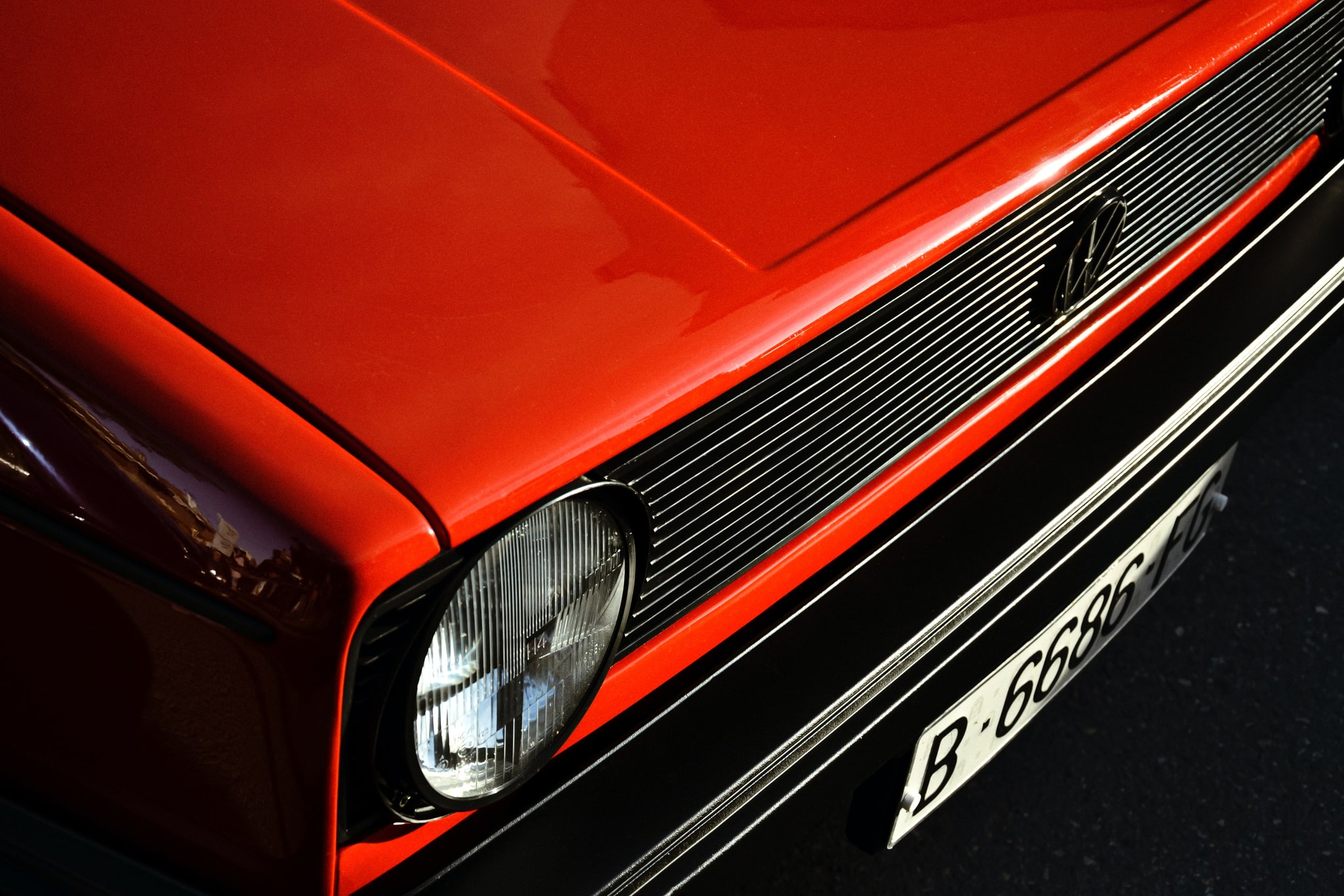
Subscribe to our MECATECHNIC newsletter