Your vehicle
No vehicle selected
Identify yours to refine your search results
No vehicle selected
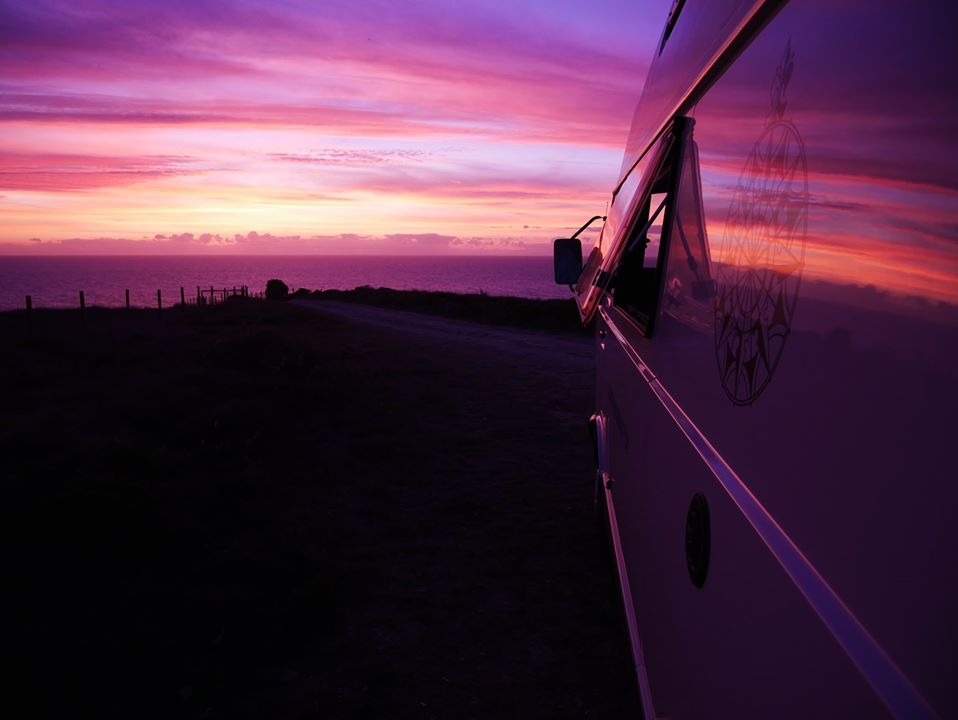
Big brother of the Transporter, the VW LT first served tradesmen before becoming a home on wheels. Its history, its engines, and eight months of travel aboard Barty, a 1990 LT 31.
22/10/2026
Harald
7 minutes read
When you think of a Volkswagen camper, you first picture a Split-Screen or Bay Window Camper, or a T3 Westfalia. Yet as early as 1975, Volkswagen had a much bigger commercial vehicle in its range, able to carry a building site's equipment or house an entire family: the LT. Designed for tradesmen and delivery drivers, it ended up winning over travellers looking for headroom and payload. A look back at the first generation (1975-1996), its engines, its second life as a home on wheels, and the travel diary of Barty, a 1990 LT 31 that took a family from Switzerland to the edge of the Sahara.
In the mid-1970s, the Transporter covered most of tradesmen's needs, but it was reaching its limits in volume and payload. To move further up the range, Volkswagen presented the LT in 1975. It was built in Hanover, the brand's commercial vehicle plant.
The LT adopted a cab-forward layout: the driver sits above the front axle and the engine sits in the cab, between the seats, under a cover. The whole rear length thus remains available for the load. At launch, the range had three versions, the LT 28, LT 31 and LT 35: the higher the number, the more the LT is built for loads. Heavier versions, from the LT 40 to the LT 55, later joined the range. Panel van, window van, flatbed or chassis cab to be bodied, with a standard or high roof: the LT came in versions for every trade.
On the petrol side, the LT started with a 2.0 four-cylinder derived from the Audi 100's, producing 71 or 75 hp depending on the version. From 1982-1983, a 2.4 l inline six took over: 90 hp with a carburettor, then 94 hp with fuel injection at the end of the 1980s.
In diesel, Volkswagen first turned to Perkins, with a 2.7 l four-cylinder of 65 hp. At the end of the 1970s, it gave way to an in-house 2.4 l six-cylinder diesel (75 hp), from the same family as the Golf's diesel. This engine received a turbo at the end of 1982 (up to 102 hp depending on the version), then an air-to-air intercooler in the early 1990s.
The LT's original Volkswagen engines have a belt-driven timing system: an item you should never let slide on a vehicle of this age. To find out which one your van has, note its engine code and refer to our page on Volkswagen LT engines, which details the eleven versions, their production periods and their characteristics.
The LT changed little, and that is also what makes it strong. In the mid-1980s, its round headlights gave way to rectangular units. A final refresh, in spring 1993, brought it a grille and grey plastic parts. The first generation left the stage in the mid-1990s: in 1996, the second-generation LT shared its body with the Mercedes-Benz Sprinter, before giving way to the Crafter in 2006.
A big volume, a flat floor and headroom with the high roof: the LT had everything to please leisure coachbuilders. Westfalia made its Sven Hedin and Florida campers from it, with a raised roof and extra beds, and Karmann an alcove cabin. Many other LTs were converted after the fact by their owners.
A reminder if you convert a van yourself: a fixed fit-out must be declared. The vehicle then becomes a "VASP" on the registration document, after an individual approval with the DREAL. We go into this in our article on the Transporter T4 camper van.
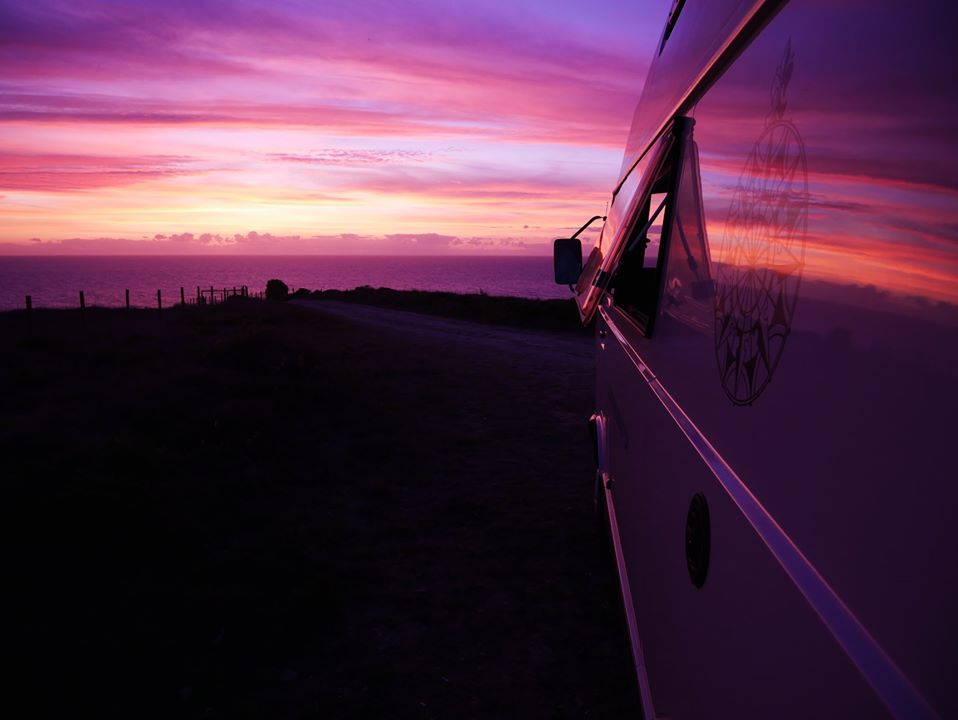
Barty is the name a Swiss family gave to their 1990 LT 31. At the start, the plan was more modest: four months of travel in a T5 Multivan topped with a roof tent. Four months before departure, the family changed their plans and fell for this LT, which had remained entirely original. It had spent 27 years with the same owner, then two years with a family who had only covered 2,000 km in it. At 30 years old, it showed 130,000 km on the clock, and no rust.
Before leaving, the family bet on self-sufficiency: solar panels, a water filter, a rack for the surfboard, a new table and new fabric for the rear seats. And a ball joint changed three days before departure, just in time. On a commercial vehicle of this age, the front axle deserves a serious check before any long trip: play in the ball joints, condition of the gaiters, geometry.
The route goes through the Ardèche, Nîmes and Perpignan, crosses the Pyrenees, crosses Spain via Zaragoza and Bilbao, then follows the whole coast to Algeciras. In Morocco, the road follows the Atlantic coast to Agadir, then plunges towards the desert as far as M'Hamid. The return is via the Atlas and High Atlas, then along the Spanish Mediterranean coast to Barcelona, with a Christmas at the top of the Pyrenees before heading back to Switzerland via Toulouse.
Planned for four months, the trip lasted four months on the road, but eight months on board: the LT became the family's home, and they slept elsewhere only about ten nights. It went through the heatwave of summer 2019, then -15 °C in January 2020, parked at 900 m altitude.
The LT has a reputation as a heavy drinker. Over these eight months, though, Barty held an average of 10.5 l/100 km, a figure the family says it is rather pleased with for a high-roof van loaded for living in. On their return, they planned to sell it: in the end it earned its place in the family, and it was the T5 that had to go.
Barty's only black spot on return: the small side rooflight in the raised roof section, which needed replacing and could not be found. It is a common case on a converted LT: the cell components (raised roof, windows, rooflights) most often come from the converter or an equipment maker, not from Volkswagen, and have no manufacturer part number. Before searching, identify the maker of the raised roof, then note the dimensions and markings of the part: LT clubs and motorhome forums are then the best lead. For on-board equipment and travel accessories, see our fit-out and camping for LT section.
Simple and robust, the first-generation LT above all needs regular maintenance. Before heading far, go through:
A working vehicle turned travelling companion, the first-generation LT remains a simple, robust vehicle with rare living space. Find all our parts for the Volkswagen LT and, to compare with the van that took over in travellers' hearts, our article on the Transporter T3/T25.

Harald
Le partage de la Passion, simplement.
Subscribe to our MECATECHNIC newsletter