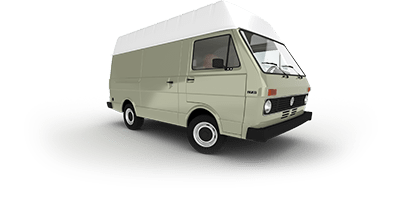












Large, robust utility vehicle with rear-wheel drive and durable engines. The LT prioritizes capability and reliability over comfort. A professional tool without unnecessary compromises.
The LT van was marketed for the first time in 1975. This utility Lasten Transporter: said LT (which means load transport) allows the Volkswagen brand to enter the light truck market, in addition to its historic offer on utilities light. The LT range supports that of its little brother the Combi which will become Transporter. As usual, VW offers several versions of this vehicle, for the VW LT three weight classes from 2.8 to 3.5 tonnes are offered (LT28, LT31, LT35), as well as different wheelbases, roof options and bodies. Design level, many modifications were made, one of the most striking is the change of headlights: round then square in 1986, the same for the grille. By reducing the clutter zones, VW has increased the cargo space, which is approximately 5.5m². The LT can be accommodated like a container! It's a real box in which everything is easily stuffed; this is partly what will make its success, with the arrival of diesel engines. When it was launched, the first LT had a 75 hp 2.0l 4-cylinder petrol engine and a 4-speed gearbox. It was from 1976 that a model with a 2.5l Diesel engine was offered, a 6-cylinder version was introduced in 1978. It was in 1986 that two turbo Diesel engines appeared carrying the powers of this beast. sum at 90 hp and 102 hp. Finally, Volkswagen decided to abandon the LT in 1995, after 20 years of production.