




















Your vehicle
No vehicle selected
Identify yours to refine your search results
No vehicle selected
Read more
26 Results
sort by
Only 3 left in stock
Only 2 left in stock
Only 2 left in stock
Only 1 left in stock
Only 1 left in stock
On order, from 12 days
Only 1 left in stock
Only 1 left in stock
In stock
Only 3 left in stock
Only 2 left in stock
In stock
In stock
Only 1 left in stock
Only 1 left in stock
Only 1 left in stock
Only 3 left in stock
Only 2 left in stock
Only 4 left in stock
Only 1 left in stock
On order, from 15 days
On order, from 15 days
On order, from 11 days
On order, from 16 days
On order, from 11 days
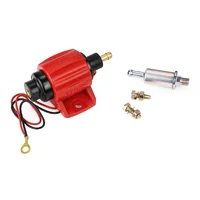
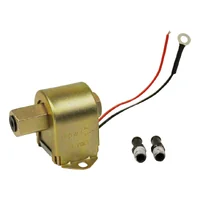
Fitting an electric fuel pump with an unsuitable pressure rating to a carburettor will flood the engine: the float cannot withstand excessively high pressure. This is the most common mistake made with this type of conversion.
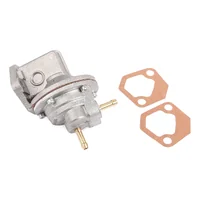
On a mechanical pump, the part that fails is almost always the diaphragm – which has hardened due to modern petrol – or the mounting seal. The pump body itself is generally in good condition and is sometimes impossible to find as a new part. Diaphragms, seals and intermediate flanges are therefore listed separately, including for older set-ups. A new diaphragm restores the flow rate at a fraction of the cost of a complete assembly, whilst allowing the original part to remain on the engine.
A useful tip: a punctured diaphragm sends fuel into the engine oil. If the oil level rises and smells of petrol, it is the diaphragm, not the cylinder head gasket.
A generic search for a fuel pump nowadays tends to yield submersible units for modern vehicles, sold by original equipment manufacturers and general retailers. This is not what a restorer is looking for: they need a mechanical diaphragm pump, a replacement diaphragm or a mounting gasket for a carburettor-equipped engine. This is what this range covers, and that is why it lists parts that generalist catalogues no longer stock.
Consult the details of the engine variants, chassis and versions offered for this model