Your vehicle
No vehicle selected
Identify yours to refine your search results
No vehicle selected
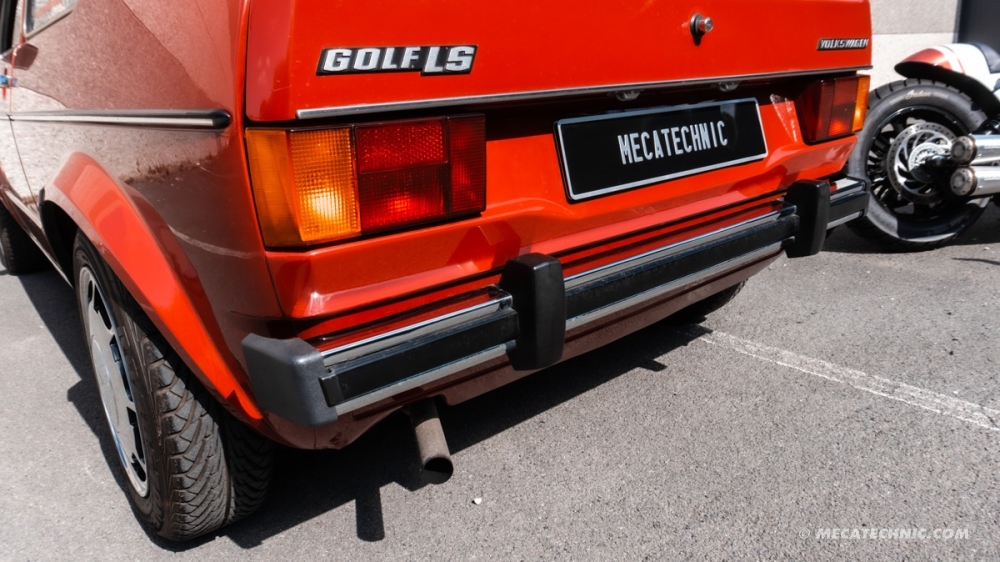
The very first Golf 1s carry a bodywork detail that Volkswagen quickly erased: the famous swallow tail. Here is how to recognise a Swallow Tail, using the Golf from our showroom as an example.
22/10/2026
Harald
7 minutes read
In spring 1974, Volkswagen was playing for high stakes with a small, square front-wheel-drive car designed by Giorgetto Giugiaro. The Golf had to make people forget the Beetle, and it succeeded beyond all expectations. But the very first Golfs to leave Wolfsburg do not look quite like those that followed: a few bodywork details, erased after a few months, make them sought-after cars today. Enthusiasts nicknamed them Swallow Tail, after the forked tail of the bird.
How do you recognise one of these early Golfs, and above all how do you avoid being fed tall stories? Here is our identification grid, illustrated by the Golf that kept our showroom visitors company for a long time.
Golf production started at Wolfsburg in March 1974, and the car was presented to the public in May. On these first series, the horizontal rib running across the tailgate, under the rear lights, does not run straight: it dips on either side of the number plate position. Seen from behind, this step forms two points that recall the forked tail of a swallow. The nickname comes from enthusiasts, not from the factory: in Volkswagen's documents, it is simply a Golf.
This design did not last long. During 1975, Volkswagen simplified the pressing: the rear rib became a straight line and the bonnet received a transverse crease on its front edge. The Golfs built between spring 1974 and 1975 therefore form a small family apart, also referred to by their model years, 1974 and 1975.
A Golf that is fifty years old has often changed hands, colour and sometimes bodywork parts. No single clue is enough on its own: it is their accumulation that allows you to conclude.
This is the criterion that gives the car its name, and the easiest to spot. Stand behind the Golf and follow the rib under the lights: if it drops around the number plate, you are looking at a Swallow Tail; if it joins the two lights in a straight line, the body is later. Beware, a tailgate can be replaced: make sure the rear is consistent with the rest of the car.
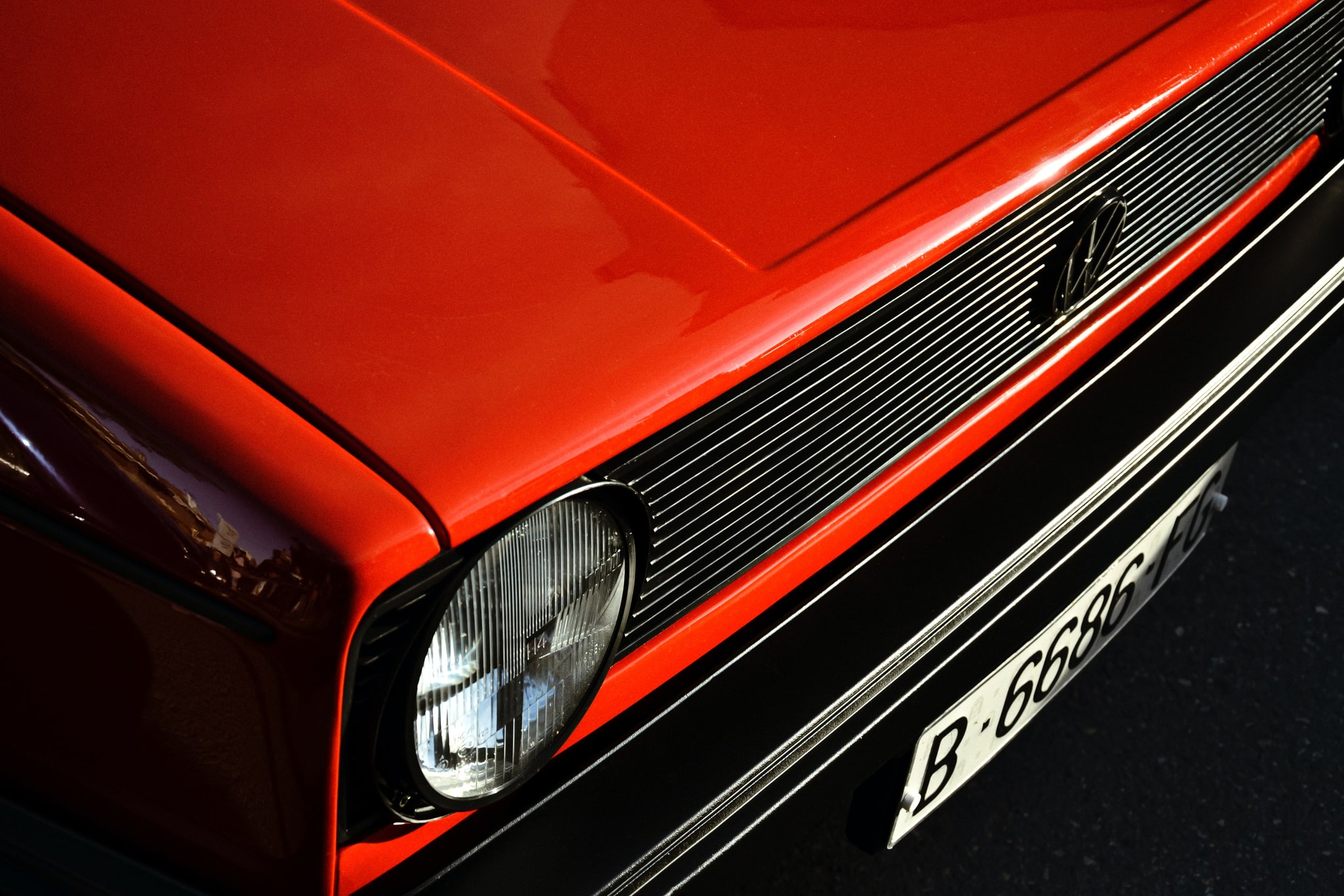
On the first Golfs, the surface between the two bulges of the bonnet reaches the front edge without a break. Later bonnets carry a transverse crease that links these two raised areas just above the grille. Bodywork specialists point it out, by the way: a standard Golf 1 bonnet fits all years, but it is not identical to that of a Swallow Tail.
Golfs of this period have small rear lights and narrow metal bumpers. The latter are not enough to date a Swallow Tail: they equip all Golfs up to summer 1978, when plastic bumpers arrived. As for the lights, the base version was delivered without reversing lights, which were offered as an option. An old Golf whose lights have no white section is therefore not necessarily incomplete.
This is the most solid clue. On Golf 1s of this period, the chassis number has ten digits: the first two, 17, designate the type (the Golf), and the third gives the model year. A number starting 174 corresponds to model year 1974, a number starting 175 to model year 1975. Do not forget that the Volkswagen model year starts in August: a Golf assembled in September 1974 is already a "1975". The numbering references are detailed on our Golf 1 engines page.
To remove the last doubts, the AutoMuseum Volkswagen foundation issues certificates that reproduce a car's factory data: model, engine, colour, trim, build date, factory release date, destination country and options. It is the document that lets you tell an original car from an assembly, and know which colour to find again during a restoration.
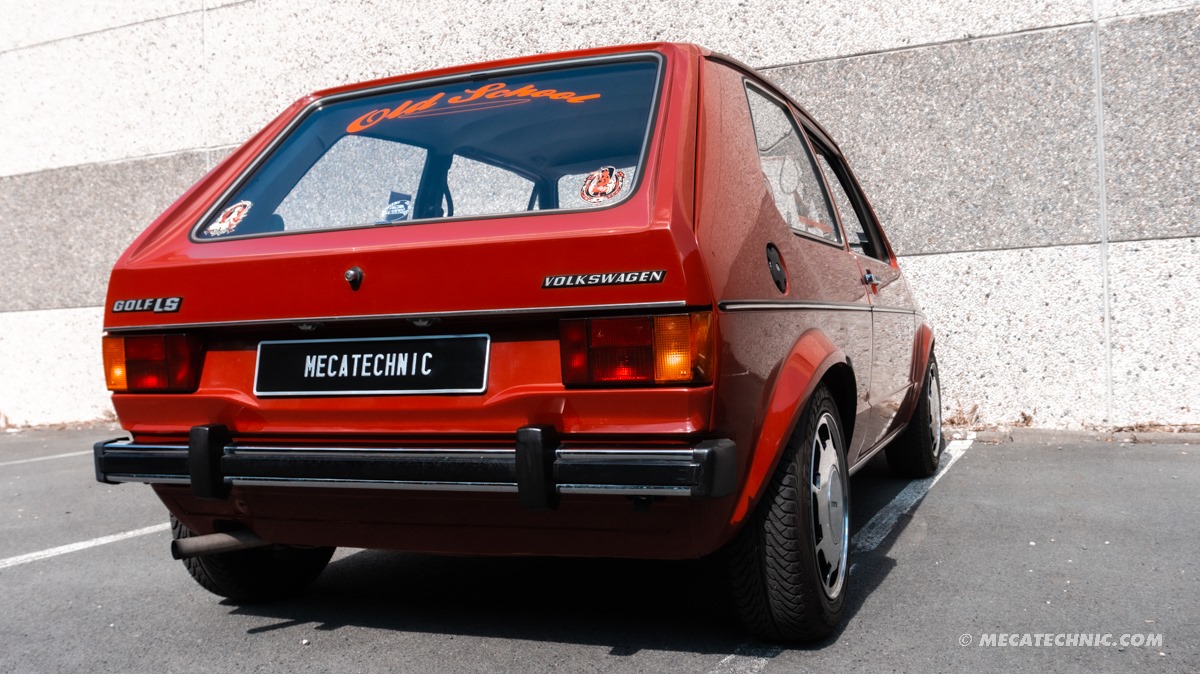
The red Golf our visitors know well is a textbook case. According to its certificate, it was built on 4 September 1974 and left the factory on 11 September, bound for France. It is a two-door Golf L, with the 50 hp 1.1 litre engine, black upholstery and original Miami Blue paint. Among the options listed are yellow headlights, for the French market, and 155 SR 13 radial tyres.
It also illustrates the pitfalls of identification. The "LS" monogram it wears on the tailgate does not match its certificate: at the time, the letter S designated the 70 hp 1.5 litre Golf, and the L the trim level. A real LS is therefore a 1500. Badges are easily changed over the years by different owners; only the chassis number and the certificate are authoritative. The same goes for the colour: its current red is nothing like factory.
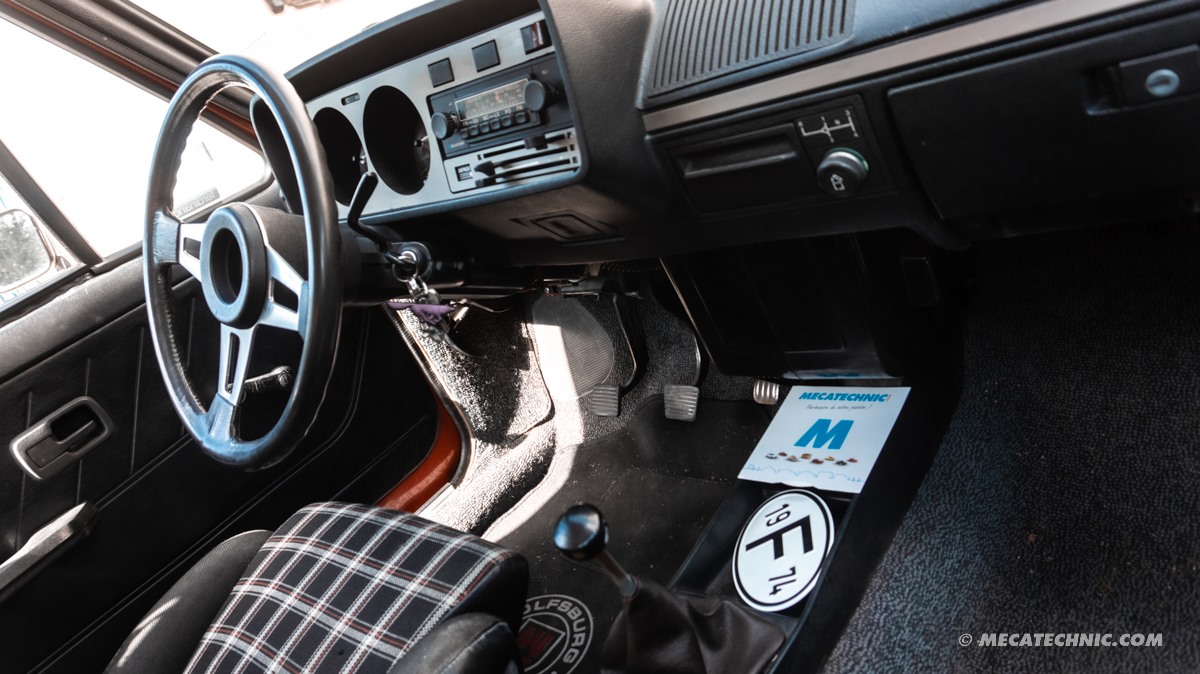
When we took it out of the showroom in 2020, after two years standing, all it took was fresh petrol and a battery to get it running again. Over time it had received a few reversible modifications: coilovers to lower it, 14 inch Pirelli wheels, Golf GTI seats and steering wheel. The original parts were kept, with a return to its factory presentation and its Miami Blue at the top of the list.
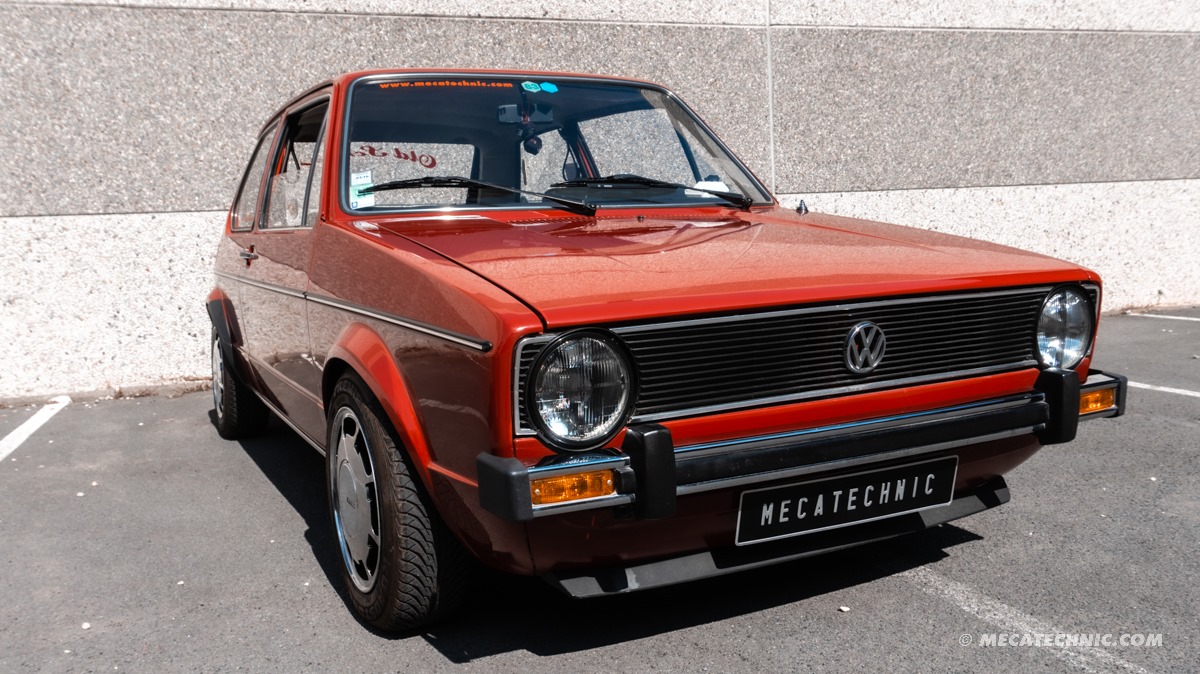
Restoring a Swallow Tail means first sorting out what is specific to it and what it shares with every Golf 1. Good news: the mechanics and a large part of the fittings are common.
A Swallow Tail does not go any faster than another Golf 1, and it has no ambition to. Its interest lies elsewhere: it shows the Golf as Giugiaro and Wolfsburg launched it, before the first simplifications. If you think you own one, start with the chassis number, then the certificate. The rest, rib, bonnet and lights, will come to confirm or qualify what the papers say.
To place the car in its history, reread our article on the Golf 1, the most famous of compacts, and find all the parts on the Volkswagen Golf 1 page.

Harald
Le partage de la Passion, simplement.
Subscribe to our MECATECHNIC newsletter