Your vehicle
No vehicle selected
Identify yours to refine your search results
No vehicle selected
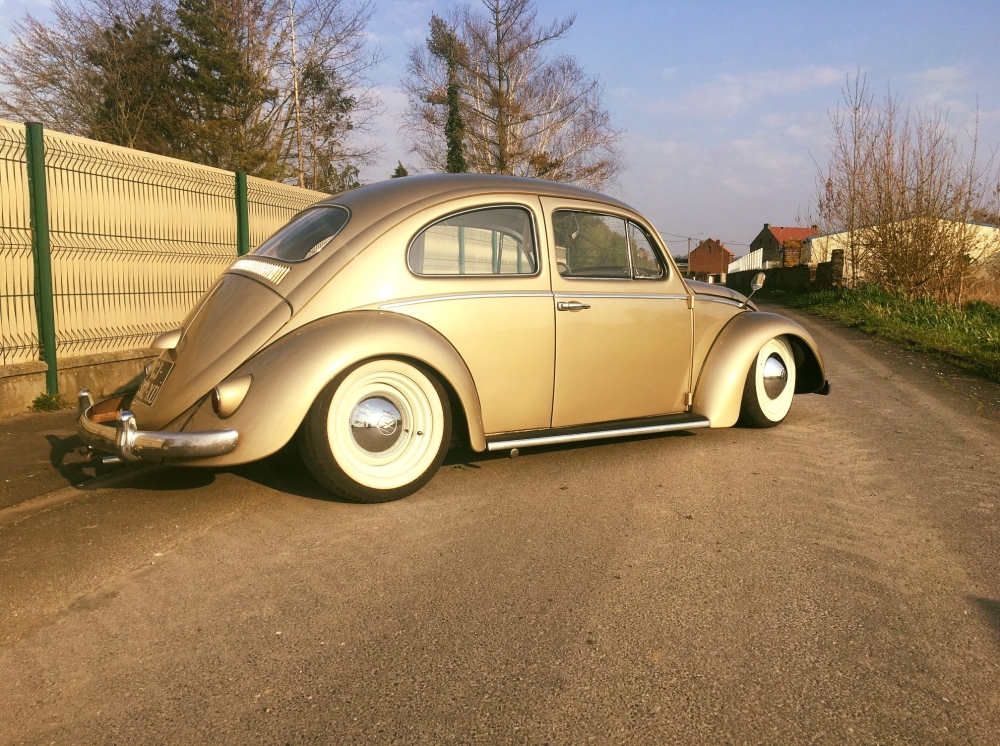
A Beetle gets handed down. Six owners tell us about theirs: a 1961 Export from Sweden, a 1302 that became a calling, a tribute to Herbie, a garage of four VWs, a wedding Beetle and a club life between northern France and Belgium.
22/10/2026
Harald
8 minutes read
A Beetle isn't bought quite like any other car: it gets handed down. From a father to his son, from in-laws to a young couple, from a gang of club friends to a newcomer. Volkswagen built 21,529,464 of them, up to the very last one, which left the Mexican plant in Puebla on 30 July 2003, and many are still on the road in the hands of enthusiasts who look after them themselves.
In Europe, the saloon left Wolfsburg on 1 July 1974, and the last European Beetle came out of the Emden plant in January 1978. In the meantime, the range had been enriched by the 1302, introduced in 1970 with a new front axle with McPherson struts, then by the 1303 and its curved windscreen. For the full history of the model, read our article on the Volkswagen Beetle.
Here, the floor goes to those who keep them alive. These six stories were entrusted to us by customers; we have rewritten and tightened them, keeping the spirit of their authors.
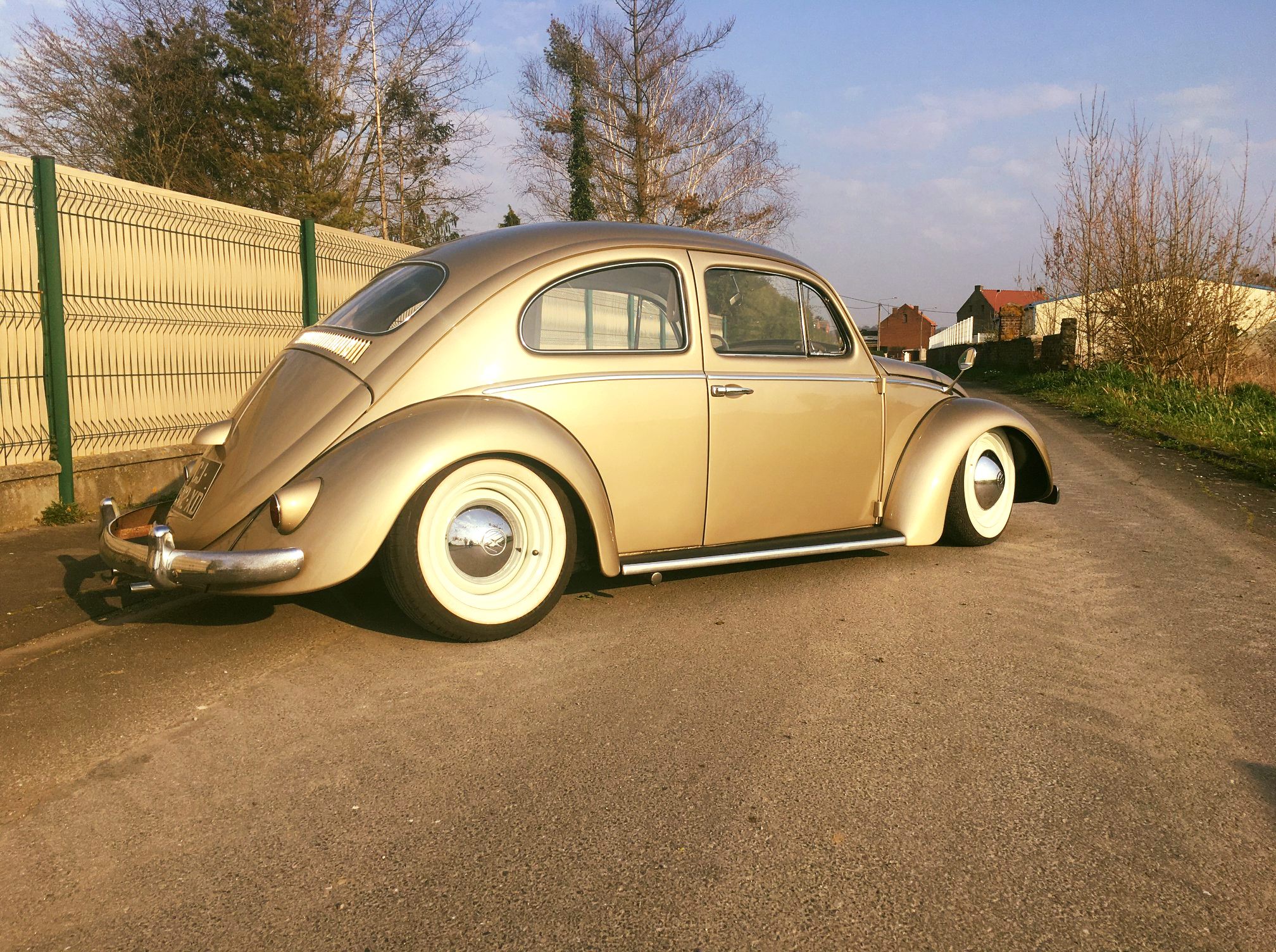
Olivier bought his Beetle in 2014. It comes from Sweden, and he has kept a copy of its original registration document. It is an Export version, the best-finished trim of the time, which had never been restored. It left the factory in Dove Blue; today it wears Polar Silver, a metallic shade from the period. Paintwork, by the way, is the only job he handed over to a professional.
Everything else he did on his own, over four years. The body was fairly sound: all it needed was one chassis quarter and the four wings, which were too far gone. The interior was completely redone, and the engine became a 1600 built on a single-port 1300 base. For the stance, he played with the ride height: the front axle was narrowed by 12 cm, with Sway-A-Way adjusters.
His aim is nothing like a concours car. Olivier wants this Beetle to stay in the family and for his children to take the wheel the day they get their licence: a family car in the true sense.
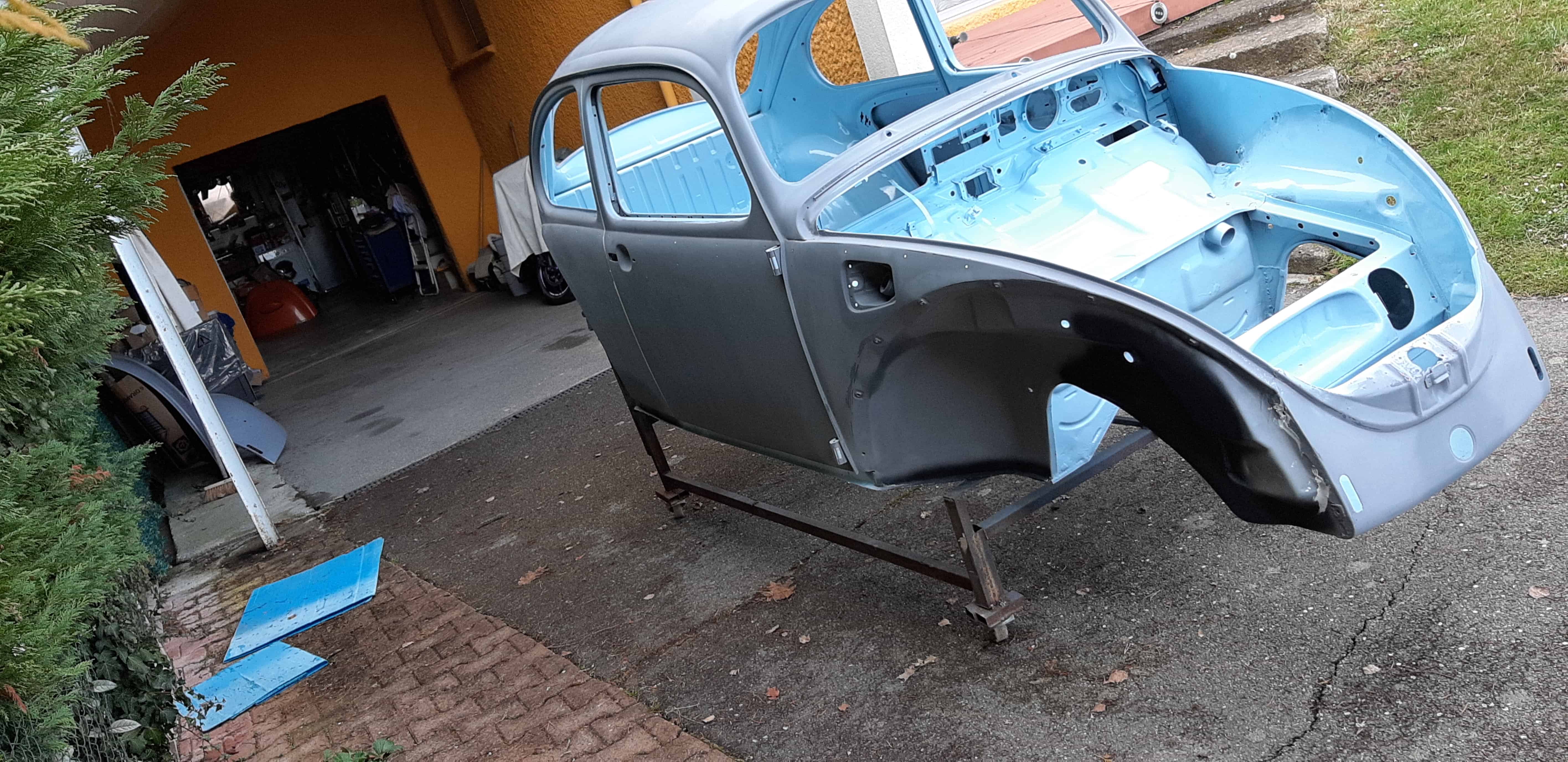
Corentin caught the classic-car bug as a child, alongside his father. Together they restored a 1303 cabriolet, and it was on that project that he learned bodywork, to the point of making it his calling.
His first car is a 1971 1302 with a 1600, which he restored himself at 17, before he even had his licence. He followed on with a second restoration, a 1971 1200, and a third Beetle is already in his plans. The rest of the time, he drives: runs out, shows and club meets, at the end of every month.
The 1302 is not a Beetle like the others. With its McPherson front axle, it does not share front suspension parts with the torsion-bar models. Before ordering, our guide How to identify your VW Beetle helps you work out what you really have in your hands.
For another Olivier, a lifelong classic-car enthusiast, the Beetle arrived in 2008 through a friend. It is a 1302 L. His children, raised on Disney films, pushed him to gradually turn it into Herbie (Choupette in France), the famous white Beetle with the number 53.
A point of history, in passing: the Herbie of the films is a 1963 Beetle. A 1302, with its redesigned front end and McPherson axle, therefore cannot be an exact copy. Olivier knows this, and his car is a tribute, not a replica.
The project is nearing its end. The original engine has been bored out to 1,875 cm³, and only a few adjustments remain. A loyal customer, Olivier calls in at the Mecatechnic counter every time he comes back up north, and we regularly chat with him about how his car is coming along.
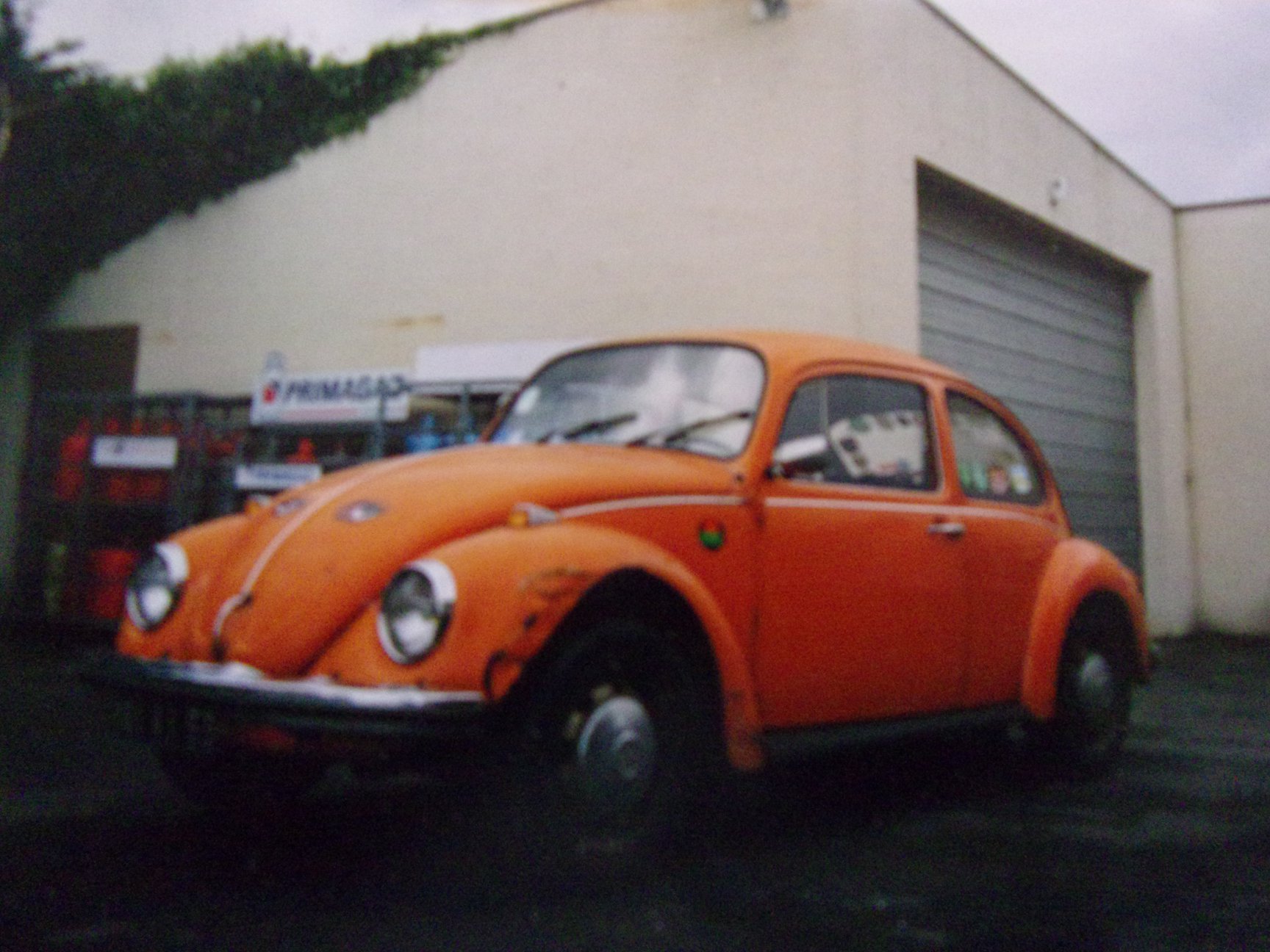
For Samuel, it all began with a childhood dream. His first car, bought in 1999, is a 1974 Beetle 1200, orange, one-owner and very sound. He restored it entirely in the Cal Look spirit.
The others followed. First a 1980 Golf 1, whose body, eaten away and loaded with filler, ended up being replaced. Then a late-1972 T2b Camper, nine-seater, bought in very poor condition and without an engine: once restored, he took it on a 1,850 km road trip along the Atlantic coast. Finally, after years of admiring Karmann Ghias at meets, he fell for a 1967 Type 14 1500 imported from California, in a lovely state of preservation.
All of them were restored by his own hands, paintwork aside, and all of them run. Three of them share the same mechanical principle, the air-cooled flat engine. To go further, read our articles on the Karmann Ghia and on the Bay Window Camper.
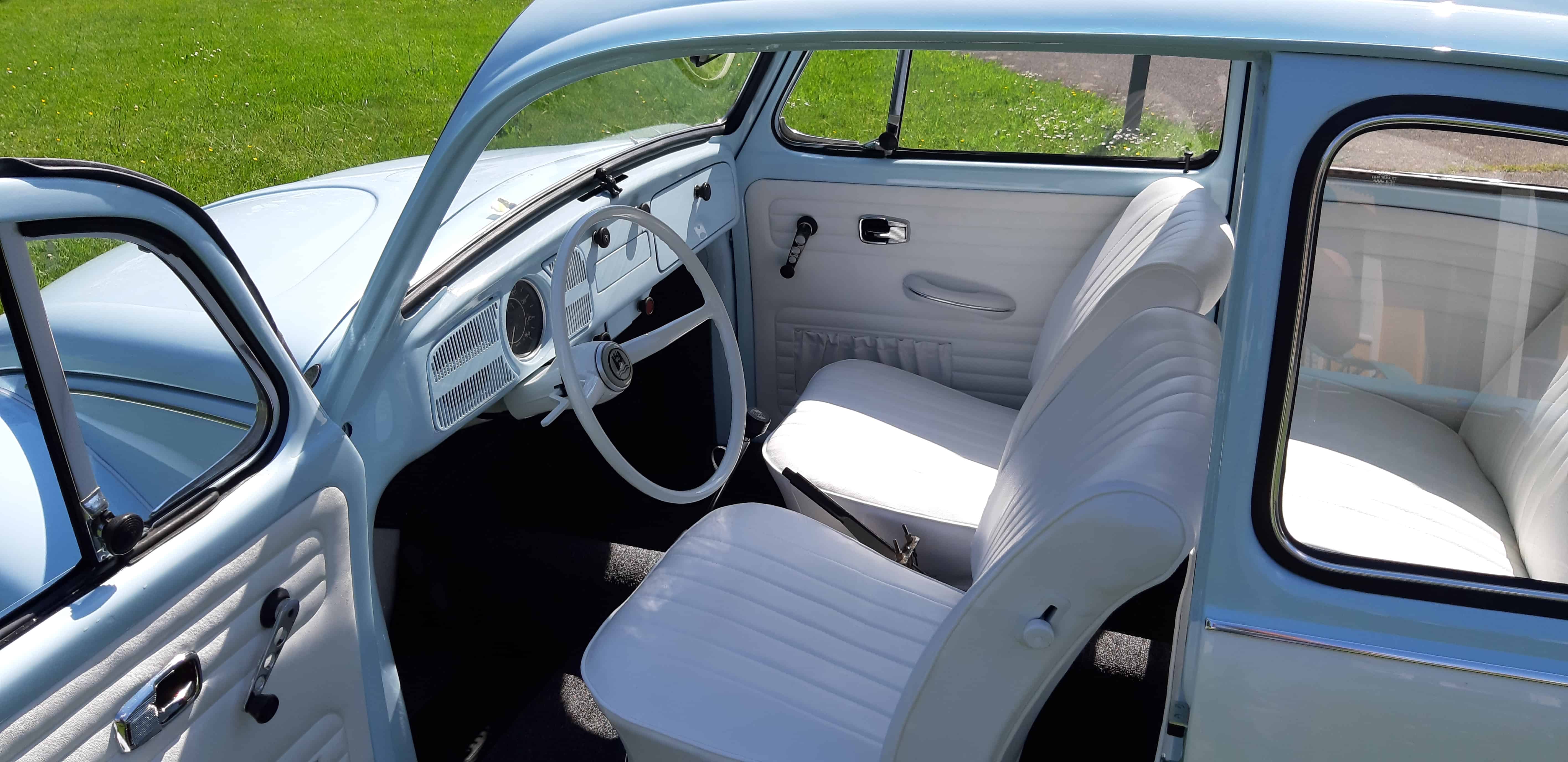
For Camille and her partner, the passion comes from him: as a child, he had sworn he would one day own a Beetle. He passed it on to Camille, with a first lesson, how to tell a 1302 from a Mexican one.
When the couple announced their wedding, the groom's family took matters into their own hands and promised that the Beetle would be waiting for them outside the church. The parents then covered thousands of kilometres, in France and beyond, before finding the right one a few kilometres from home. Christened Mélodie, she joined the family in September 2015.
At first it was he who looked after the maintenance and mechanics; Camille took it up in her turn. As the family grew, they needed room to travel: Albert, a Camper, joined them in 2019, with a complete overhaul before hitting the road.
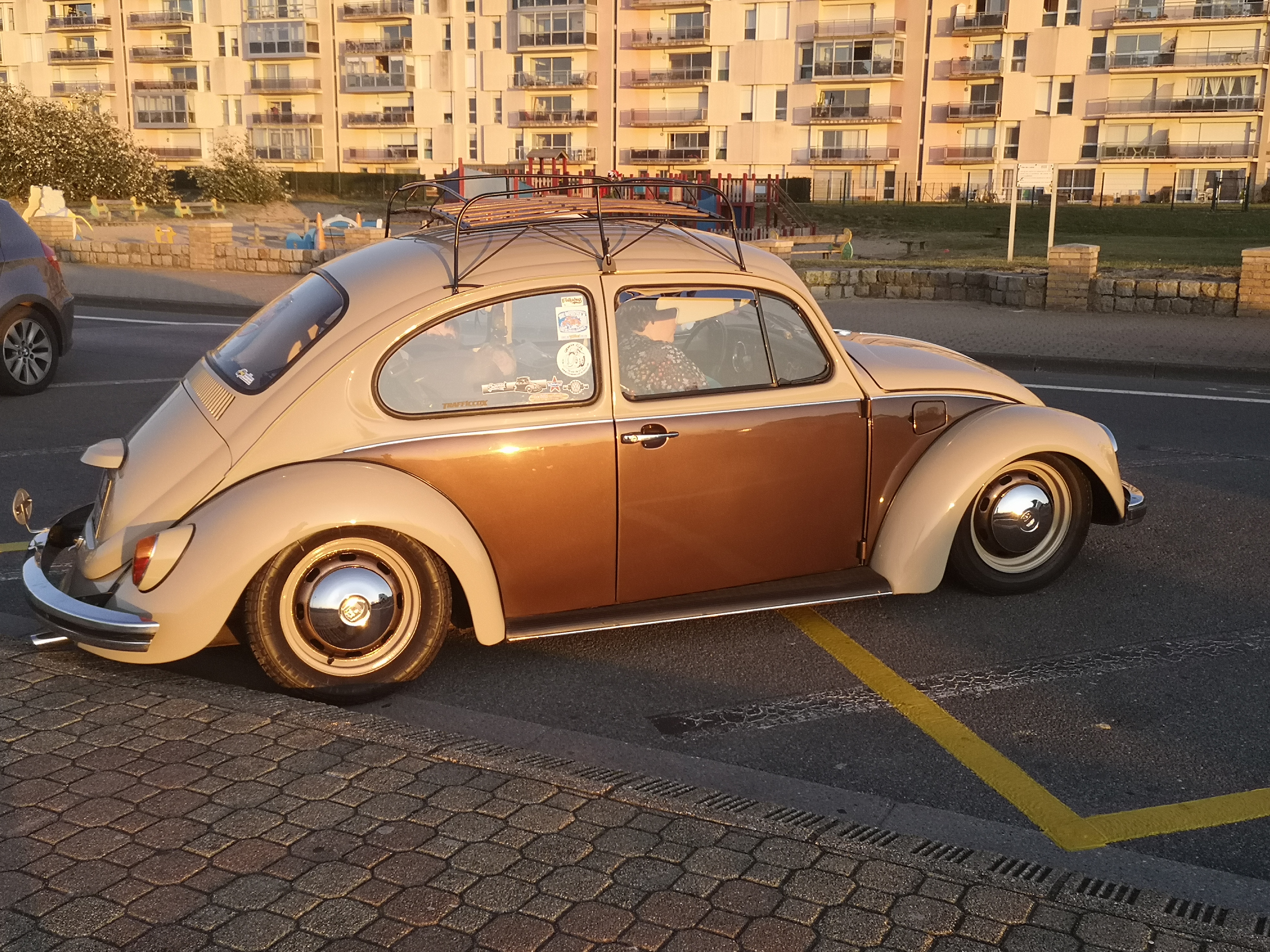
Cédric discovered the Beetle thanks to a cousin who owned one. His own, a 1975 named Lulu, he bought in 2015, surrounded by friends from his club, and it was with them that he restored it. Two-tone cream and brown, roof rack loaded with period luggage, it doesn't go unnoticed.
Lulu is above all a life of gatherings, with the family: Chimay, Nazareth, Open House, the Nostalgia Retro Festival or Auby. His first appearance at Chimay at the wheel of his own Beetle, in 2019, remains one of his best memories. His story is a reminder of what a club brings: extra hands, tools, advice and tips for finding the missing part.
Before ordering a part, check the real model year of your Beetle. The date of first registration can mislead, especially for a car sold around summer, when Volkswagen changed model year. The chassis number is stamped on the central tunnel, under the rear seat, and it must match the one on the manufacturer's plate and on the registration document. Its first digits indicate the body type and the model year: the correspondence tables can be found in our guide How to identify your VW Beetle.
These six Beetles have one thing in common: they are driven. It is the best way to keep them in shape, provided you follow the essentials. Setting the ignition and the rocker clearance, oil changes, the condition of the brakes and front axle, and keeping an eye on the floors and sills account for most of a Beetle's longevity. For the ignition, follow our article How to set the ignition timing on a Beetle and a Camper, and before winter, our guide to winterising your classic car properly.
All the parts are sorted by model on our Beetle page and by engine on the Beetle engines page, from the 1200 to the 1303 S.
Are you restoring, driving or have you inherited a Beetle? Tell us its story. We only publish a testimonial with the written agreement of its author, for the text as well as the photos, and we can keep just your first name.
Harald
Le partage de la Passion, simplement.
Subscribe to our MECATECHNIC newsletter