








Your vehicle
No vehicle selected
Identify yours to refine your search results
No vehicle selected
Read more
59 Results
sort by
Only 1 left in stock
Only 2 left in stock
On order, from 13 days
Only 4 left in stock
Only 2 left in stock
Only 1 left in stock
In stock
Only 1 left in stock
Only 1 left in stock
Only 1 left in stock
Only 4 left in stock
On order, from 12 days
On order, from 12 days
On order, from 12 days
On order, from 12 days
On order, from 12 days
On order, from 12 days
On order, from 12 days
On order, from 11 days
On order, from 12 days
On order, from 12 days
On order, from 12 days
On order, from 12 days
On order, from 12 days
On order, from 12 days
On order, from 13 days
On order, from 18 days
On order, from 17 days
On order, from 11 days
On order, from 12 days
On order, from 18 days
On order, from 18 days
On order, from 18 days
On order, from 17 days
On order, from 18 days
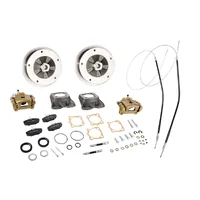
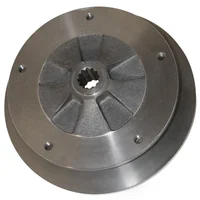
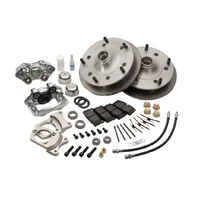
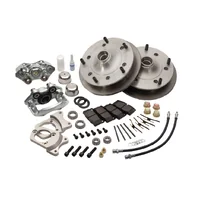
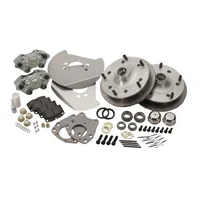
A drum in good condition brakes properly the first time. Where it falls short is when you have to do it again: it traps heat, and after a few hard braking manoeuvres on a downhill stretch, the lining loses its bite and the pedal travel increases. A disc is exposed to the air, so it dissipates heat and retains its effectiveness.
However, the conversion does not necessarily shorten the cold stopping distance of a light vehicle: on the first application, a good drum brake performs almost as well. It is with repeated use that the gap widens.
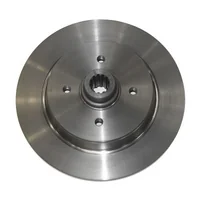
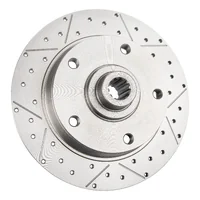
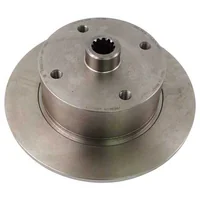
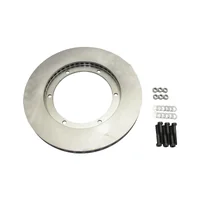
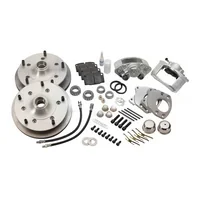
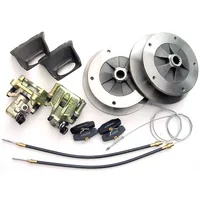
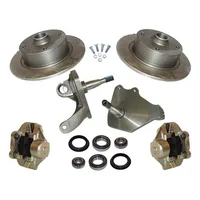
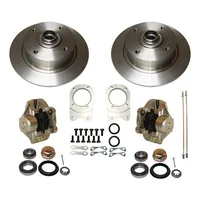
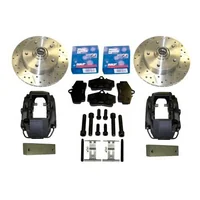
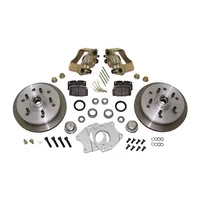
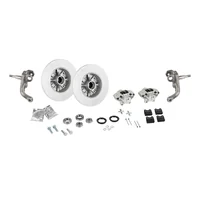
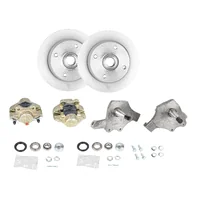
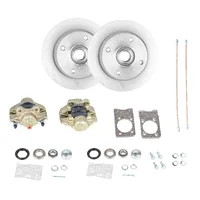
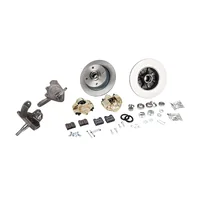
Discs sold on their own are also available, to replace worn parts in an existing conversion. Make sure you check what you’re buying: a disc on its own won’t convert anything.
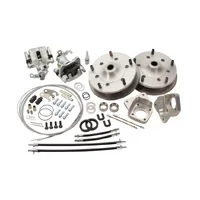
The bolt pattern of a hub is specified by two figures: the number of bolts and the diameter of the circle on which they are arranged, in millimetres. A conversion kit dictates its own bolt pattern, and this is not always the same as the original.
The consequence is straightforward: if the kit changes the bolt pattern, your current wheels won’t fit, and you’ll need to factor compatible rims into your budget. Some kits deliberately adopt a more common bolt pattern, precisely to broaden the choice of rims; others retain the original bolt pattern so that nothing else changes. Also check the offset: a brake caliper may rub against the rim, and this is something you’ll only discover during a test drive. Finally, make sure the kit covers both wheels on the same axle: converting just one side will throw the braking balance off, which is dangerous.
A disc and a drum do not operate with the same hydraulic characteristics. A drum has a self-squeeze effect that amplifies the braking force; a disc does not and requires greater pressure. Changing one without considering the rest will cause the braking system to become unbalanced.
Modifying the braking system may also affect the vehicle’s roadworthiness: check the applicable regulations before starting the work, and have the result tested on a brake test bench.
Consult the details of the engine variants, chassis and versions offered for this model