Your vehicle
No vehicle selected
Identify yours to refine your search results
No vehicle selected
A 1982 911 SC bought with a 964 kit, turned into a 2.7 RS look and brought up to date underneath; a Carrera 3.2 that swallows the miles. Two stories of G-series 911s, and what they teach before you buy.
22/10/2026
Harald
7 minutes read
Between 1973 and 1989, Porsche built 198,496 examples of the second-generation 911, the one enthusiasts call the "G-series" or "G-model". It is recognised by its concertina bumpers, designed to absorb an 8 km/h impact without damage, as the new American regulations required. It is also the 911 that brought the model into everyday life, and the one you meet most often at youngtimer gatherings.
Two versions form its heart. The 911 SC, sold from 1977 for the 1978 model year, took over the widened wings of the old Carrera (SC incidentally stands for Super Carrera) and received a 3.0-litre flat-six: 180 hp at launch, 188 hp from September 1979, then 204 hp from 1980. For the 1984 model year, it gave way to the 911 Carrera 3.2: 3,164 cm³, electronic engine management and 231 hp without a catalytic converter. The more pleasant G50 gearbox arrived in 1986 for the 1987 model year, until the end of the series in 1989. For the full history of the model, read our article on the Porsche 911.
Here is the story of an SC transformed by a customer, then the view of a couple who own a Carrera 3.2, and what you can take from them before buying.
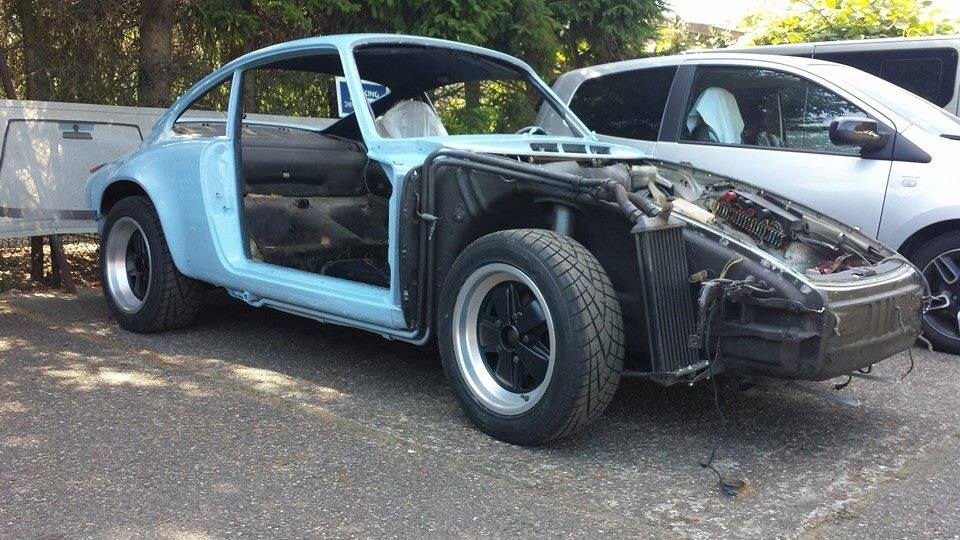
Erwan is not loyal to any one marque. He got to know Mecatechnic while restoring a BMW 3 Series E30, and when he wanted to simplify his garage, he chose a 1982 911 SC. In the advert it had nothing enviable about it: a 964-style body kit, 330,000 km on the clock and almost no service history.
He still went to see it, and he was right to. The mileage was a typo: the car had "only" 230,000 km, with an engine rebuilt at 120,000 km. The previous owner had already spent heavily: full repaint, upholstery, brakes and clutch. There was still work to do, with cracked tyres and worn running gear.
Above all, this SC was no longer in its original configuration. Its price took that into account, and modifying it did not take a collector's car away from the heritage. For the project Erwan had in mind, it was the ideal base.
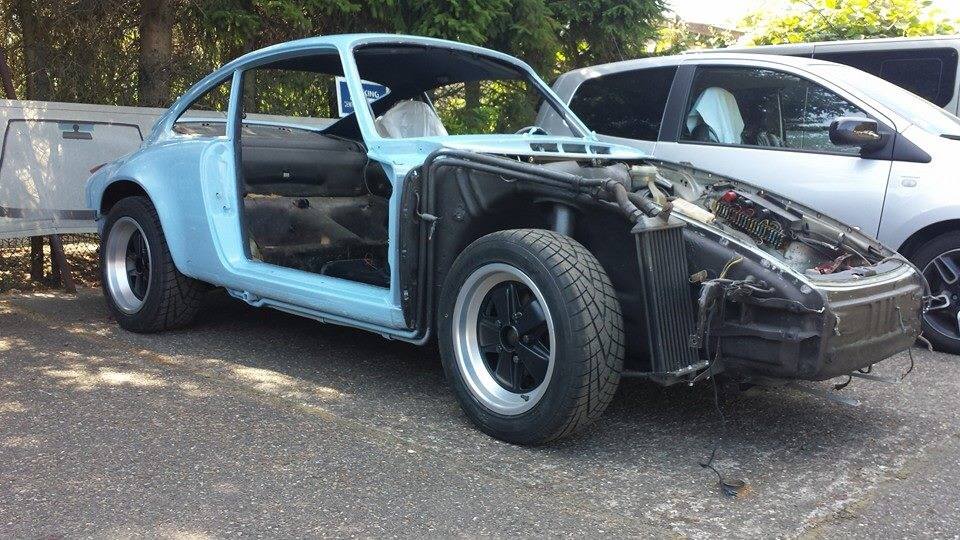
The project is a backdate: giving a G-series 911 the look of the pre-1974 911s. Erwan chose the absolute reference, the 1973 Carrera RS 2.7, built in 1,580 examples with 210 hp. With the help of a bodyworker friend, the SC lost its 964 kit for a 2.7 RS silhouette, in a Gulf blue long weighed against a lime green.
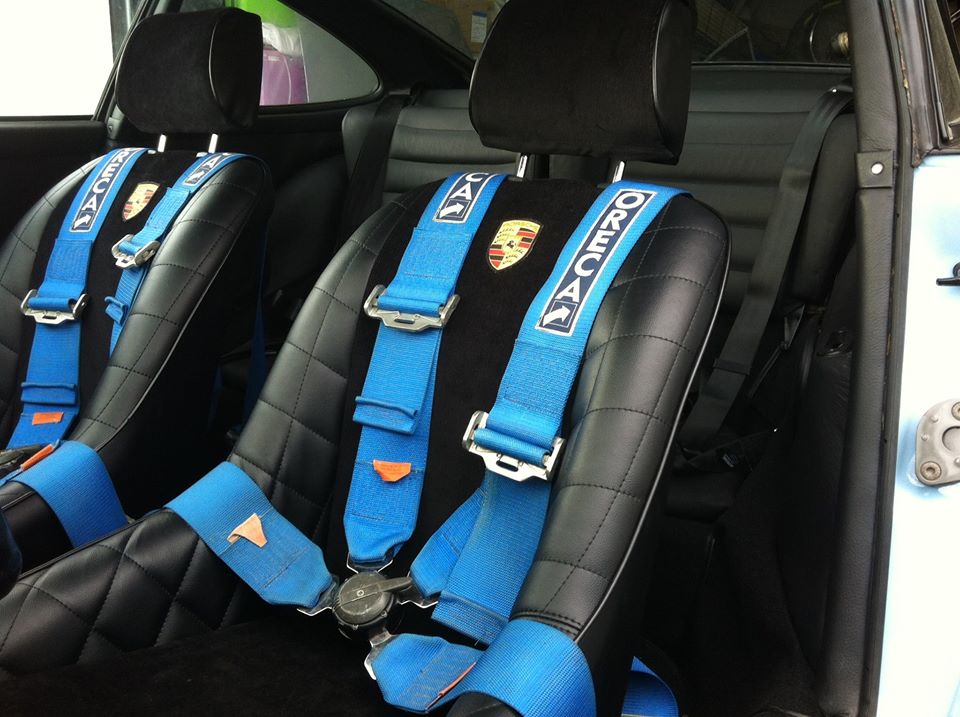
The replaced body parts are fibreglass. With thin carpets and bucket seats, the car drops to 1,050 kg. Without a single extra horse, it has become lively and pleasant to drive.
Before thinking about the engine, Erwan brought up to date everything that makes a 911 hold the road: Bilstein B6 shock absorbers, new bushes, a full geometry set-up and corner weighting to balance the car. On a forty-year-old car, this does far more for the handling than a few extra horses. It is also the item most often neglected at purchase, because worn suspension doesn't show in an advert photo.
Like many 911s that have had years out of favour, this one hid a few surprises: a windscreen aperture never treated against corrosion, and wiring that needed redoing. Since the mid-1970s, Porsche has made the 911's body and floor from hot-dip galvanised sheet, which protects the G-series well against rust. But a car repaired or repainted carelessly loses that protection wherever the metal was ground, welded or poorly prepared: this SC's windscreen aperture is the example.
The most serious came later. Descending a mountain pass, the accelerator pedal stayed stuck flat out. Erwan got off with bodywork to redo, and a car off the road for a while. On a 911, the throttle control goes through a linkage that runs from the pedal box to the rear engine: its joints and return spring deserve a check at every service, and without waiting on a car whose history you don't know. The last job in view for him: rebuilding the gearbox.
A couple of enthusiasts who have been criss-crossing France in a Carrera 3.2 for several years describe it as the perfect compromise between looks, performance, reliability and running costs. Their car arrived with a few "improvements" of dubious taste, corrected bit by bit by changing the parts concerned, to the point of entering it in a rally.
This verdict matches Porsche's own, which presents the 3.2-litre as almost indestructible with regular maintenance, mileages well beyond 300,000 km without an engine rebuild being more the rule than the exception. It is the 3.2's best argument against the SC. The G50 gearbox of the last model years is another, for anyone who wants to cover a lot of miles.
For maintenance, all the parts are sorted on our Porsche 911 page and by engine on the 911 engines page.
Do you drive a 911 SC or a Carrera 3.2, original or transformed? Tell us its story. We only publish a testimonial with the written agreement of its author, for the text as well as the photos, and we can keep just your first name.
Harald
Le partage de la Passion, simplement.
Subscribe to our MECATECHNIC newsletter