


























Your vehicle
No vehicle selected
Identify yours to refine your search results

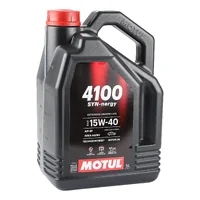
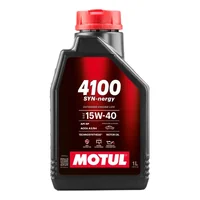
Between the 10W40 used in ‘youngtimers’ and the 20W50 used in older engines, the 15W40 is the all-rounder: thick enough when hot for slightly wider clearances, and fluid enough when cold for starting in winter. The range covers both mineral and technosynthesis oils.
Read more
3 Results
sort by
On order, from 13 days
The 15W40 occupies a useful middle ground. More fluid when cold than a 20W50, it builds up pressure more quickly when starting, which is important for a vehicle that’s parked outdoors. Thicker when hot than a 10W40, it maintains a protective film on worn clearances. It is the standard grade for an engine from the 1980s or 1990s in good condition, whether petrol or naturally aspirated diesel.
Conversely, an engine with hydraulic tappets requiring a specific fluid grade, or a modern engine with a particulate filter, requires the manufacturer’s recommendation rather than this grade.
Beyond the product family, check the specification listed on the product data sheet. For a diesel engine, this specifies whether the oil can withstand soot loads; for an older petrol engine, it indicates whether the additive package is suitable for a flat-tappet valve train.
The manufacturer’s recommendation remains the benchmark, and can be found in the service booklet or on the filler cap. Avoid topping up with a different grade or type of oil: whilst the mixture will still lubricate, the additive packages do not combine effectively and the resulting viscosity will no longer be the one you selected. For a vehicle that is driven infrequently, oil changes should be based on time rather than mileage: oil ages even when the vehicle is not being driven.