
























Your vehicle
No vehicle selected
Identify yours to refine your search results
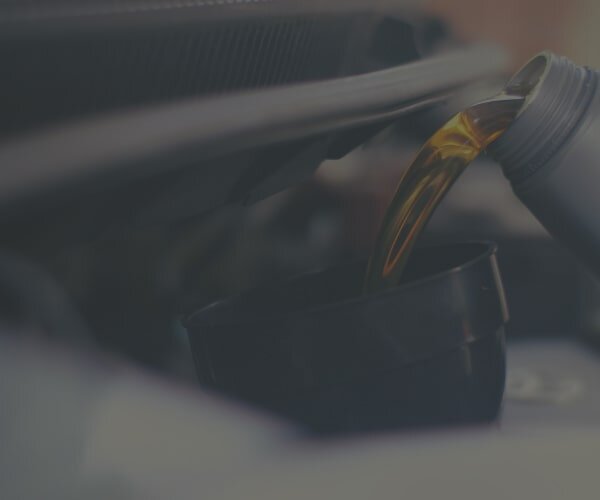
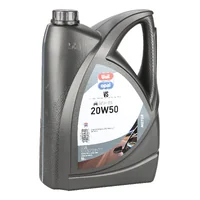
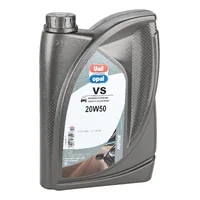
20W50 mineral oil is the benchmark grade for engines from before the era of low-viscosity oils: thick when hot and with low detergent properties, it is suitable for wide clearances and period gaskets. Part of the range contains ZDDP zinc additives, which are designed for flat-tappet valve trains.
Read more
14 Results
sort by
In stock
In stock
In stock
In stock
In stock
In stock
In stock
In stock
In stock
On order, from 17 days
The 20W describes the oil’s flow properties at low temperatures, whilst the 50 indicates its viscosity at high temperatures. A 20W50 is therefore a thick oil, designed for engines with wide original bearing and piston ring clearances, and where the seals are made of paper, cork or braided material rather than modern lip seals. In these set-ups, an oil that is too thin seeps where it shouldn’t and fails to maintain a film when hot.
This is why this grade has disappeared from general retail shelves, which are stocked to cater for the current fleet of vehicles, whilst it remains the default choice for classic car engines.
In recent oils, the content of zinc and phosphorus anti-wear additives – ZDDP – has been reduced to protect catalytic converters. However, these additives protect the high-pressure contact points between the cam and the tappet. In flat-tappet valve trains – a design widely used prior to the 1990s – the absence of these additives results in cam wear, sometimes even during the running-in of a new camshaft.
Part of the range is therefore formulated with a ZDDP content suited to these engines. If your valve train uses flat tappets, this is the key factor to consider before looking at the brand or the price. With a hydraulic roller tappet valve train, this is not an issue.
An air-cooled engine has no thermostat to curb temperature spikes: the oil operates at higher temperatures and provides some cooling, in addition to lubrication. A grade that remains thick at high temperatures is not a luxury here; it is essential for the survival of the engine block under sustained use. Formulations designed for these engine architectures meet this requirement, whereas an oil of the same grade designed for a water-cooled engine does not guarantee this.
A synthetic oil is more thermally stable and has greater detergency. In an older engine that has never been overhauled, these two qualities can backfire: the detergency loosens deposits that were plugging small leaks, and the cold-flow properties allow the oil to reach passages that the mineral oil could not. The result is an engine that leaks after an oil change, even though nothing has actually broken.
This is not a matter of principle against synthetic oil, but rather a matter of caution: it should be reserved for a rebuilt engine with brand-new seals.