


























Your vehicle
No vehicle selected
Identify yours to refine your search results

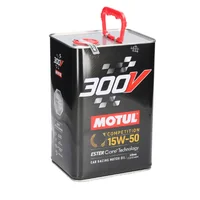
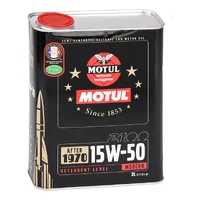
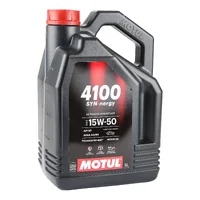
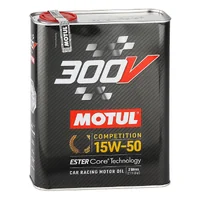
A classic car engine has greater operating clearances than a modern engine, and oil that is too thin when hot will not fill these clearances. The 15W50 grade maintains film thickness at high temperatures whilst remaining pumpable during cold starts. The range includes mineral, semi-synthetic and 100% synthetic oils.
Read more
8 Results
sort by
Only 2 left in stock
In stock
The grade is interpreted in two parts. The 15W describes the oil’s behaviour when cold, whilst the 50 indicates the viscosity at 100 degrees. A 15W50 is therefore a thick oil when hot, intended for:
Conversely, a modern engine with tight clearances, an oil pump rated for a lower viscosity grade or a hydraulically controlled valve train, has nothing to gain from a 15W50: the manufacturer’s recommendation remains the benchmark.
Modern oils are formulated to protect exhaust after-treatment systems. Their content of zinc- and phosphorus-based anti-wear additives has therefore been reduced. However, it is these additives that protect the high-pressure contact points in flat-tappet valve train systems, a common configuration on engines manufactured before the 1990s. A modern oil of the same grade does not offer the same cam protection on these engines.
This is the rationale behind the so-called ‘classic’ ranges: the same viscosity, but with additives specifically designed for these systems. If your engine has a flat-tappet valve train, this is the key factor to consider before the brand.
One thing to bear in mind before switching from mineral to synthetic oil in an older engine: synthetic oil has stronger detergent properties and is more fluid when cold. It can sometimes reveal seepage that the mineral oil had masked, particularly at the sump seals and hardened sealing rings. It is not the oil that causes the leak; it simply reveals it.
The 15W50 grade is common on older motorbikes, but viscosity alone is not enough to make a decision. On an engine witha wet clutch, a formulation containing too many friction-modifying additives causes the clutch plates to slip. The specification to check is the JASO MA standard, which guarantees compatibility with a wet clutch, as opposed to JASO MB, which is reserved for dry clutches. The product data sheet lists the approved specification(s): that is where you need to look, not at the grade.
A general-purpose range offers the grades required by vehicles in today’s fleet. The engines we service have different requirements: hot viscosity, anti-wear additives suitable for flat tappets, and mineral-based formulations that are still available. These are the selection criteria for this range, and this is also why the bottle sizes offered correspond to the sump capacities of classic cars rather than the standardised sizes found in mass-market retail outlets.