













Your vehicle
No vehicle selected
Identify yours to refine your search results
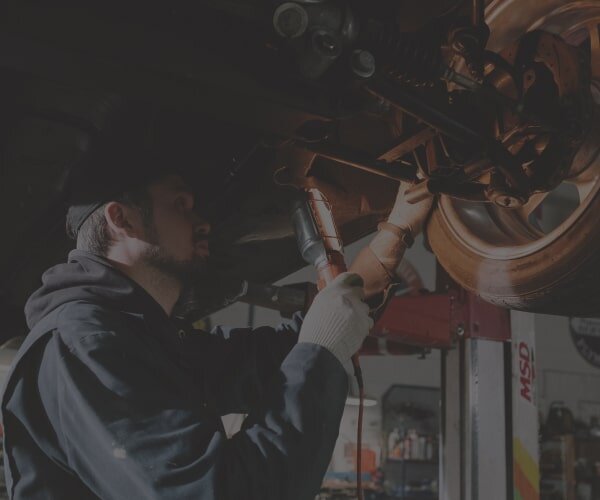
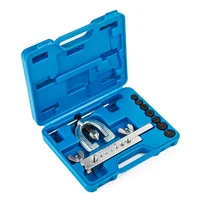
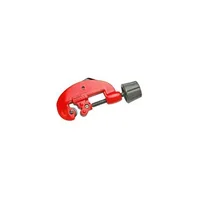
A corroded brake line cannot be repaired: it must be replaced. Brake line tools are used to cut, deburr, bend and, most importantly, flare the rigid tube to form the collar that ensures a watertight seal in the fitting. It is the collar that does the job, and it is the collar that requires the right tool.
Read more
10 Results
sort by
In stock
In stock
In stock
In stock
In stock
Only 2 left in stock
Only 3 left in stock
Only 1 left in stock
Only 4 left in stock
On order, from 15 days
The braking system operates at high pressures and does not tolerate any half-measures. A rigid pipe affected by corrosion must be replaced along its entire length, from one fitting to the next, rather than just in the affected section.
Replacing a pipe yourself involves four steps: cutting the tube to the correct length, deburring the cut, bending the pipe to the required route, and flaring the ends to form the collars. None of these steps requires a workshop, but all require the right tool. Rigid tubing is sold by the metre, and doing it yourself means you don’t have to rely on a part number that is no longer available.
The standard diameter of brake tubing is 4.75 mm, or three-sixteenths of an inch, on the vast majority of vehicles. What varies from one fitment to another is the shape of the ferrule formed at the end of the tubing.
Both fit into fittings that look identical, and a collar of the wrong shape can be screwed on without difficulty. However, a proper seal will not be achieved: a leak will occur under pressure, i.e. when braking. Before ordering a tool, therefore, identify the type of collar on the pipe you are removing, and check that the collar press offers the corresponding die.
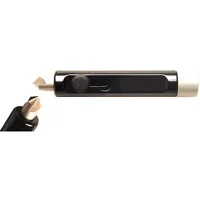
A scraper is a useful addition to the kit for cleaning the tube before flaring: even a trace of corrosion beneath the die is enough to ruin a collar.
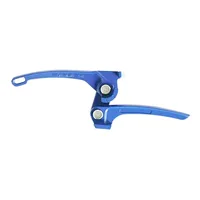
A tube bent by hand will pinch, causing its cross-section to become oval. The internal diameter is reduced, braking on that section of the circuit becomes spongy, and the pinched area will fatigue due to vibration until it cracks.
Adhere to the minimum radius permitted by the bender and do not attempt to correct a botched bend by bending it in the opposite direction: work-hardened tubing will break. Follow the original path, fixing point by fixing point, and refit all the clips: a brake pipe that rubs against a chassis component will wear out through friction within a few thousand kilometres.
Any open pipe means air in the circuit, and a spongy pedal as long as air remains. Bleeding is not optional; it is the final step in the job.
One-person bleeding kits, whether vacuum-operated or with a non-return valve, mean you don’t need an assistant to operate the brake pedal – which is the usual set-up in a private workshop. Remember to maintain the fluid level in the reservoir throughout the operation: emptying it whilst bleeding reintroduces air into the master cylinder and means you’ll have to start all over again.