
























Your vehicle
No vehicle selected
Identify yours to refine your search results
No vehicle selected
Read more
10 Results
sort by
In stock
In stock
In stock
In stock
Only 3 left in stock
Only 2 left in stock
Only 2 left in stock
In stock
Only 3 left in stock
On order, from 15 days
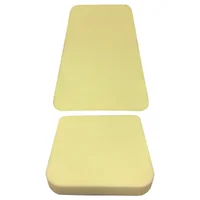
Seat foam is an open-cell polyurethane: a honeycomb structure that regains its shape because air circulates freely within it. Over the years, oxidation and thousands of compression cycles break down the walls of these cells. The foam loses its resilience – that is, its ability to spring back – and remains flattened.
There are three unmistakable signs: a permanent indentation in the driver’s seat, a lateral sag on the side where you get in, and a feeling of hardness even though the foam is actually too soft and you can feel the frame through it. At this stage, a new cover won’t solve the problem: it will sag because the foam it covers has lost volume.
Also check the frame before ordering: loose straps, broken springs or torn jute fabric cause a seat to sag just as much as worn-out foam. New foam fitted to a sagging frame will collapse within a few months.
Density, expressed in kilograms per cubic metre, measures the amount of material in the foam. It does not measure firmness, which is a separate property: foam can be dense and supple, or light and hard.
What density determines is the lifespan. Dense foam retains its shape for years; light foam, which feels comfortable to the touch, collapses within a season or two and reproduces the very problem you were trying to fix. This is why car seat foam costs more than a block of upholstery foam of the same size, and why cutting your own foam from recycled material almost always proves disappointing.
In older vehicles, the seats were not padded with foam but with natural fibres – horsehair or plant fibres – laid over springs and held in place by canvas. The feel is different: firmer, drier, with a very gradual settling.
Reupholstering these seats with the original material is the choice that stays true to the original, and the only one that restores the period driving position: modern foam of the same thickness does not compress in the same way and alters the seat height. Reupholstering with polyurethane is more comfortable for everyday use and cheaper. On a car intended for display, the original upholstery is the right choice. On a car that’s actually used, the foam holds up very well.
On an antique seat, the cover is often worth more than the foam and is much harder to come by. It is therefore the cover that must be treated with care.
Consult the details of the engine variants, chassis and versions offered for this model