



















Your vehicle
No vehicle selected
Identify yours to refine your search results
No vehicle selected
Read more
23 Results
sort by
Only 3 left in stock
On order, from 9 days
In stock
In stock
Only 4 left in stock
Only 2 left in stock
Only 5 left in stock
Only 3 left in stock
Only 4 left in stock
Only 2 left in stock
Only 2 left in stock
Only 5 left in stock
In stock
Only 3 left in stock
Only 1 left in stock
Only 3 left in stock
Only 3 left in stock
Only 2 left in stock
Only 2 left in stock
On order, from 11 days
On order, from 11 days
On order, from 14 weeks
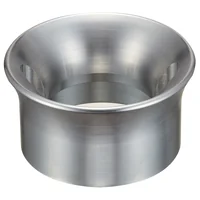
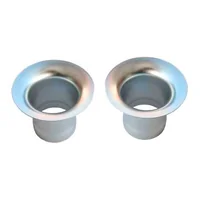
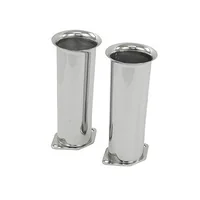
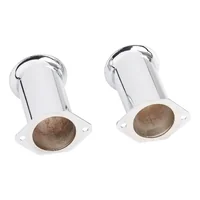
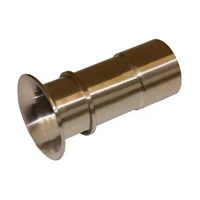
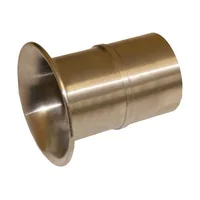
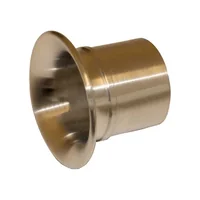
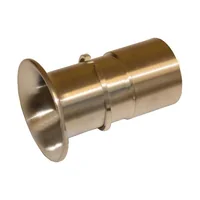
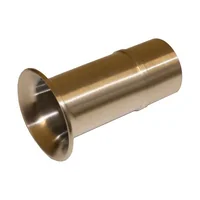
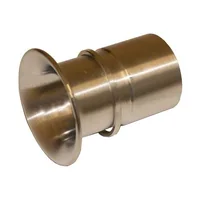
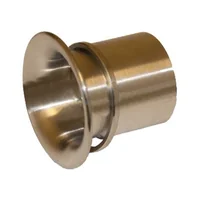
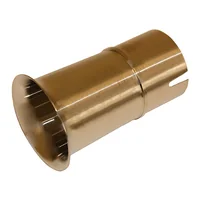
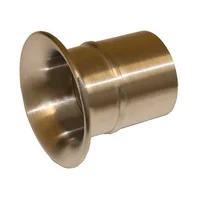
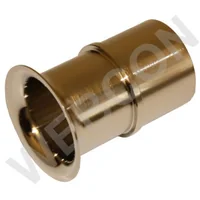
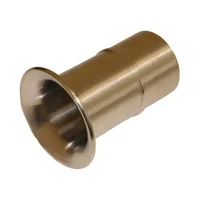
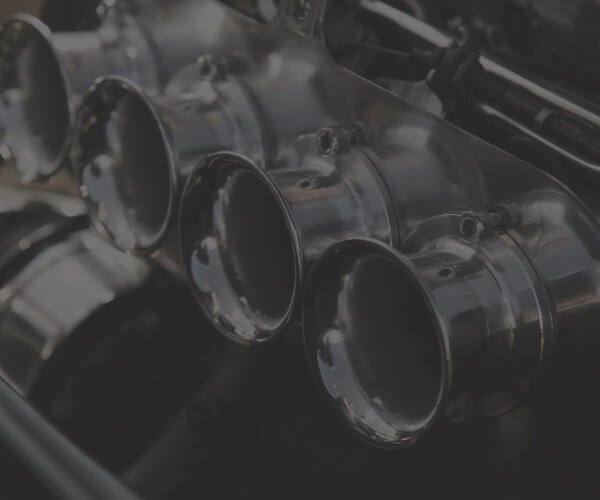
At the inlet of a carburettor body without a horn, air enters from the sides and has to flow round a sharp edge. It lifts off, forming a constricted flow that is narrower than the duct, and the flow rate is reduced as a result. The bell replaces this edge with a trumpet-shaped radius: the air follows the wall, the airflow occupies the entire cross-section, and the effective flow rate increases for the same throttle opening.
The gain is not merely theoretical and is all the more pronounced when the engine is fed by short, independent carburettor bodies, as is the case with horizontal or vertical twin-barrel carburettor set-ups. This is also why a poorly chosen throat – one that is too short or incorrectly fitted – impairs performance rather than improving it.
Every time a valve closes, a pressure wave travels up the intake manifold, is reflected at the open end and travels back down. If it returns just as the valve reopens, it aids the filling process. This timing depends on the total length of the manifold, including the intake pipe.
There is therefore no single ‘correct’ length in absolute terms; rather, there is a length suited to the intended use. Changing the length alters the air-fuel mixture, and thus the richness: a jet adjustment should be carried out after testing, rather than as a cost-saving measure.
A bare intake manifold looks good but leaves the system wide open. Anything that passes the inlet ends up in the cylinder: road dust, sand and debris. The resulting wear isn’t immediately visible; it becomes apparent later when measuring compression.
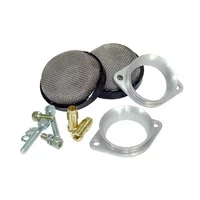
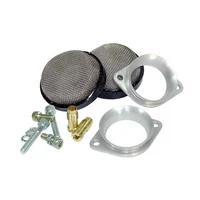
Filters – made of foam or fabric – can be fitted directly onto the air intakes, including very compact versions where space is limited. They cost a fraction of the price of a top-end engine overhaul. On a vehicle that is only driven in good weather and on clean roads, not fitting a filter remains a justifiable choice; on a car used regularly, it is a saving that ends up costing you twice over.

Consult the details of the engine variants, chassis and versions offered for this model