













Your vehicle
No vehicle selected
Identify yours to refine your search results
No vehicle selected
Read more
28 Results
sort by
Only 3 left in stock
On order, from 15 days
In stock
Only 1 left in stock
Only 2 left in stock
Only 2 left in stock
Only 3 left in stock
Only 2 left in stock
Only 3 left in stock
Only 2 left in stock
Only 2 left in stock
Only 3 left in stock
Only 1 left in stock
Only 2 left in stock
Only 2 left in stock
Only 5 left in stock
Only 1 left in stock
Only 2 left in stock
On order, from 13 days
On order, from 16 days
On order, from 16 days
On order, from 16 days
On order, from 13 days
On order, from 13 days
On order, from 13 days
On order, from 13 days
On order, from 13 days
An engine is not rigidly fixed to the bodywork: it rests on flexible mounts that allow it to move by several millimetres during acceleration, braking and idling. The exhaust system, meanwhile, is suspended from the bodywork. Without an intermediate component, all this movement would place stress on the first weld it encounters.
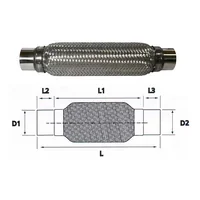
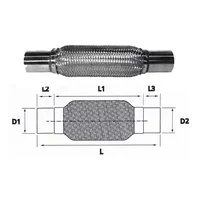
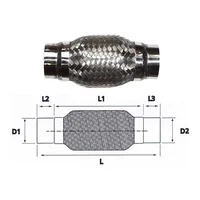
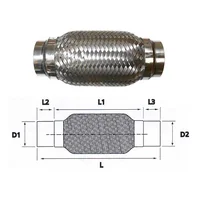
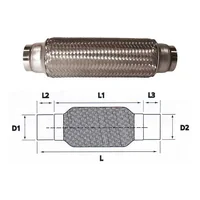
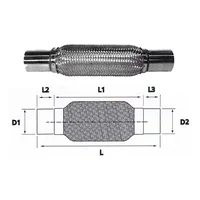
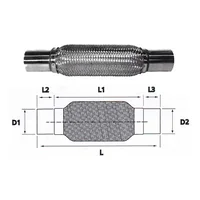
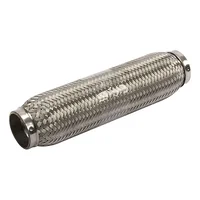
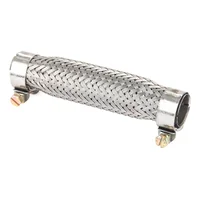
The flexible pipe absorbs this movement. It prevents cracks at the manifold outlet, limits the transmission of vibrations to the passenger compartment, and compensates for minor misalignments during fitting. It is a wear part: its braided sleeve stretches and eventually starts to whistle or leak.
The hoses in the range are made from AISI 304 stainless steel, designated V2A in the German classification system. This austenitic grade withstands exhaust temperatures without carbon build-up and resists the acidic condensation that accumulates at the lowest point of the system – which is the real cause of exhaust system failure.
A standard steel flexible pipe, whilst cheaper, will rust from the inside within a few seasons on short runs. On a component that you don’t want to have to replace – and which requires welding to be changed – the choice of stainless steel grade is the most cost-effective investment in the system.
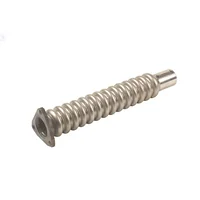
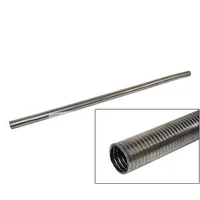
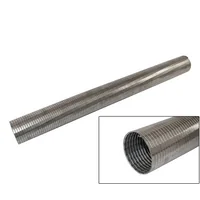
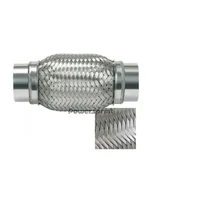
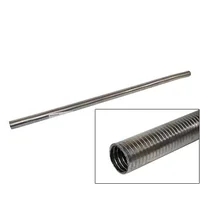
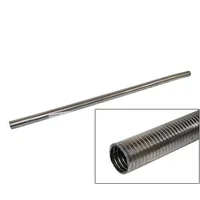
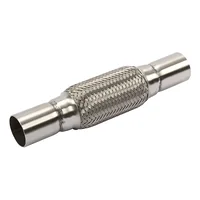
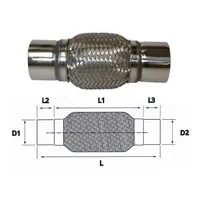
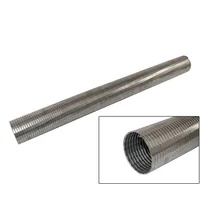
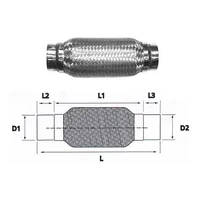
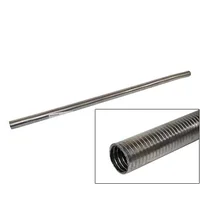
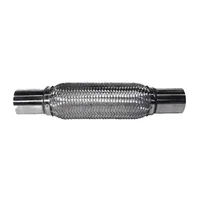
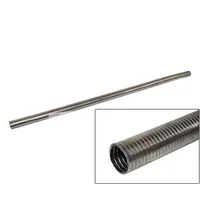
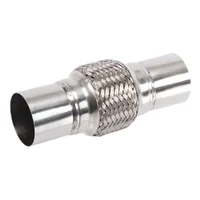
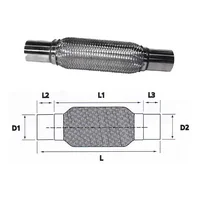
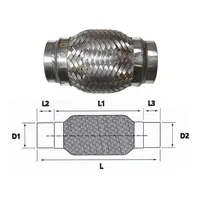
Two ways to purchase, each requiring a different type of workshop. Hoses sold by the metre are cut to the required length and welded into place: this is the solution for a bespoke line or a modified assembly, and it requires knowledge of how to weld stainless steel. Hose sleeves with fittings come with both ends already formed to the correct diameter, ready to be fitted and clamped or butt-welded.
In both cases, ensure you are working on a cold, removed pipe. A hose welded in place, underneath the car, will deform due to the heat of the arc and lose some of its flexibility.
The hose is designed to absorb movement, not to compensate for a permanent misalignment. If fitted under tension or bent from the outset – because the pipe isn’t aligned properly – it will be under constant strain in the same spot and will crack within a few months.
If the pipe does not align naturally, first look for the cause: a broken exhaust mount, a sagging rubber bush, or a worn-out engine mount. The flexible pipe should then be fitted in a relaxed state, and it will last.