

















Your vehicle
No vehicle selected
Identify yours to refine your search results
No vehicle selected
Read more
7 Results
sort by
On order, from 9 days
In stock
In stock
In stock
On order, from 9 days
In stock
On order, from 12 days
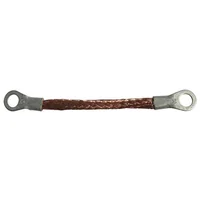
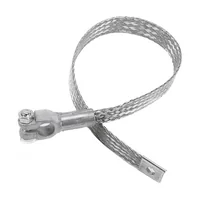
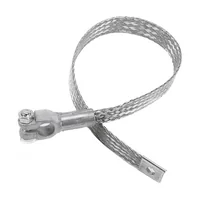
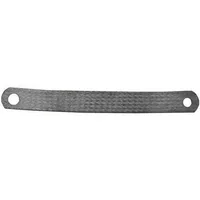
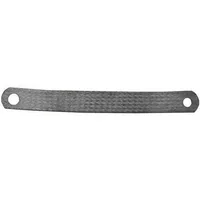
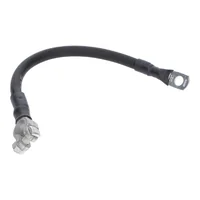
In a vehicle, the current does not return to the battery via a dedicated wire: it returns via the bodywork, which acts as a common conductor. However, the components must be connected to it, and this is the role of ground straps.
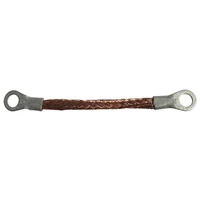
Why a braided cable rather than a rigid one? Because the engine and gearbox rest on flexible mounts and move by several millimetres. A rigid cable would fail due to fatigue, and a simple metal-to-metal contact is not sufficient: the mounts are made of rubber, and are therefore insulating. The braided cable, made up of hundreds of fine strands, accommodates this movement without breaking, whilst providing a large cross-sectional area. It is often supplemented by a shorter braided cable between the engine block and the bodywork, particularly in set-ups where the bonnet or wing houses an electrical component.
A faulty earth connection does not cut off the current; it adds resistance. The symptom therefore depends on which component is drawing the most current at that moment, which explains why faults may appear seemingly unrelated.
The test is carried out using a multimeter, by measuring the voltage drop between the component and the negative terminal of the battery whilst the circuit is active, for example during starting. Any significant reading indicates a short to earth that needs to be rectified.
Opt for bare braided cable rather than sheathed cable for engine connections: it can be checked at a glance, whereas a sheath hides oxidation that progresses unseen.
A new braided cable bolted to painted sheet metal conducts almost no current. The contact is just as important as the component itself.
Consult the details of the engine variants, chassis and versions offered for this model